







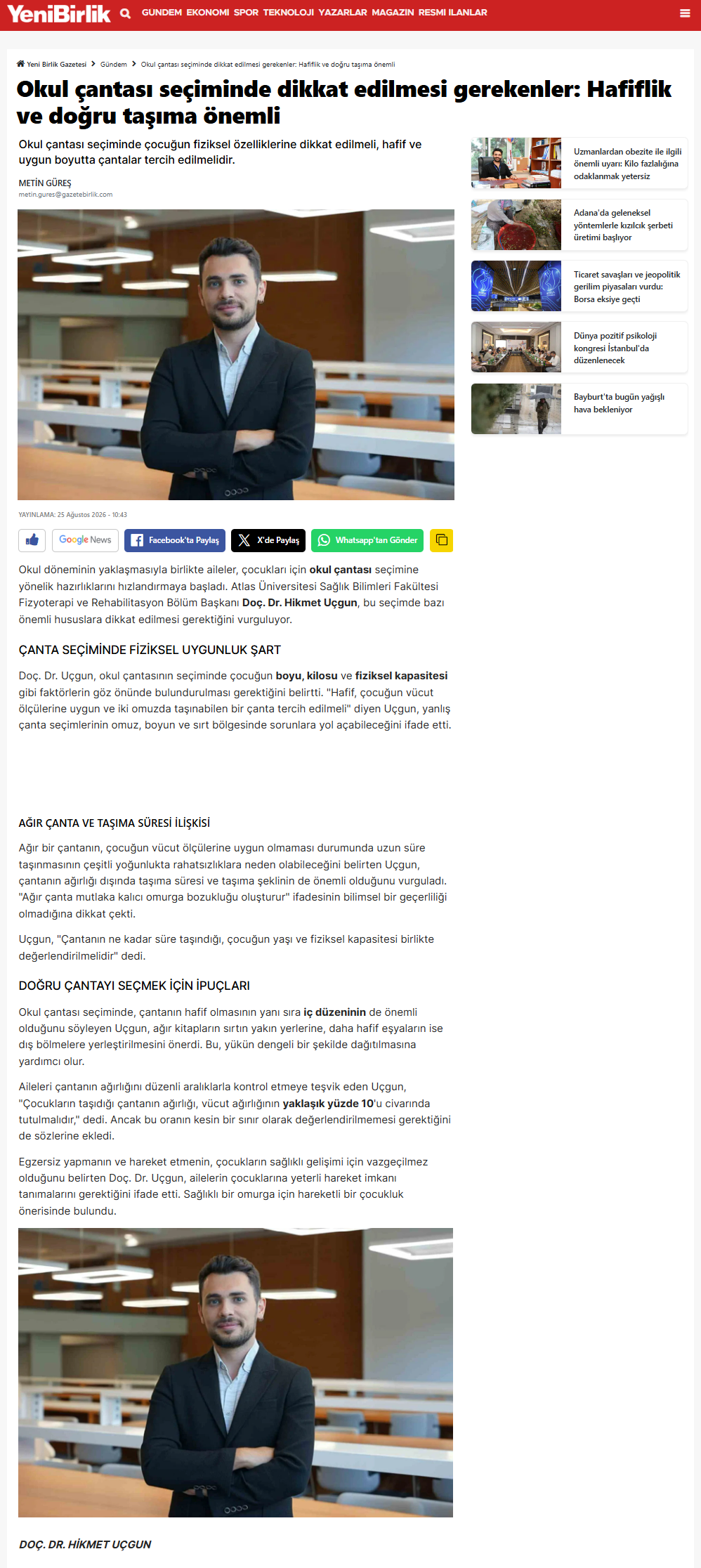
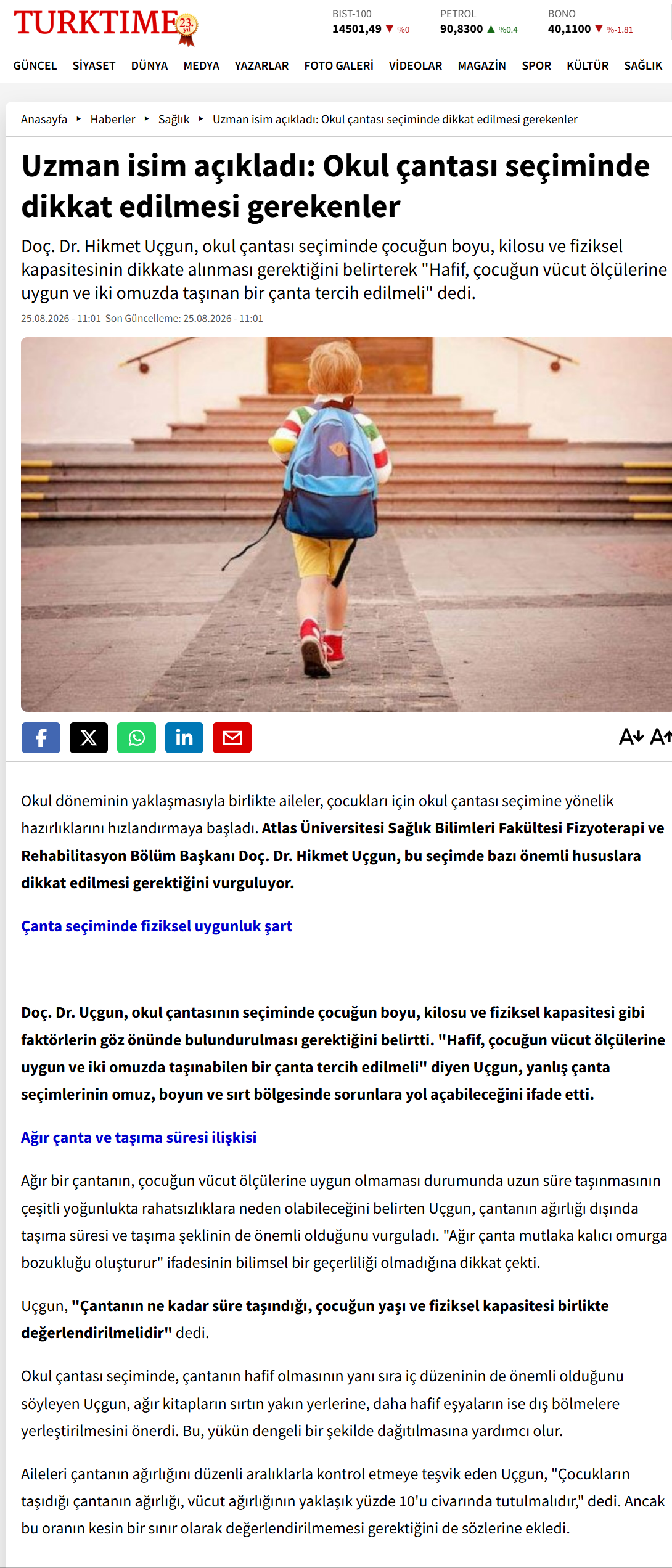
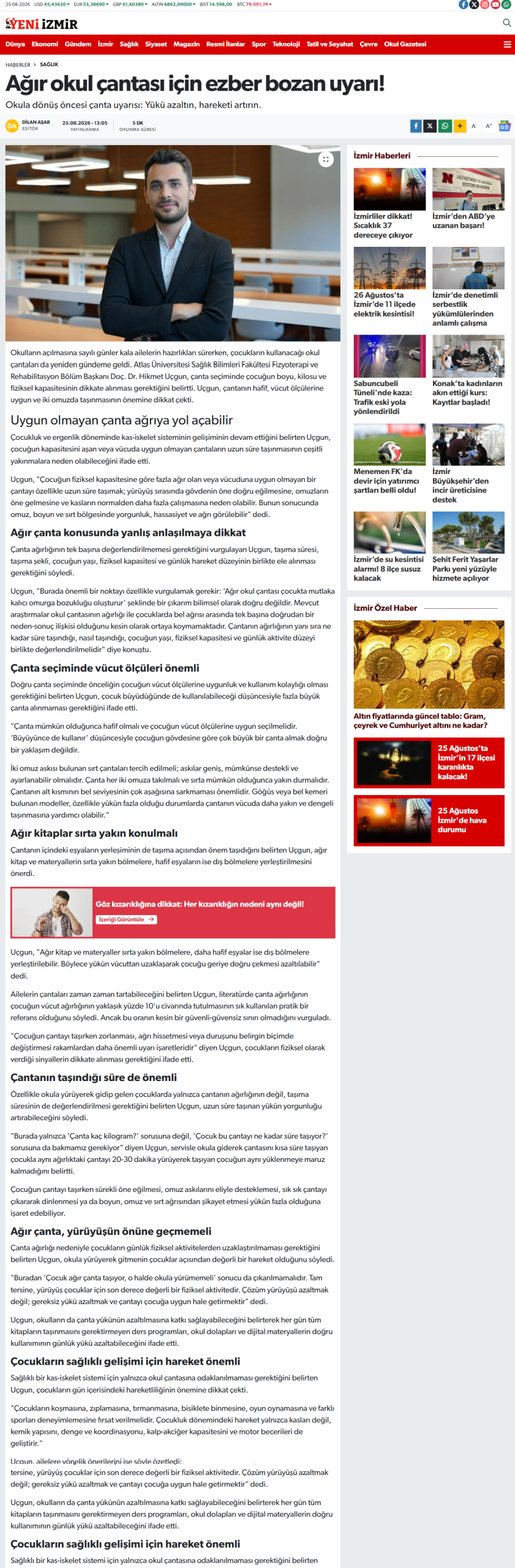
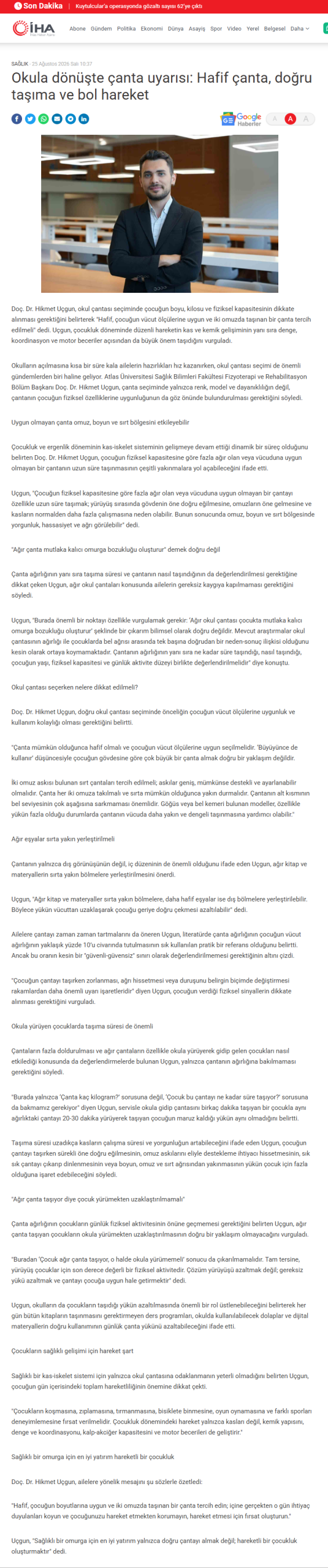

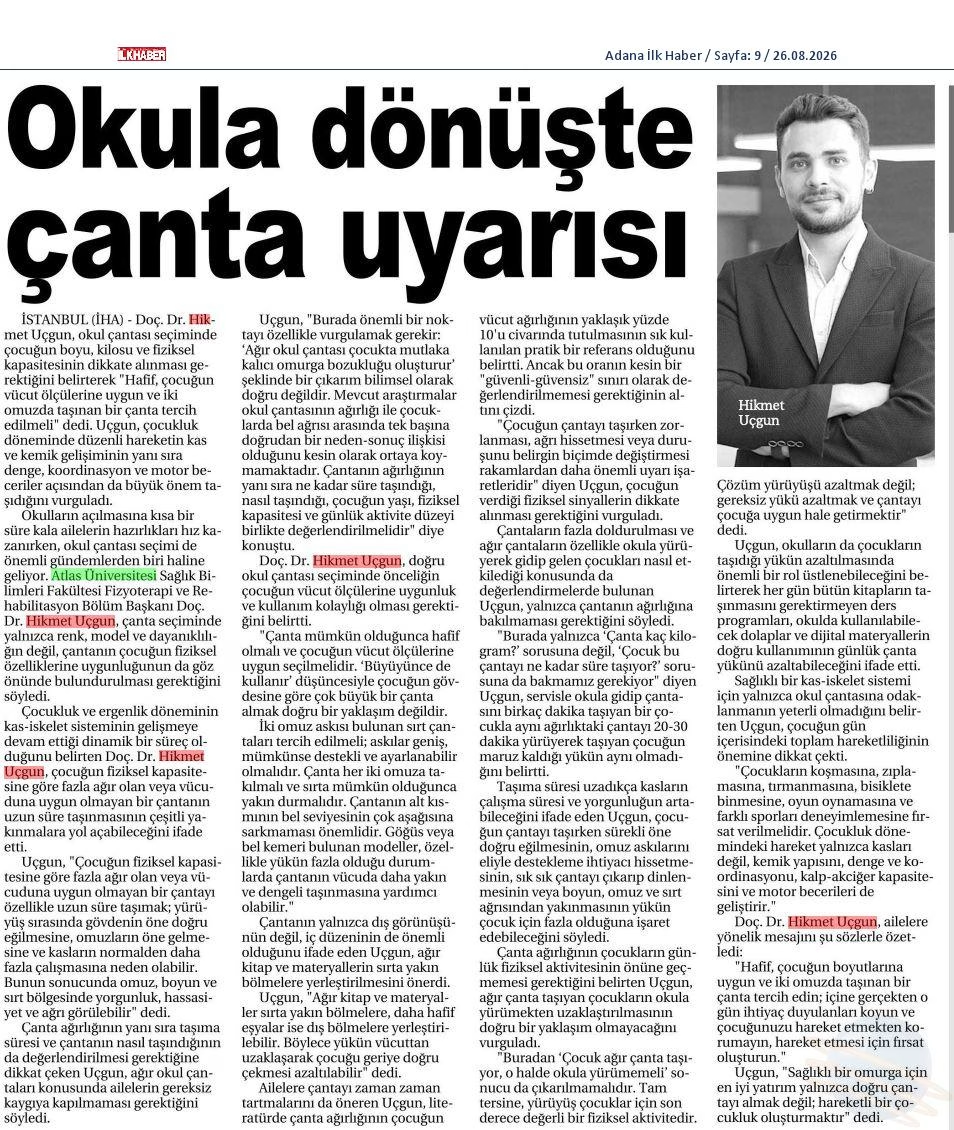
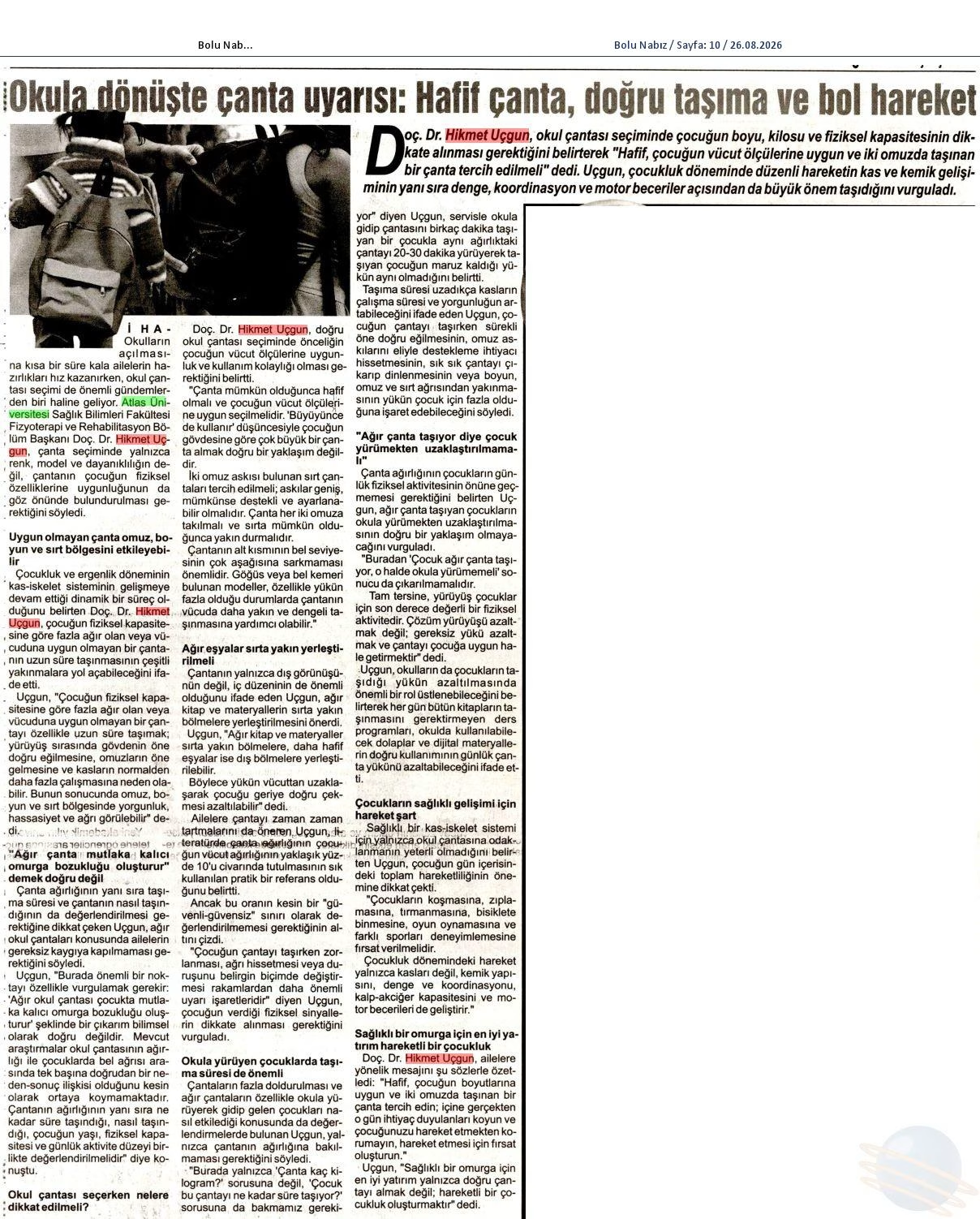
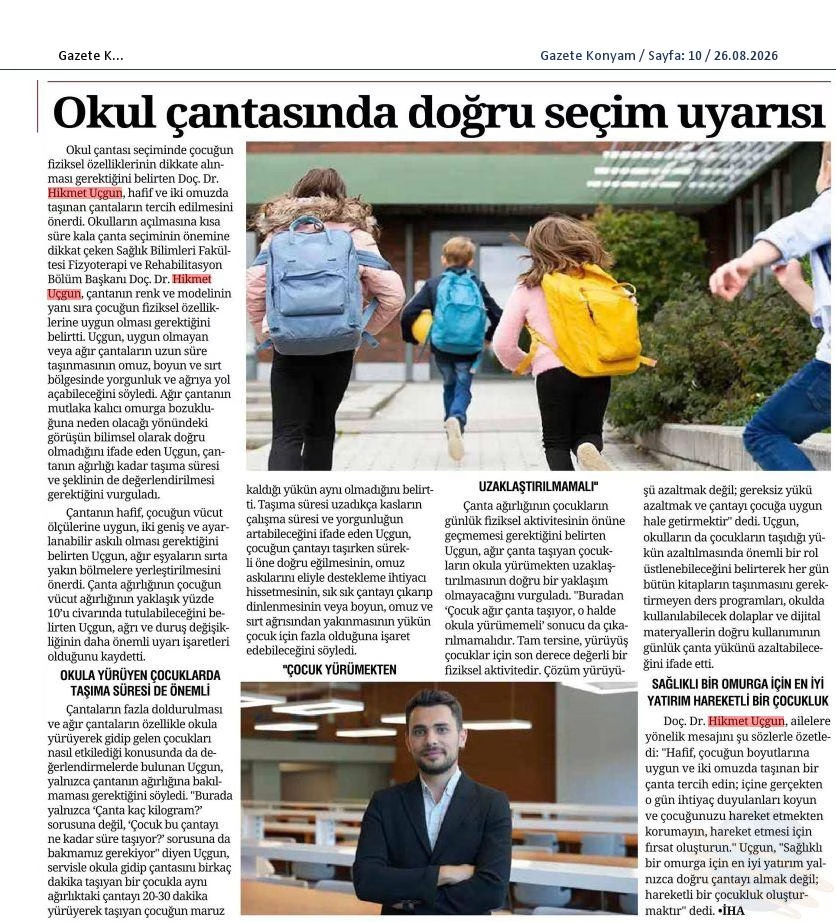
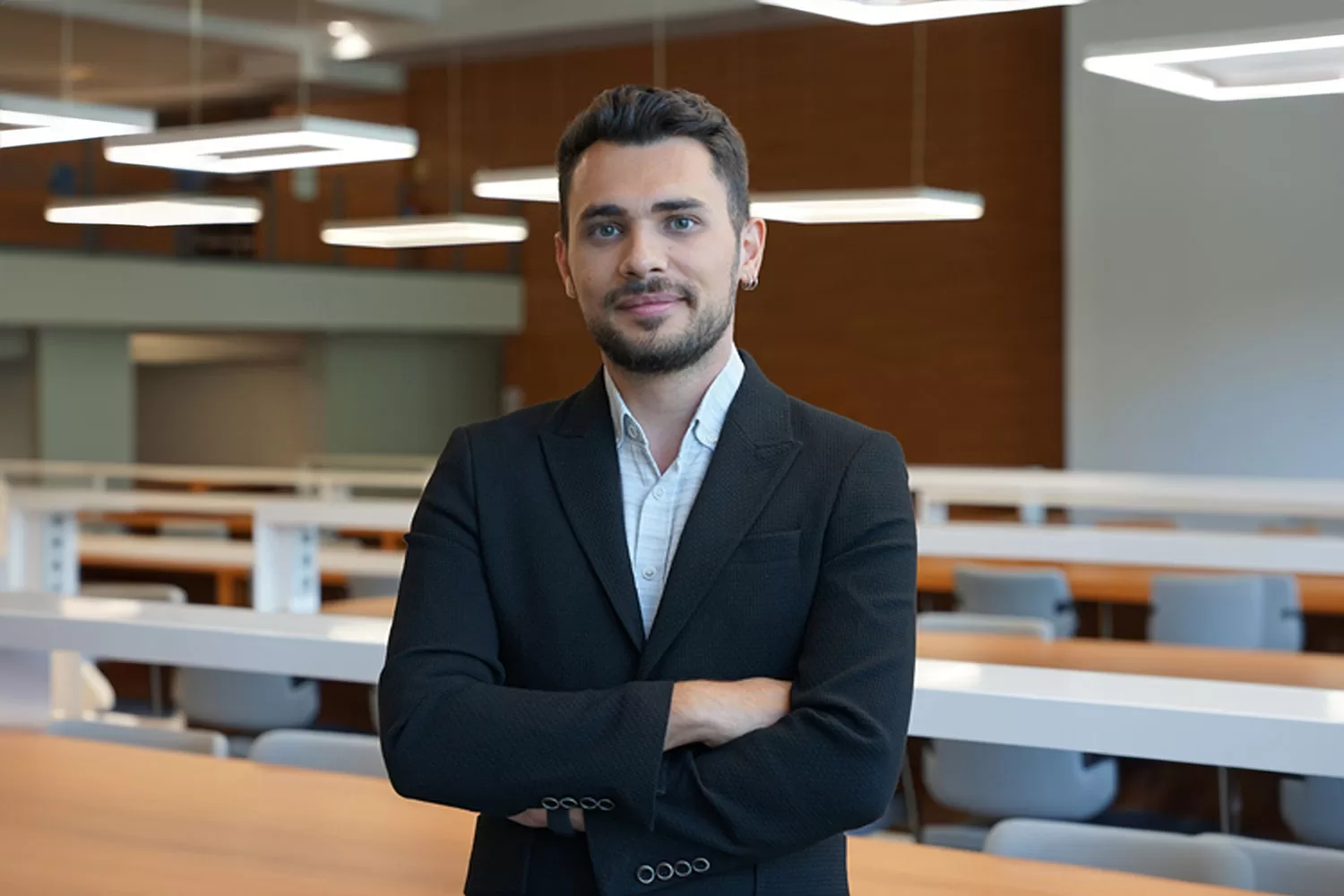
Associate Professor Dr. Hikmet Uçgun, Head of the Physiotherapy and Rehabilitation Department at Atlas University Faculty of Health Sciences, stated that when choosing a bag, not only color, model, and durability should be considered, but also whether the bag is suitable for the child's physical characteristics.
An unsuitable bag can affect the shoulder, neck, and back area.
Associate Professor Dr. Hikmet Uçgun's assessments are as follows:
“Childhood and adolescence are dynamic periods during which the musculoskeletal system continues to develop. Carrying a bag that is too heavy or unsuitable for a child's physical capacity for extended periods can lead to various complaints.”
Carrying a bag that is too heavy or unsuitable for a child's physical capacity, especially for extended periods, can cause the torso to lean forward, the shoulders to come forward, and the muscles to work harder than normal during walking. As a result, fatigue, tenderness, and pain may occur in the shoulder, neck, and back areas.
"It is not correct to say that heavy backpacks inevitably cause permanent spinal deformities."
In addition to the weight of the bag, the carrying time and how the bag is carried should also be considered, and families should not have unnecessary concerns about heavy school bags.
It is important to emphasize one crucial point here: the conclusion that 'heavy school bags inevitably cause permanent spinal deformities in children' is not scientifically accurate. Current research does not definitively establish a direct cause-and-effect relationship between school bag weight and lower back pain in children. The weight of the bag, along with factors such as the duration and method of carrying it, the child's age, physical capacity, and daily activity level, should all be considered together.”
What should be considered when choosing a school bag?
Associate Professor Dr. Hikmet Uçgun stated that the priority in choosing the right school bag should be its suitability to the child's body measurements and ease of use.
“The bag should be as lightweight as possible and chosen to fit the child's body measurements. Buying a bag that's too large for the child's size, thinking 'They'll use it when they grow up too,' is not the right approach.”
Backpacks with two shoulder straps should be preferred; the straps should be wide, preferably padded and adjustable. The bag should be worn on both shoulders and sit as close to the back as possible. It is important that the bottom of the bag does not hang too far below waist level. Models with a chest or waist belt can help carry the bag closer to the body and more balanced, especially when carrying a heavier load.
Heavy objects should be placed close to the back.
Uçgun stated that not only the exterior appearance but also the interior organization of the bag is important, and suggested placing heavy books and materials in the compartments closer to the back.
“Heavy books and materials can be placed in compartments closer to the back, while lighter items can be placed in outer compartments. This way, the load is shifted away from the body, reducing the risk of the child being pulled backward. Families should weigh the backpack periodically. In the literature, keeping the backpack weight around 10% of the child's body weight is a commonly used practical reference. However, this ratio should not be considered a definitive "safe-unsafe" limit. Difficulty, pain, or a noticeable change in posture while the child is carrying the backpack are more important warning signs than the numbers. Paying attention to the child's physical signals is crucial.”
Transportation time is also important for children walking to school.
We shouldn't just look at the weight of the bag; we need to consider not only 'How many kilograms does the bag weigh?' but also 'How long does the child carry this bag?' The burden on a child who carries their bag for a few minutes on the school bus is not the same as the burden on a child who carries the same weight for 20-30 minutes on foot.
As the carrying time increases, the muscles' workload and fatigue can also increase. If the child constantly leans forward while carrying the bag, feels the need to support the shoulder straps with their hands, frequently takes the bag off to rest, or complains of neck, shoulder, and back pain, it may indicate that the load is too much for the child.
Children should not be discouraged from walking simply because they are carrying heavy bags.
The weight of the school bag should not interfere with children's daily physical activity. Preventing children who carry heavy bags from walking to school is not the right approach. However, this shouldn't be interpreted as meaning 'If a child carries a heavy bag, they shouldn't walk to school.' On the contrary, walking is an extremely valuable physical activity for children. The solution is not to reduce walking, but to reduce unnecessary burden and make the bag suitable for the child.
Schools should also play an important role in reducing the burden on children. Daily schedules that don't require carrying all the books, the availability of lockers at school, and the proper use of digital materials can all help reduce the daily schoolbag burden.
Exercise is essential for children's healthy development.
Uçgun stated that focusing solely on the school bag is not enough for a healthy musculoskeletal system, and emphasized the importance of the child's overall physical activity throughout the day.
“Children should be given the opportunity to run, jump, climb, ride bikes, play games, and experience different sports. Movement during childhood develops not only muscles but also bone structure, balance and coordination, cardiovascular capacity, and motor skills.”
The best investment for a healthy spine is an active childhood.
Associate Professor Dr. Hikmet Uçgun summarized his message to families with the following words:
“Choose a lightweight bag that is the right size for your child and can be carried on both shoulders; put only what they really need that day inside, and don't restrict your child from moving, create opportunities for them to move. The best investment for a healthy spine is not just buying the right bag; it's fostering an active childhood.”