




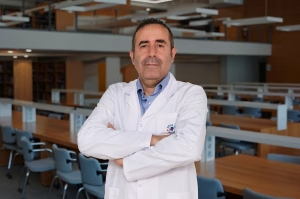




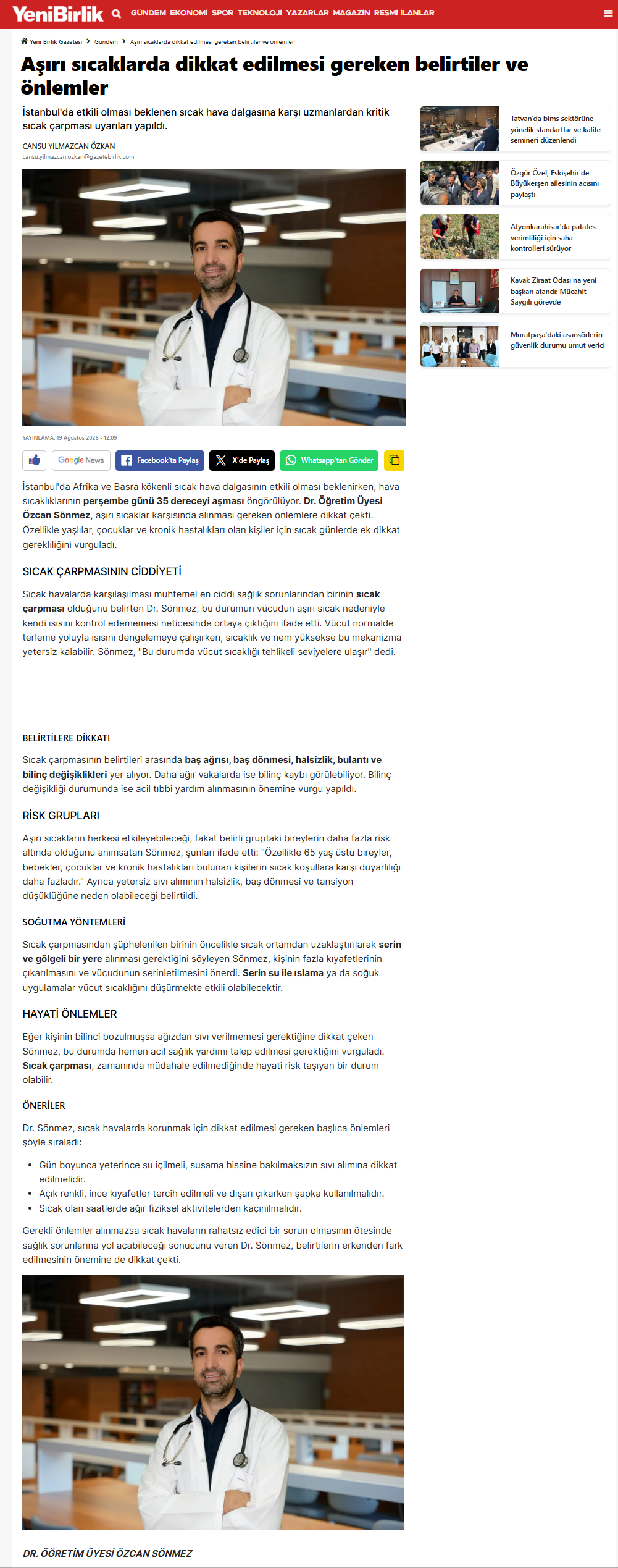
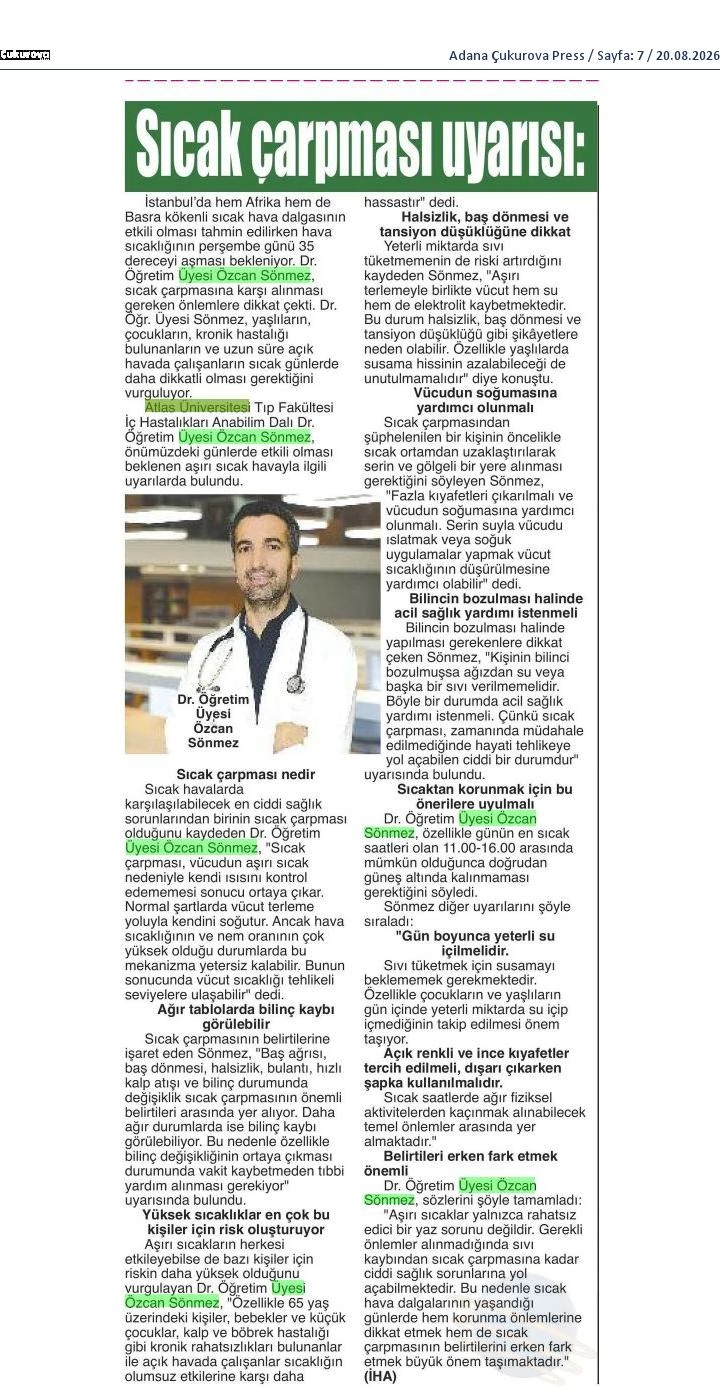
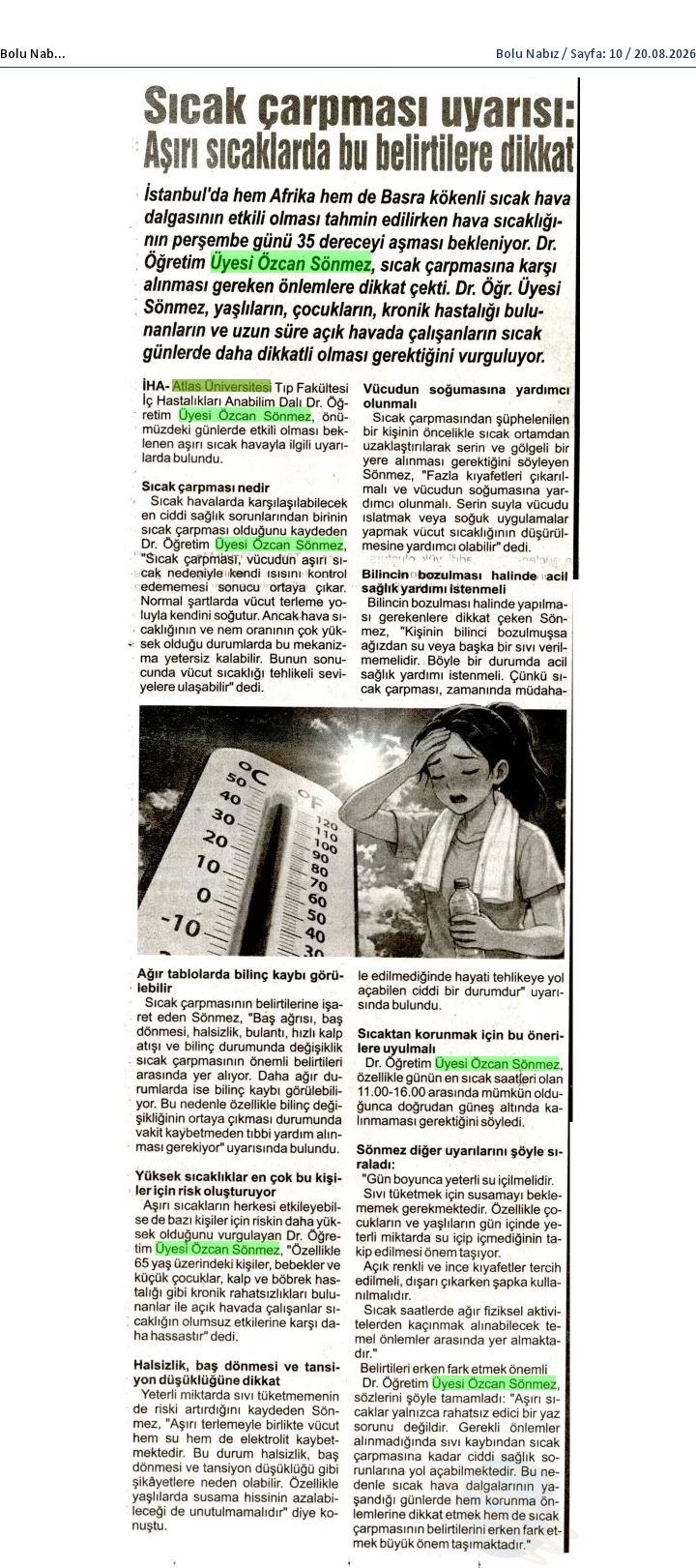
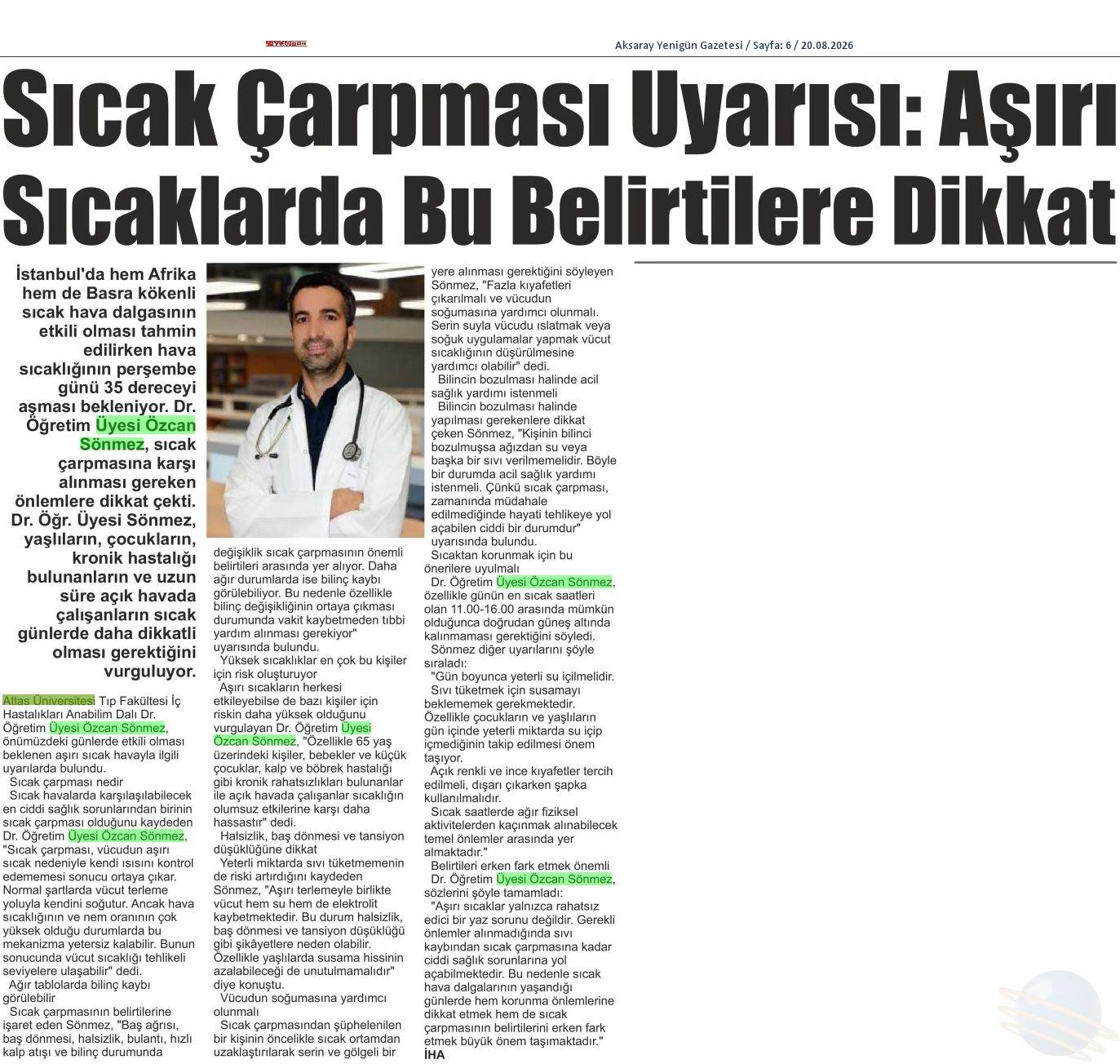
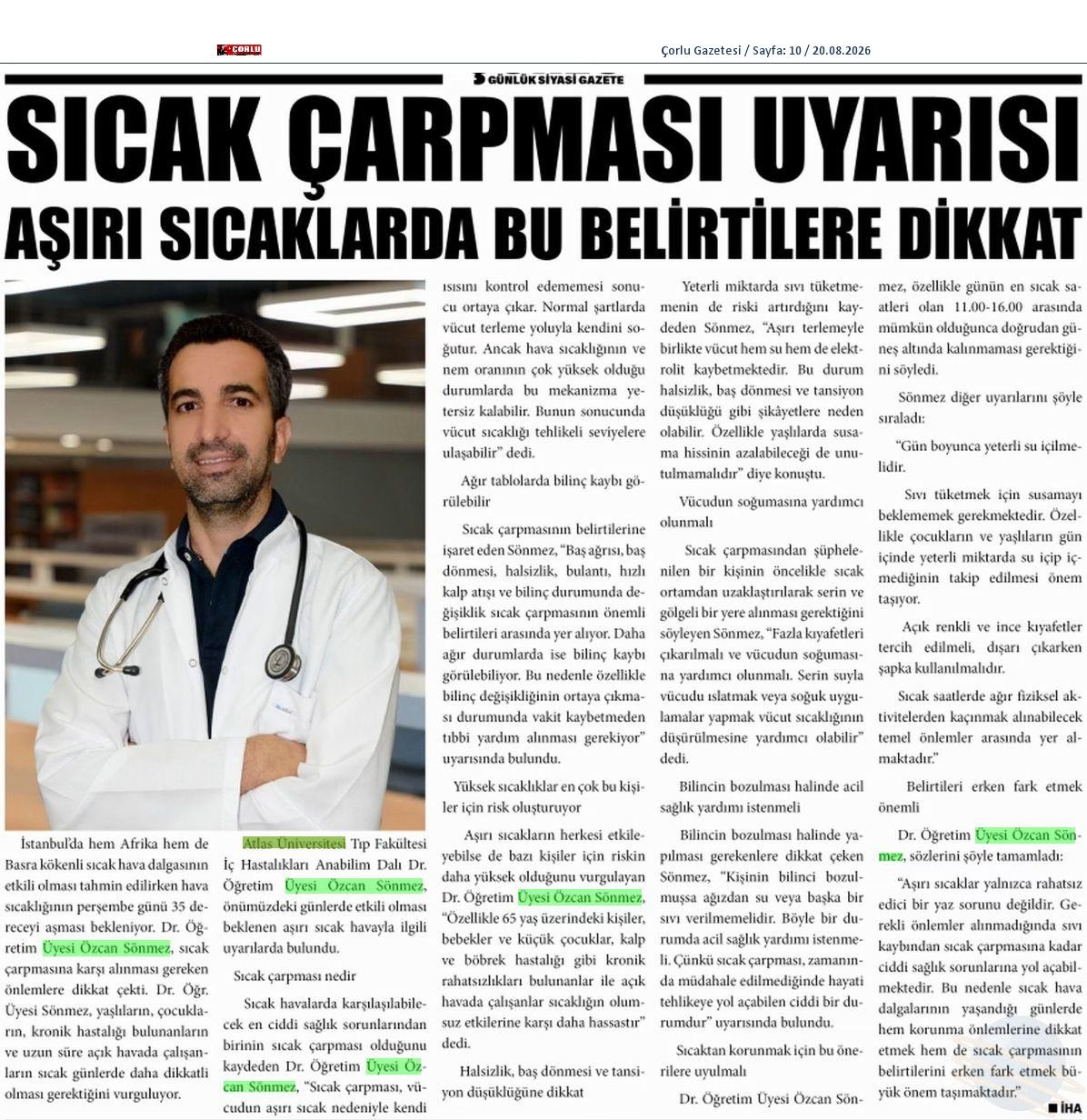
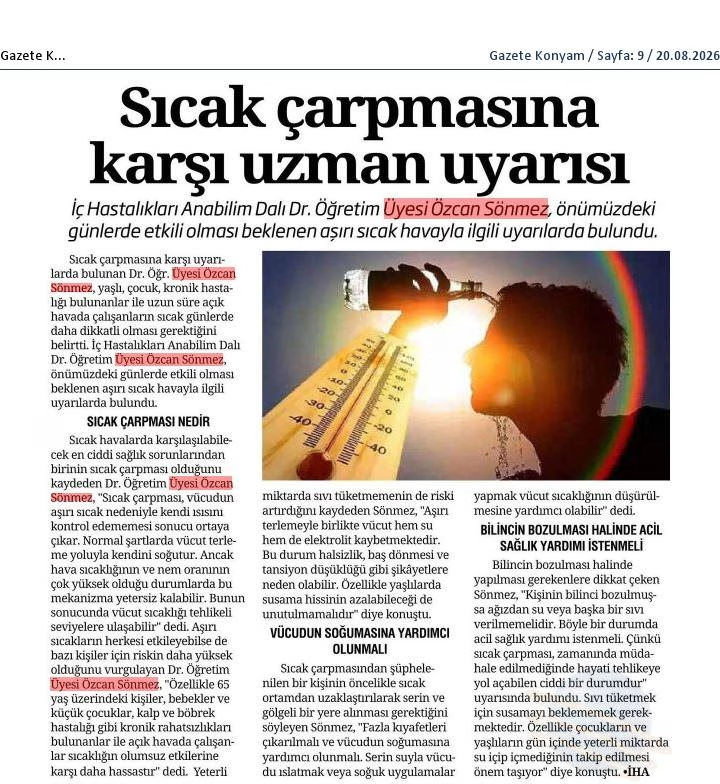
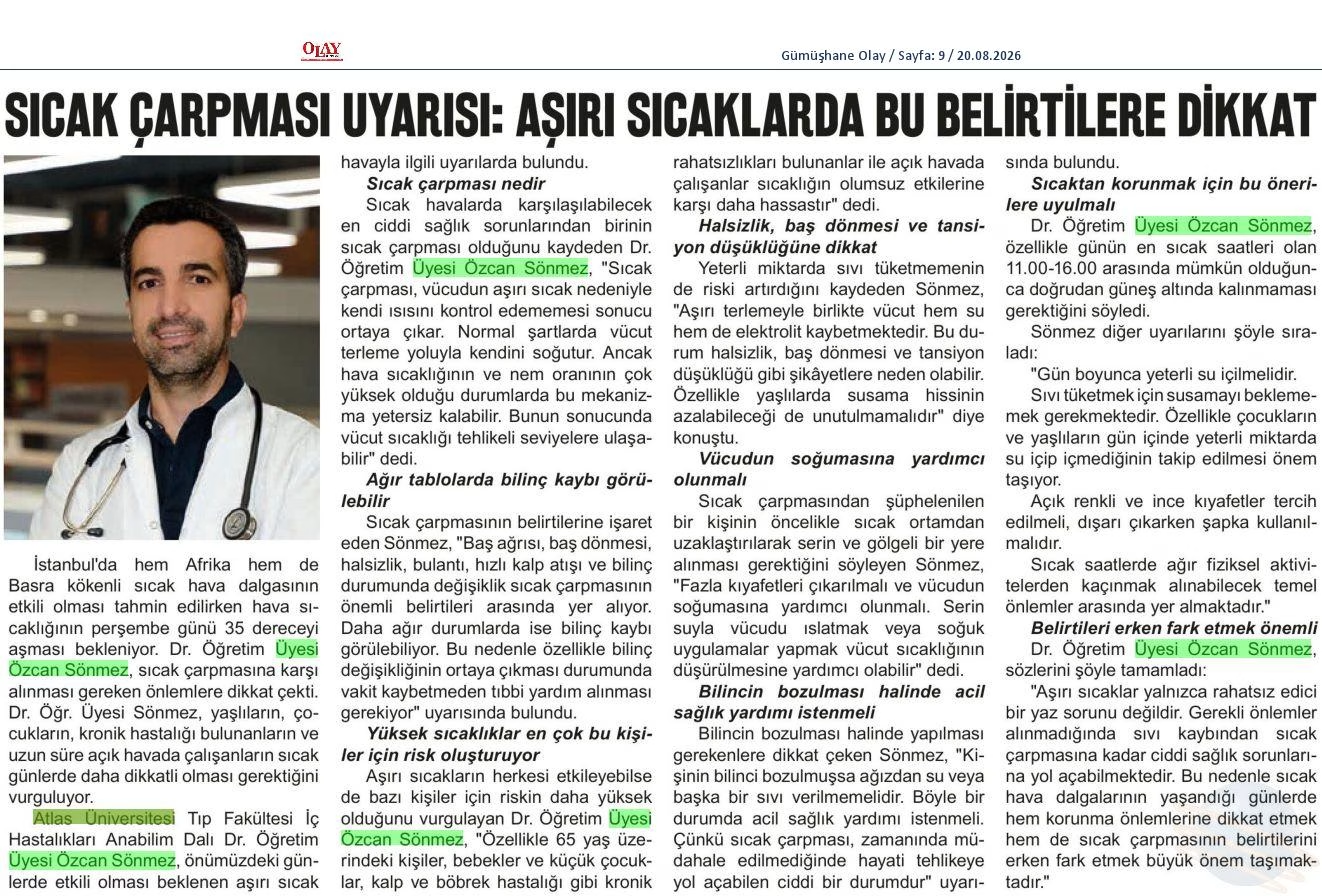
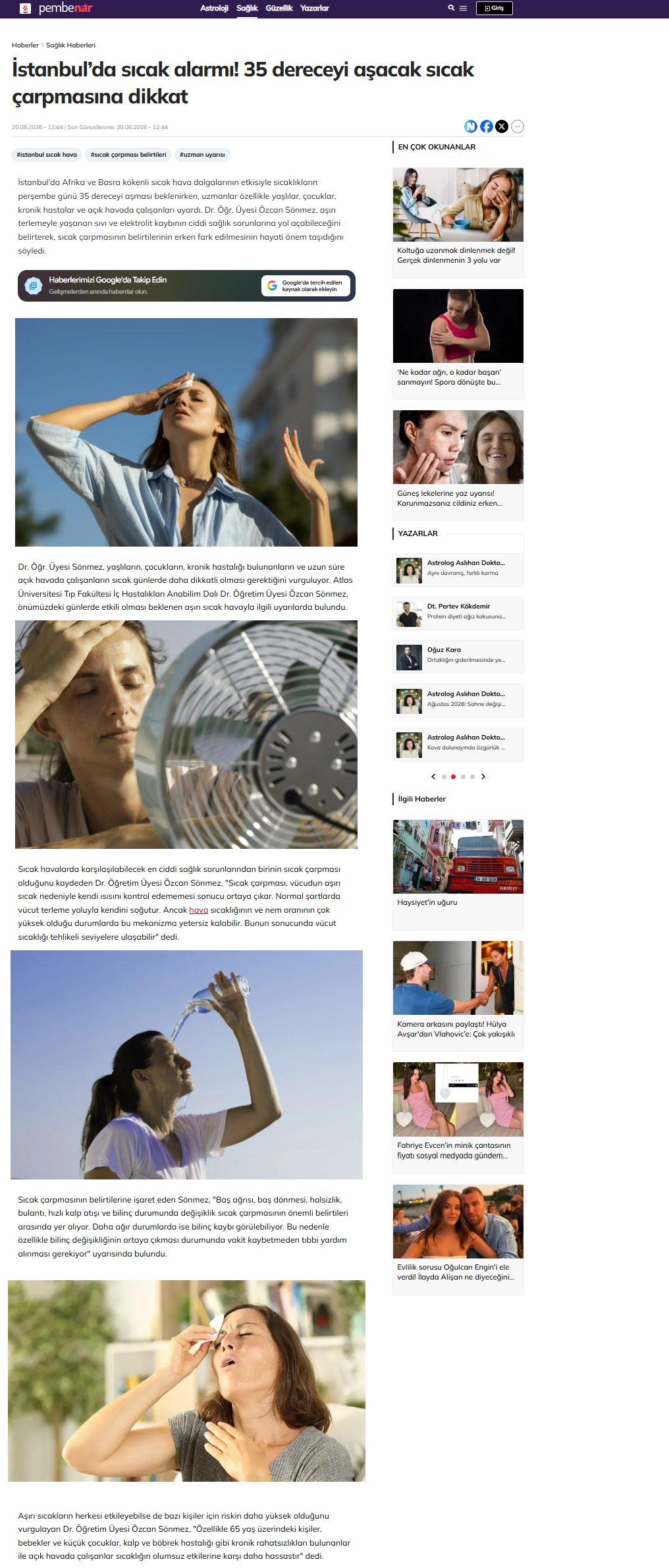
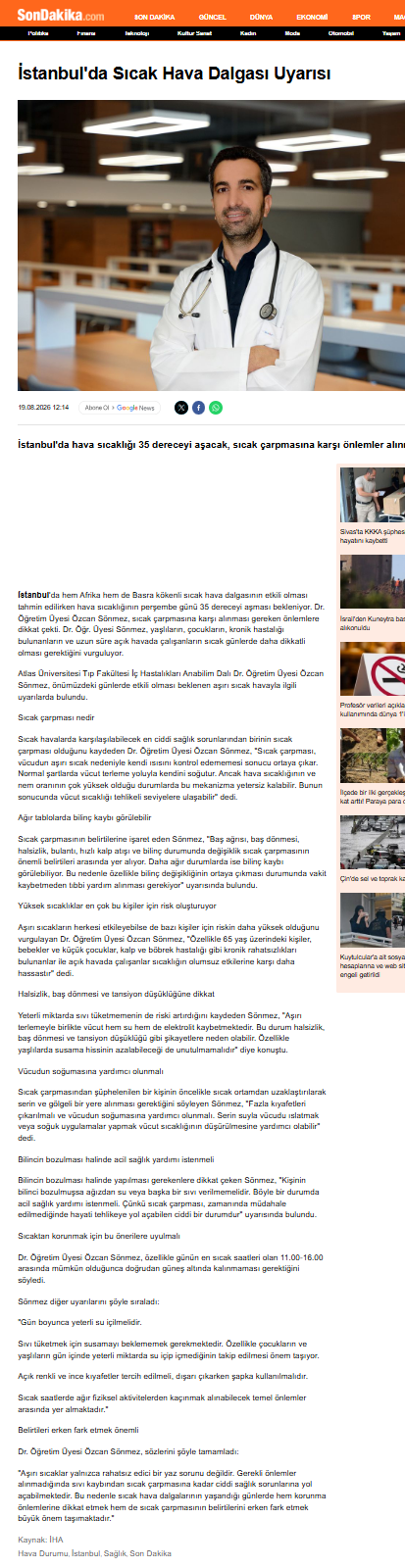
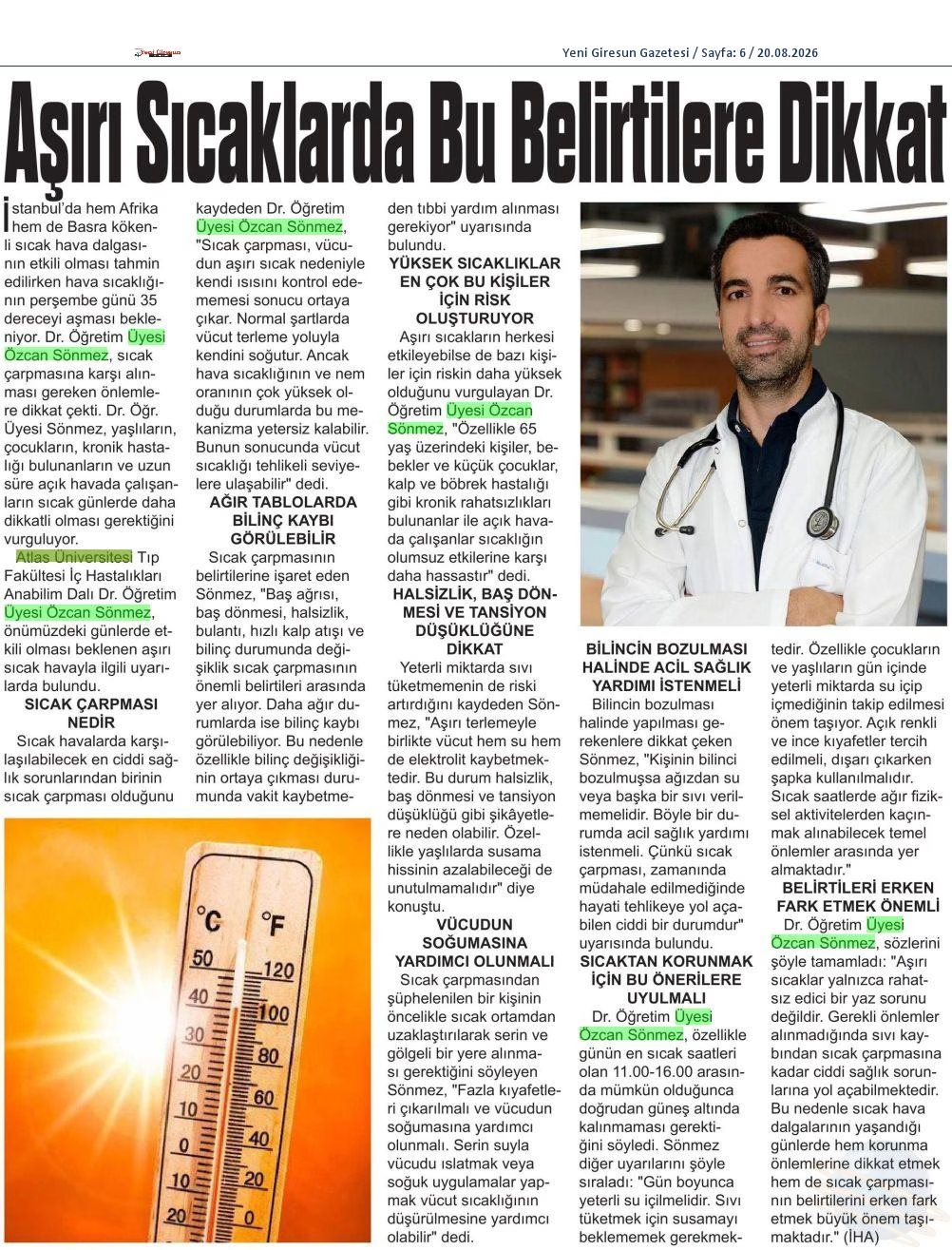
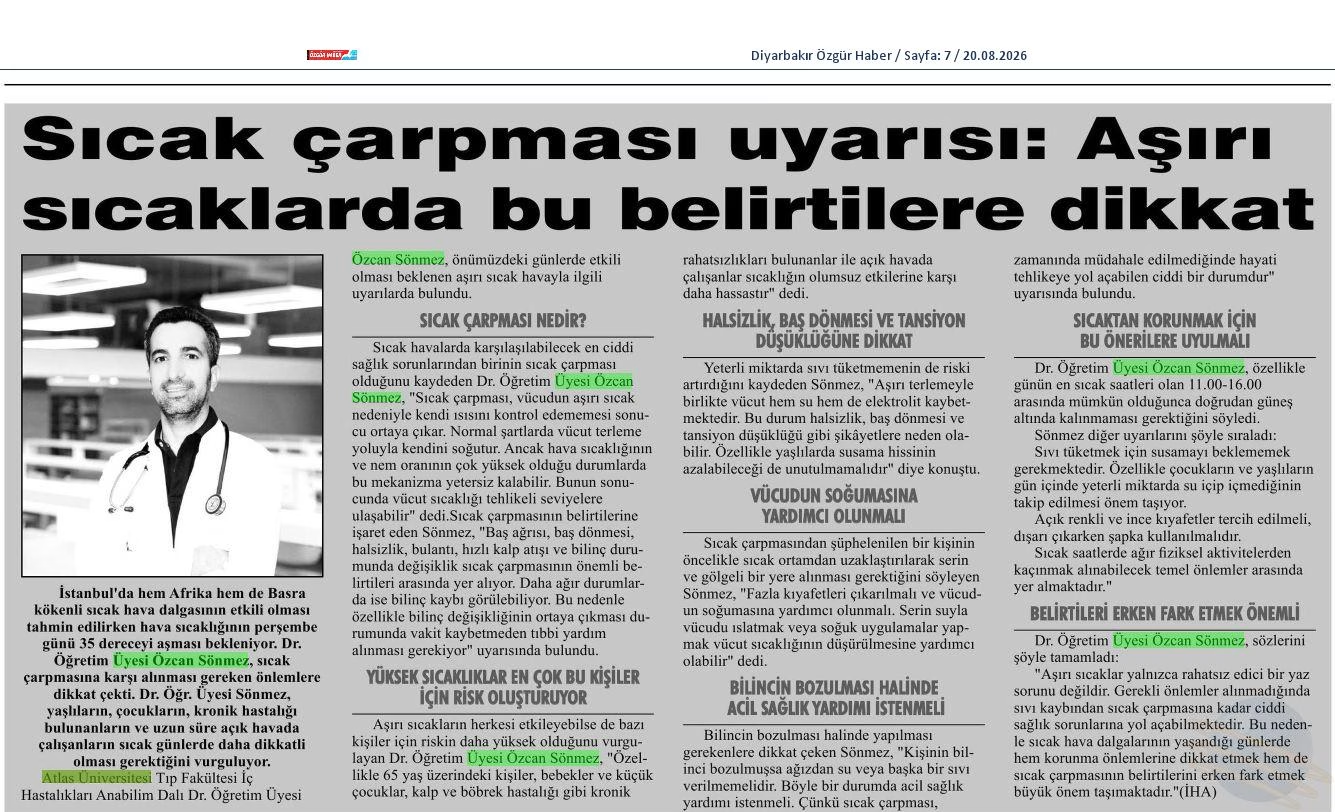

Dr. Özcan Sönmez, Assistant Professor in the Department of Internal Medicine at Atlas University Faculty of Medicine, issued warnings regarding the extreme heat expected to affect the region in the coming days.
What is heatstroke?
Dr. Özcan Sönmez, Assistant Professor, provided the following information:
“One of the most serious health problems that can be encountered in hot weather is heatstroke. Heatstroke occurs when the body cannot regulate its own temperature due to excessive heat. Under normal circumstances, the body cools itself through sweating. However, when the air temperature and humidity are very high, this mechanism may be insufficient. As a result, body temperature can reach dangerous levels.”
In severe cases, loss of consciousness may occur.
The symptoms of heatstroke should be carefully observed. Headache, dizziness, weakness, nausea, rapid heartbeat, and changes in consciousness are among the important signs of heatstroke. In more severe cases, loss of consciousness may occur. Therefore, it is necessary to seek medical help immediately, especially if a change in consciousness occurs.”
High temperatures pose the greatest risk to these individuals.
While extreme heat can affect everyone, Dr. Özcan Sönmez, Assistant Professor, emphasized that the risk is higher for some individuals, and stated the following:
“People over 65, babies and young children, those with chronic conditions such as heart and kidney disease, and those who work outdoors are particularly susceptible to the negative effects of heat.”
Watch out for weakness, dizziness, and low blood pressure!
Insufficient fluid intake increases the risk of heatstroke. Excessive sweating causes the body to lose both water and electrolytes. This can lead to symptoms such as weakness, dizziness, and low blood pressure. It should also be remembered that the sense of thirst may decrease, especially in the elderly.
The body needs to be cooled down.
A person suspected of having heatstroke should first be removed from the hot environment and taken to a cool, shaded area. Excess clothing should be removed, and the body should be cooled down. Dousing the body with cool water or applying cold compresses can help lower body temperature.
If consciousness is impaired, emergency medical assistance should be sought.
There are a few important points to consider if someone loses consciousness. If the person is unconscious, do not give them water or any other liquid by mouth. Emergency medical assistance should be sought in such a situation, as heatstroke is a serious condition that can be life-threatening if not treated promptly.
Follow these tips to protect yourself from the heat.
Dr. Özcan Sönmez, Assistant Professor, stated that people should avoid staying in direct sunlight as much as possible, especially between 11:00 and 16:00, the hottest hours of the day.
Sönmez listed his other warnings as follows:
- Drink enough water throughout the day.
- It's important not to wait until you're thirsty to drink fluids. It's particularly crucial to monitor whether children and the elderly are drinking enough water throughout the day.
- Light-colored and thin clothing should be preferred, and a hat should be worn when going outside.
- Avoiding strenuous physical activity during hot hours is among the key precautions that can be taken.
Early detection of symptoms is important.
Dr. Özcan Sönmez, Assistant Professor, concluded his remarks as follows:
“Extreme heat is not just an unpleasant summer problem. If necessary precautions are not taken, it can lead to serious health problems ranging from dehydration to heatstroke. Therefore, it is crucial to pay attention to protective measures and to recognize the symptoms of heatstroke early during heatwaves.”