










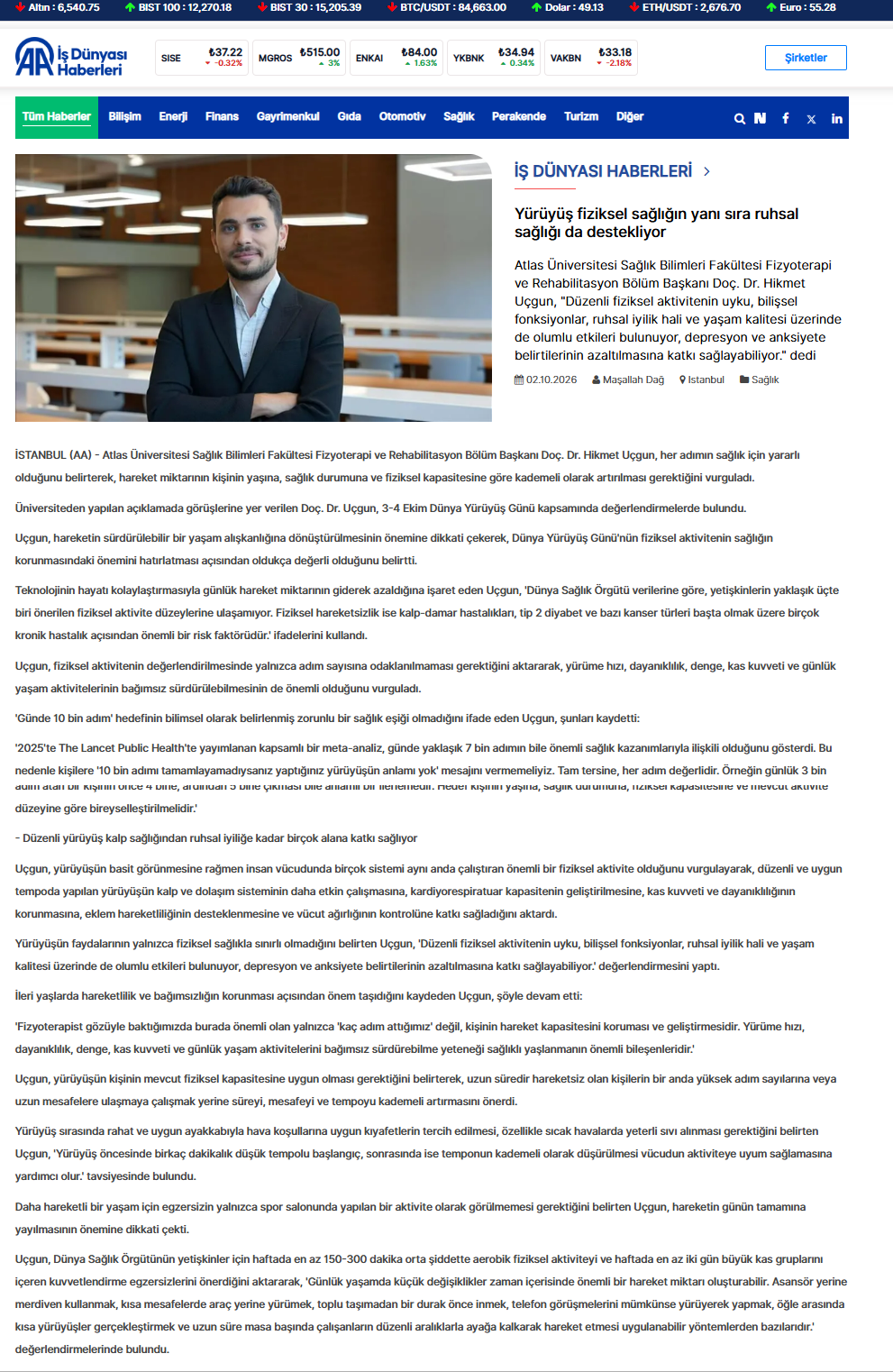
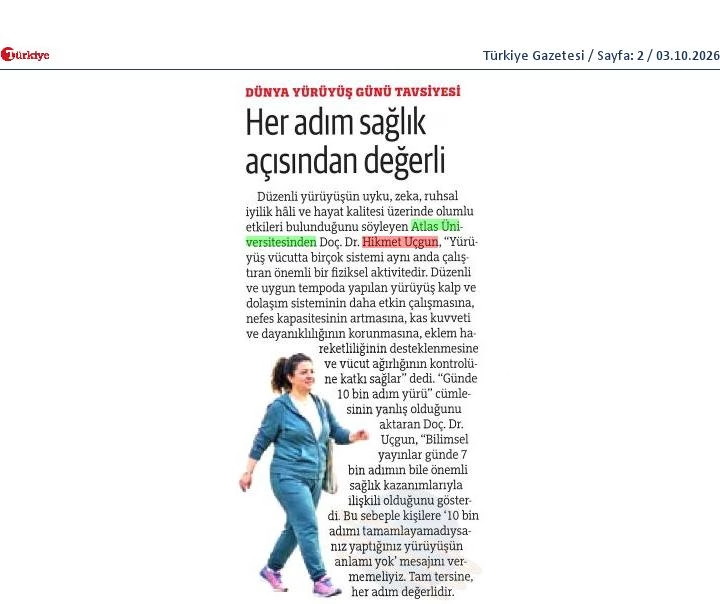
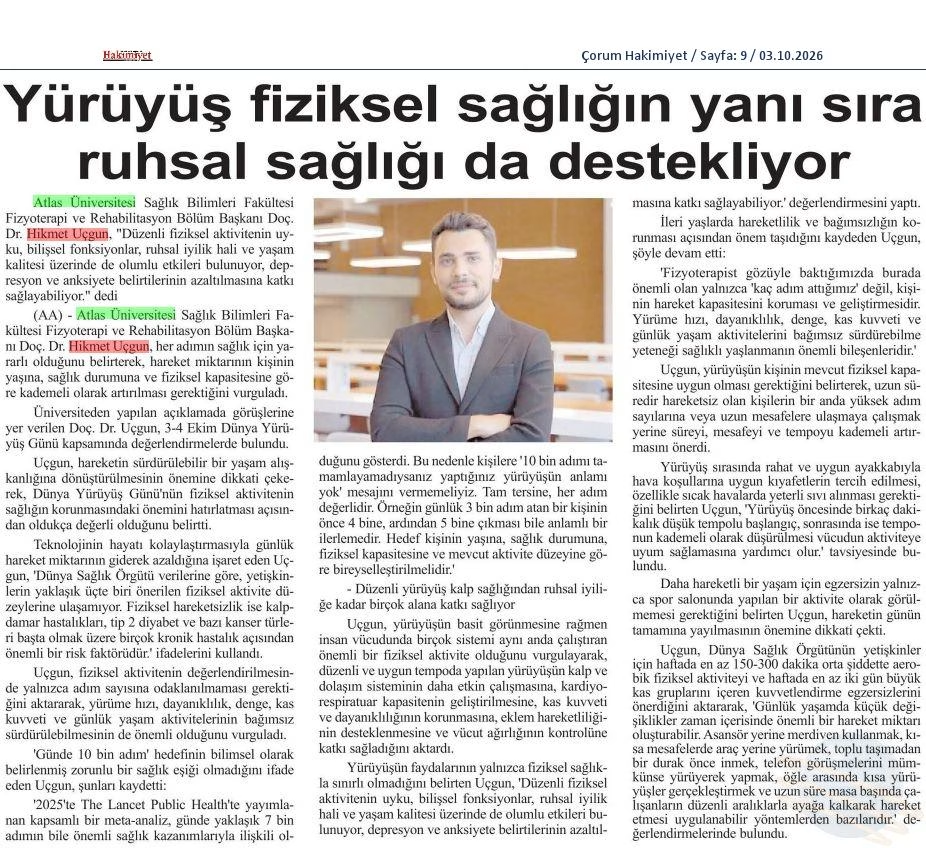


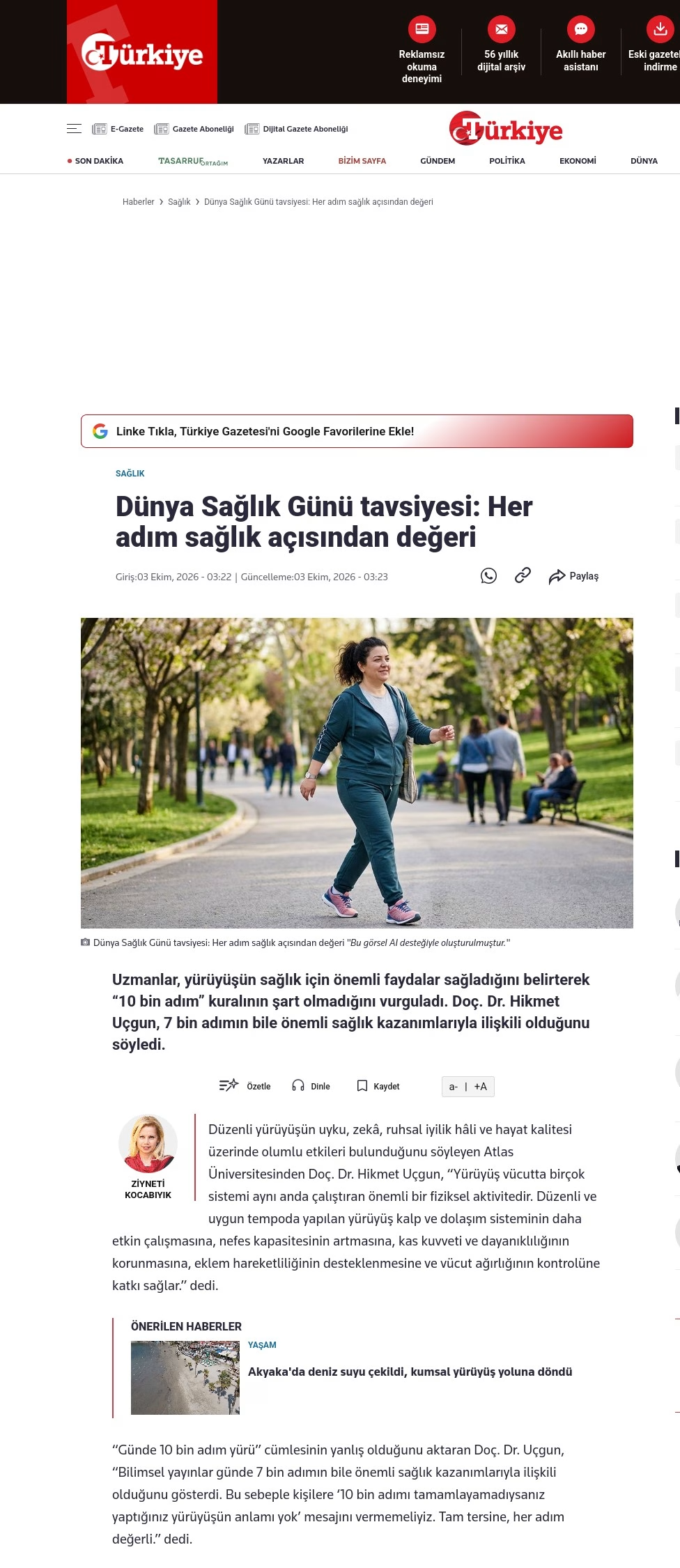
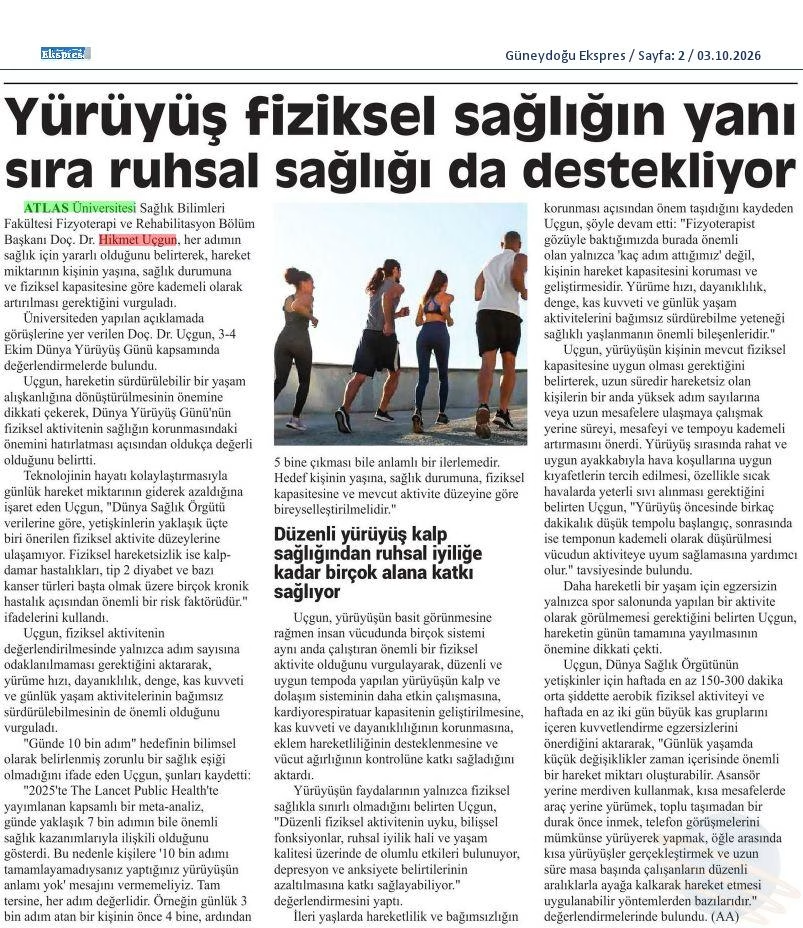

Associate Professor Dr. Hikmet Uçgun, Head of the Physiotherapy and Rehabilitation Department at Atlas University Faculty of Health Sciences, stated that World Walking Day on October 3-4 should not be seen merely as an opportunity to walk more for two days, but rather as an important step towards transforming physical activity into a sustainable lifestyle habit.
Why is World Walking Day important?
Associate Professor Dr. Hikmet Uçgun stated that World Walking Day is very valuable in reminding us of the importance of physical activity in maintaining health, and made the following assessments:
“Nowadays, with technology making our lives easier, our daily physical activity is decreasing, and we are spending more and more time sitting. According to World Health Organization data, approximately one-third of adults do not reach the recommended levels of physical activity. Physical inactivity is a significant risk factor for many chronic diseases, including cardiovascular diseases, type 2 diabetes, and some types of cancer.”
One of the most important advantages of walking is its accessibility. It can be incorporated into daily life for almost any age group without the need for special facilities or expensive equipment. Therefore, World Walking Day should not be seen merely as an awareness day where we walk more for two days, but as a starting point for making movement a natural part of our lives.”
It's not just the number of steps we take that matters...
From a physiotherapy and rehabilitation perspective, assessing physical activity should not focus solely on step count. Walking speed, endurance, balance, muscle strength, and the ability to perform daily living activities independently are also important.
"In terms of healthy aging, preserving and, as much as possible, improving a person's mobility capacity should be one of the fundamental goals."
Are 10 Steps Really Necessary?
Associate Professor Dr. Hikmet Uçgun stated that the widely accepted goal of "10 steps a day" is not a scientifically determined mandatory health threshold, and that this number dates back to a pedometer marketed in Japan in the 1960s, whose name roughly means "10 steps meter."
Every Step Counts
Associate Professor Dr. Hikmet Uçgun continued as follows:
“Indeed, a comprehensive meta-analysis published in The Lancet Public Health in 2025 showed that even approximately 7 steps a day are associated with significant health benefits. Therefore, we shouldn't give people the message that 'your walk is meaningless if you can't complete 10 steps.' On the contrary, every step is valuable. For example, even for someone who takes 3 steps a day, increasing it to 4 and then 5 is a meaningful step forward. The goal should be individualized according to the person's age, health status, physical capacity, and current activity level.”
Regular walking contributes to many areas, from heart health to mental well-being.
Although walking seems simple, it is an important physical activity that engages many systems in our body simultaneously. Regular walking at an appropriate pace contributes to more efficient cardiovascular system function, improves cardiorespiratory capacity, maintains muscle strength and endurance, supports joint mobility, and helps control body weight.
Furthermore, the benefits of walking are not limited to physical health. Regular physical activity also has positive effects on sleep, cognitive function, mental well-being, and quality of life; it can contribute to reducing symptoms of depression and anxiety.
In older age, maintaining mobility and independence is also of particular importance. From a physiotherapist's perspective, what matters here is not just "how many steps we take," but maintaining and improving one's mobility capacity. Walking speed, endurance, balance, muscle strength, and the ability to independently perform daily living activities are important components of healthy aging.
What should be considered while walking?
Associate Professor Dr. Hikmet Uçgun emphasized that walking, like other exercises, should be appropriate to a person's current physical capacity.
"We recommend that people, especially those who have been inactive for a long time, gradually increase the duration, distance, and pace instead of trying to reach high step counts or long distances all at once," he said.
Associate Professor Dr. Hikmet Uçgun also listed the things to pay attention to during the walk:
- Comfortable and suitable shoes should be chosen for walking.
- Clothing suitable for the weather conditions should be worn, and
- Adequate fluid intake is especially important in hot weather.
- Starting with a few minutes of low-intensity exercise before the walk, followed by gradually reducing the pace, helps the body adapt to the activity.
Speech Test for Moderate Intensity Walking
A practical "talk test" can be used to assess moderate walking intensity. If a person can talk while walking but has some difficulty maintaining a long, relaxed conversation, they are generally at a moderate activity level.
Special circumstances should be assessed on an individual basis.
Associate Professor Dr. Hikmet Uçgun stated that some situations should be evaluated on an individual basis, and said the following:
- Those with cardiovascular or respiratory system disease,
- Someone who has balance problems,
- Individuals with serious musculoskeletal conditions or those who have been physically inactive for a long time require individual assessment of their exercise programs.
- If symptoms such as chest pain, unusual shortness of breath, dizziness, or feeling faint occur during the walk, the activity should be stopped and a necessary medical assessment should be sought.
Exercise for at least 150 minutes a week for a healthy life.
Associate Professor Dr. Hikmet Uçgun stated that for a more active life, exercise should not be seen as an activity only done in the gym, and emphasized the importance of spreading movement throughout the entire day.
Pay attention to these tips for a more active life!
Uçgun noted that the World Health Organization recommends at least 150–300 minutes of moderate-intensity aerobic physical activity per week for adults, and at least two days a week of strength training exercises involving large muscle groups, and said the following:
“He also particularly emphasizes reducing the amount of time spent sedentary. Small changes in daily life can create a significant amount of movement over time. Using the stairs instead of the elevator, walking instead of driving short distances, getting off public transport one stop earlier, making phone calls while walking if possible, taking short walks during lunch breaks, and those who work at a desk for long periods getting up and moving around at regular intervals are some of the feasible methods.”
The focus should be on the entire movement, not just the number of steps.
Furthermore, it's important not to focus solely on step count. Walking is a very valuable aerobic activity, but when considered alongside exercises that support strength, balance, and flexibility, it forms a more holistic approach. Maintaining muscle strength and balance, preventing falls, and ensuring independence in daily life are particularly important in older adults.”
Not "Complete 10 Steps," but "Move a Little More Today Than Yesterday."
Associate Professor Dr. Hikmet Uçgun concluded his remarks as follows:
“In society, there is sometimes an ‘all or nothing’ approach to physical activity. Instead of not exercising at all when there isn’t time for an hour of exercise, or considering walking insufficient when 10 steps cannot be reached, the focus should be on increasing the current level of activity.”
The message that should be conveyed on World Walking Day is this:
Not "complete 10 steps", "Move around a little more today than yesterday.”
Every step taken for health is invaluable. The important thing is for individuals to start in a way that suits their own capacity, gradually increase the amount of activity over time, and transform it from a goal of a few days into a sustainable lifestyle habit.”