










Pir Zengi emphasized that delays in the vaccination schedule should not be dismissed with the thought, "It's too late now," as the child grows older, adding, "Almost every missed vaccination can be completed with an appropriate catch-up schedule at a later age. School enrollment is a natural opportunity to review the vaccination record with the family doctor."
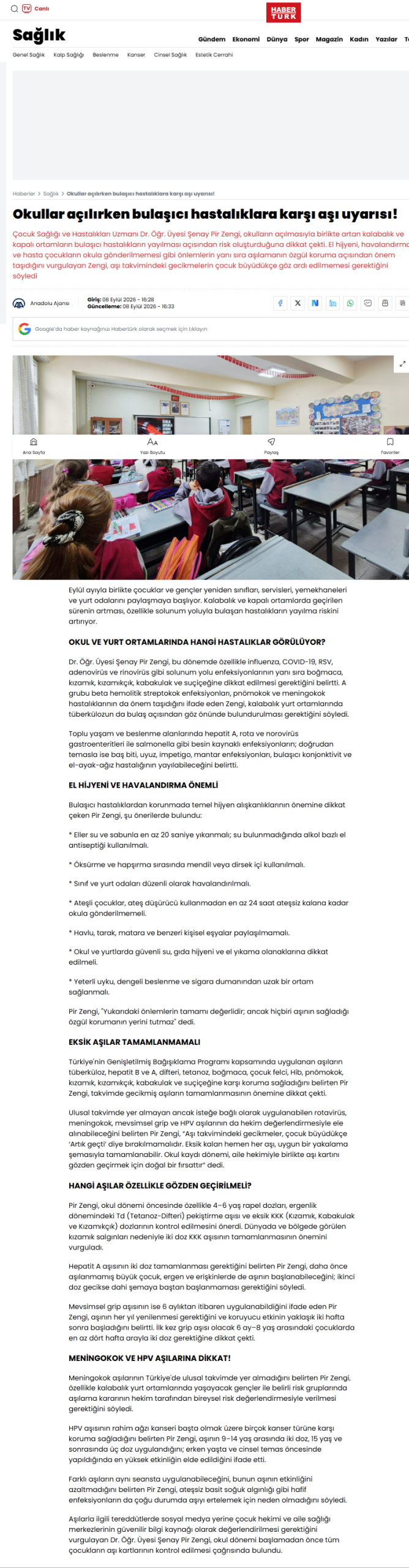
With the arrival of September, children and young people begin sharing the same classrooms, buses, cafeterias, and dormitory rooms again after months apart. Increased time spent in crowded, enclosed spaces, reduced ventilation, and the gathering of individuals from different cities pose a risk, particularly in terms of respiratory illnesses.
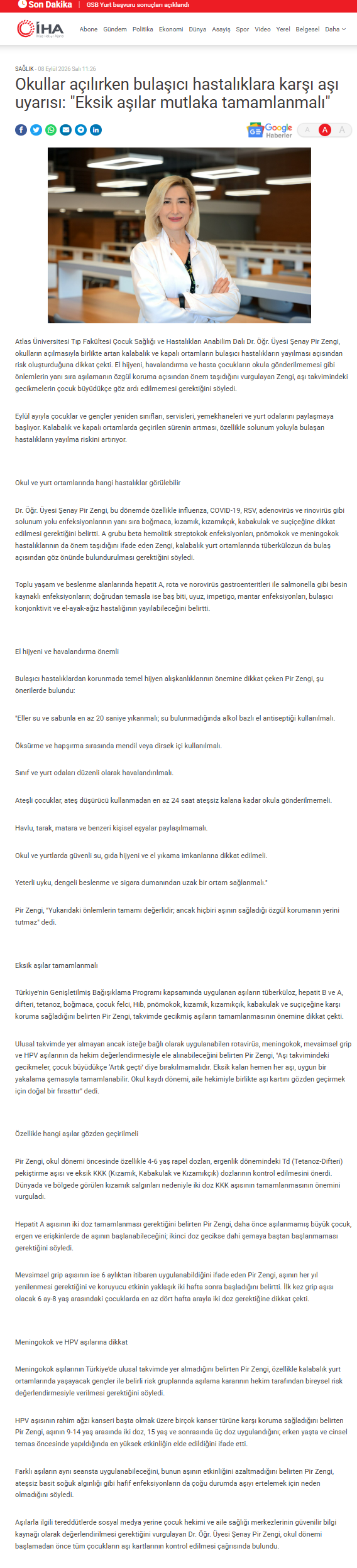
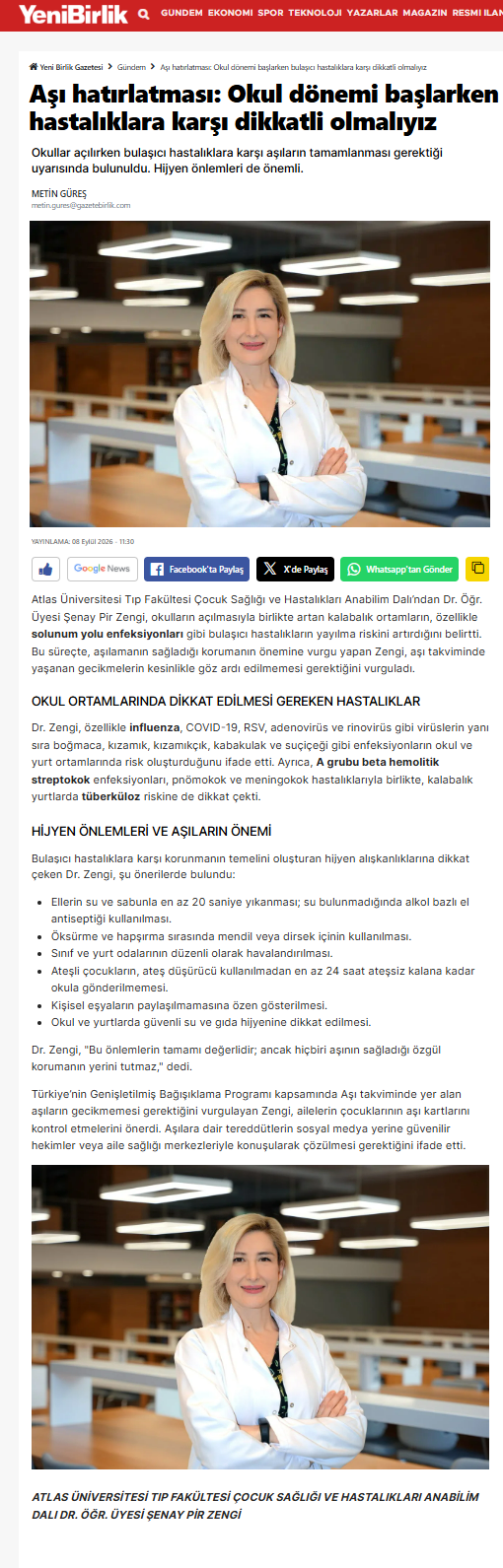
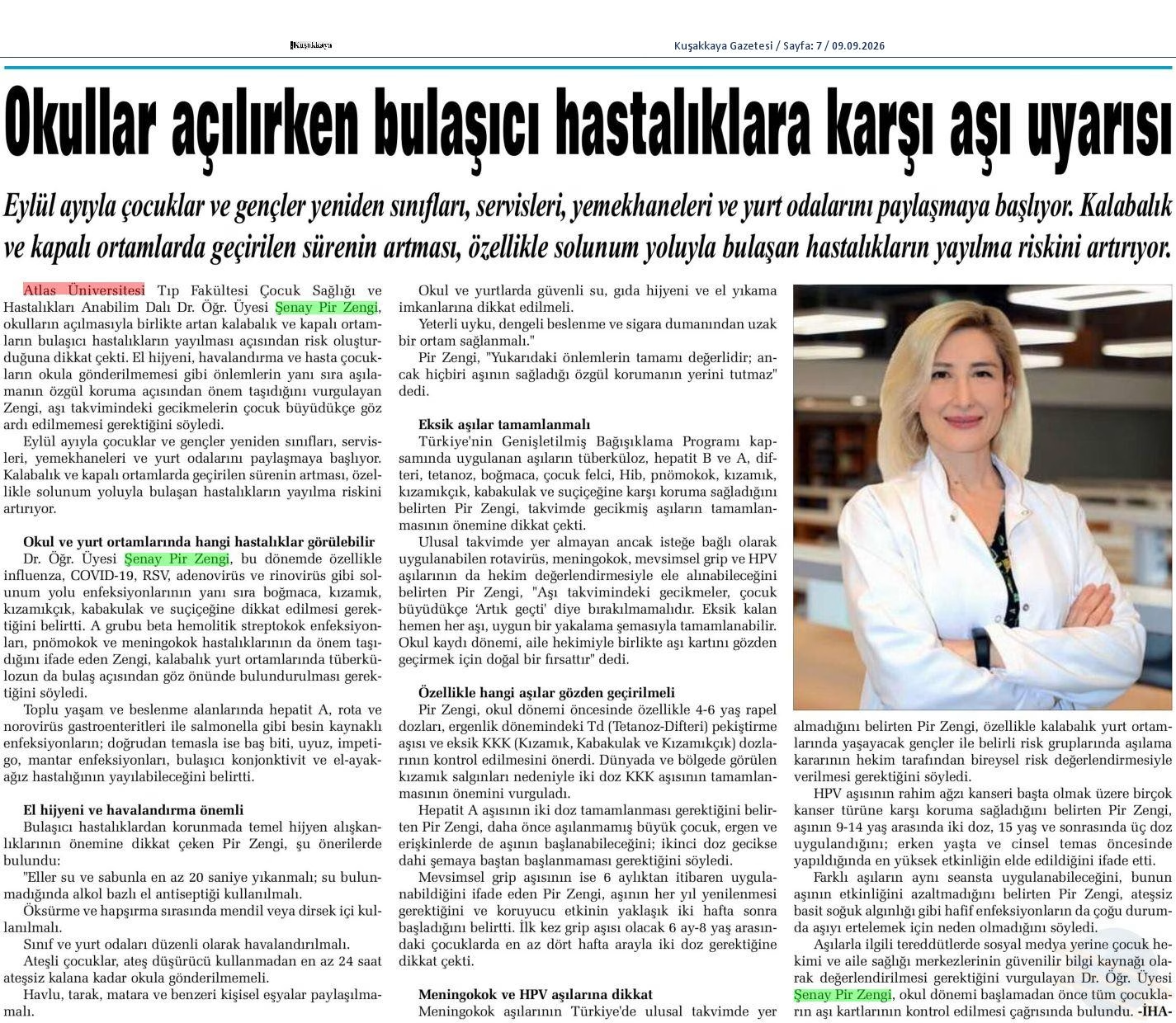
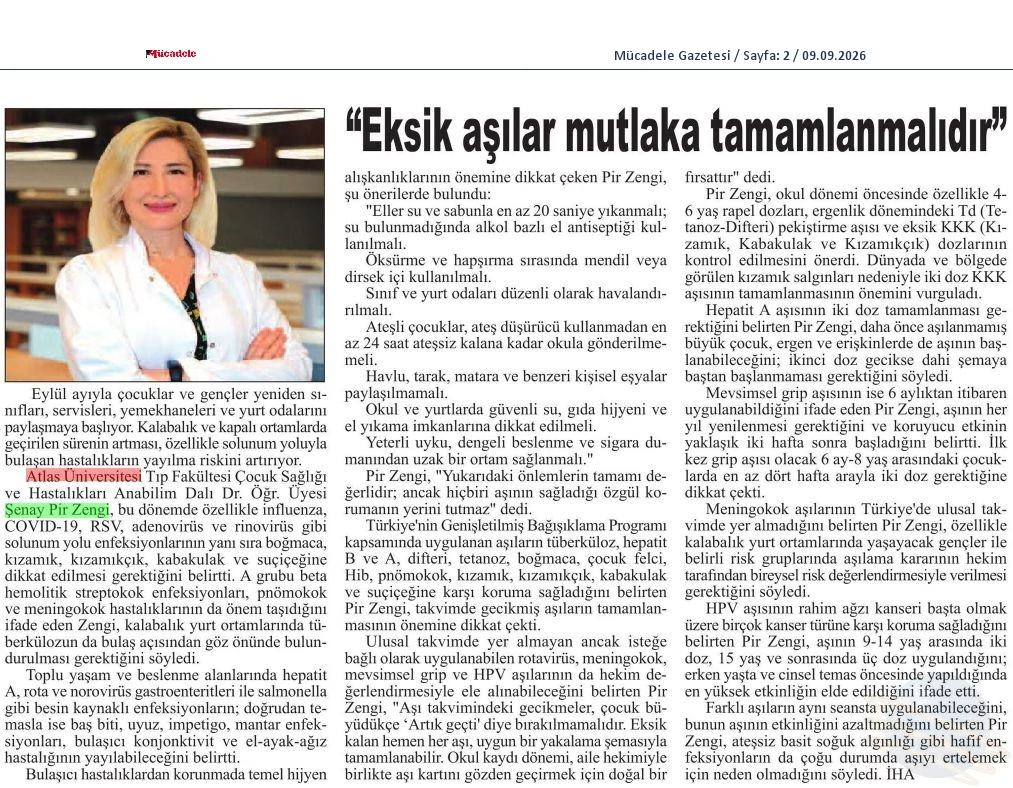
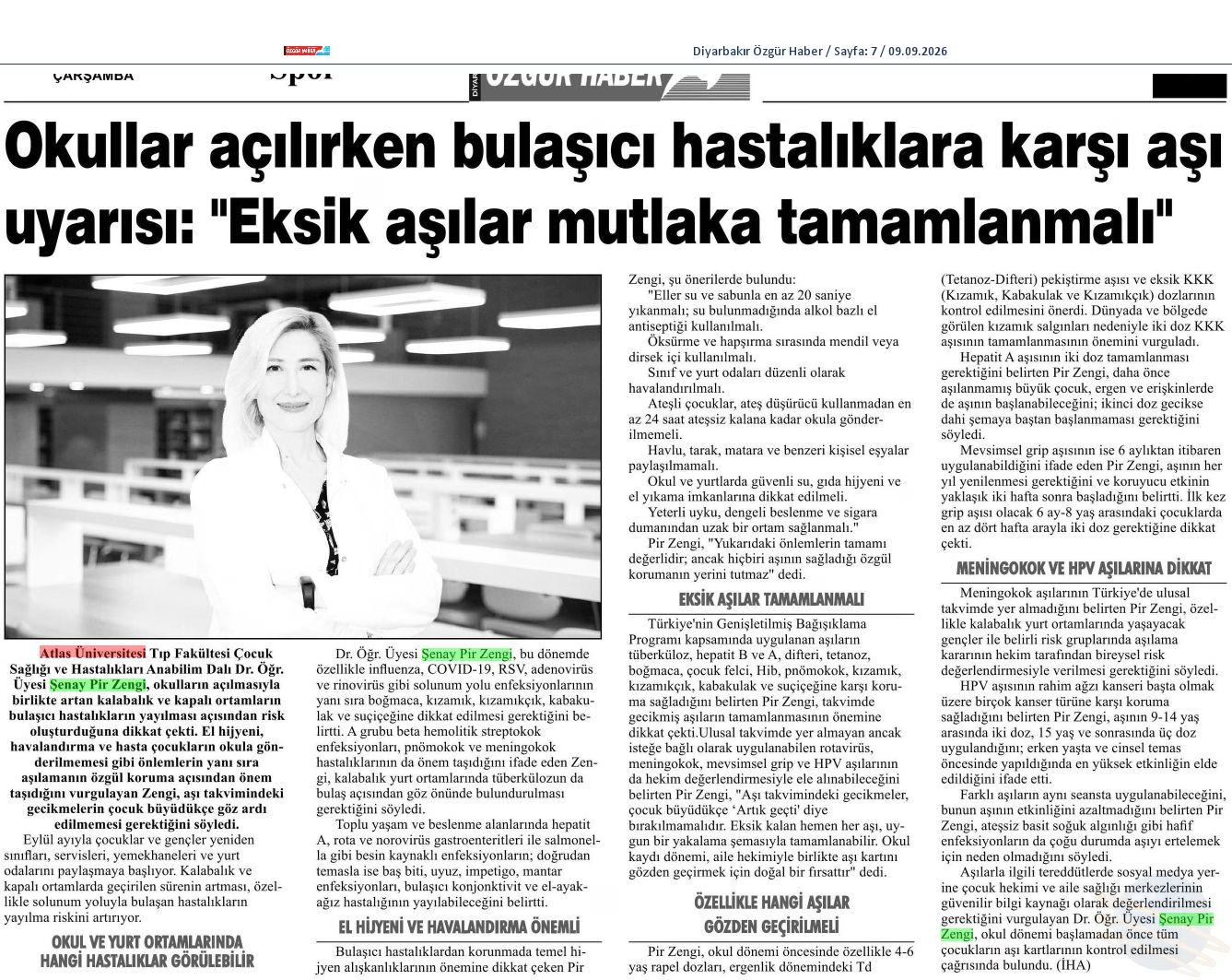
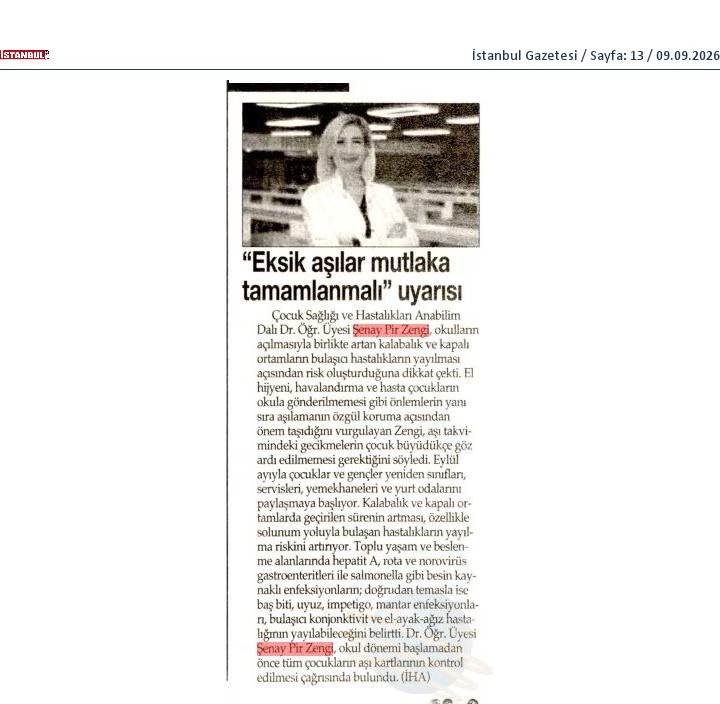
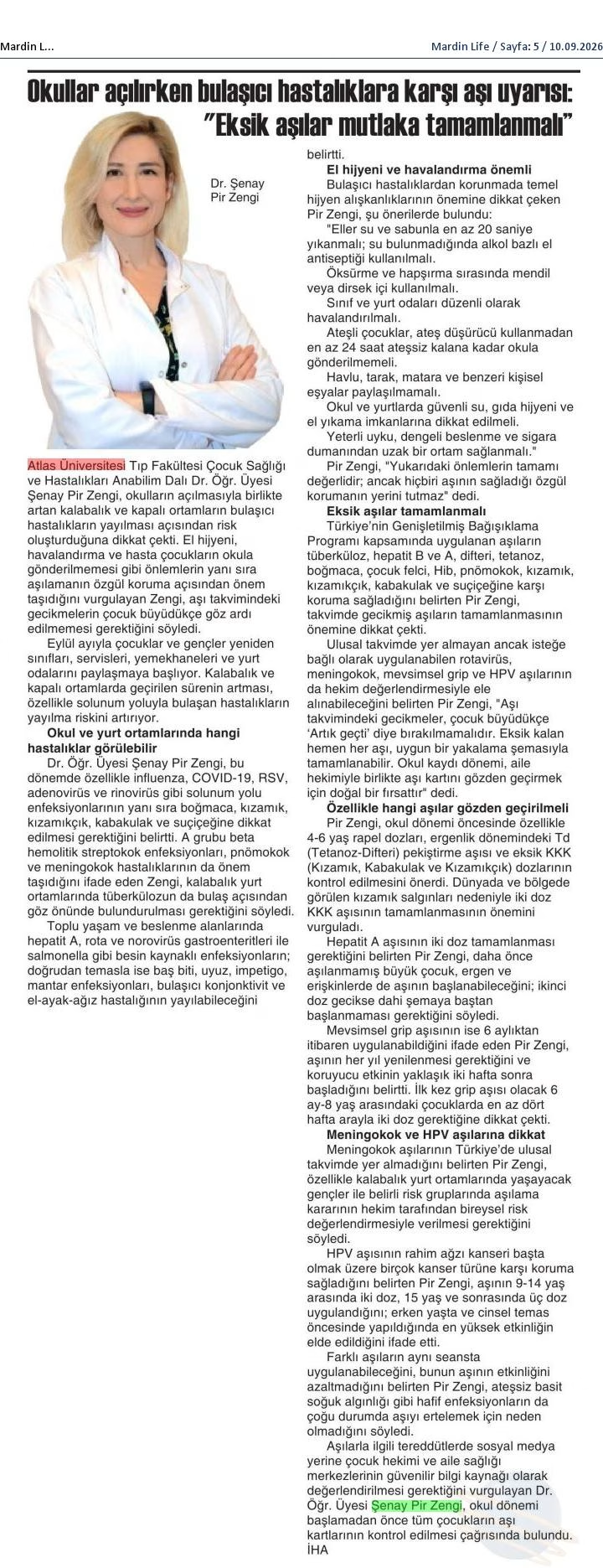
Dr. Şenay Pir Zengi, Assistant Professor at the Department of Pediatrics, Faculty of Medicine, Atlas University, drew attention to the precautions that can be taken to protect against infectious diseases and the importance of vaccination with the start of the school year.
What infectious diseases can be found in school and dormitory environments?
Dr. Şenay Pir Zengi, Assistant Professor, stated that respiratory illnesses have become more prominent with the opening of schools, and made the following assessments:
“Seasonal flu (influenza), COVID-19, RSV, adenovirus and rhinovirus infections; throat infections caused by group A beta-hemolytic streptococcus; whooping cough; measles, rubella, mumps and chickenpox are among the diseases that should be watched out for during this period.”
In addition to pneumococcal and meningococcal diseases, tuberculosis is also among the contagious diseases in crowded dormitory environments. Meningococcal disease, although rare, requires special attention because it can lead to meningitis and meningococcemia, conditions that can worsen within hours.
Fecal-oral transmitted diseases also pose a significant risk in communal living and eating environments. Hepatitis A, rotavirus and norovirus gastroenteritis, as well as salmonella and other foodborne infections, can spread rapidly in communal eating settings.
Diseases transmitted through direct contact include head lice, scabies, impetigo, fungal infections, contagious conjunctivitis, and hand-foot-mouth disease.
Hand hygiene and ventilation are important in reducing transmission.
Dr. Şenay Pir Zengi, Assistant Professor, stated that basic hygiene rules should become a part of daily life to protect against infectious diseases during the school year. Pir Zengi offered the following recommendations:
"Hand hygieneWashing hands with soap and water for at least 20 seconds is recommended; if water is not available, alcohol-based hand sanitizer should be used. Hand hygiene should become a habit, especially before meals, after using the toilet, and after returning from school.
Respiratory courtesyWhen coughing or sneezing, move your hand towards your elbow or a tissue, and immediately discard the used tissue.
VentilationRegular ventilation of classrooms and dorm rooms during breaks is also important. Ventilation significantly reduces droplet and aerosol concentration.
Sick children should not be sent to school.
Not sending a sick child to school: A child with a fever should be monitored at home until they are fever-free for at least 24 hours without taking fever reducers. This is one of the most effective measures for both the child's recovery and the protection of the classroom.
Not sharing personal belongings: Sharing towels, combs, water bottles, headphones, hats, and pillows are known ways for lice, fungal infections, and respiratory infections to spread.
Water and food security: Hygiene checks in dormitories and school canteens, as well as access to safe drinking water and handwashing facilities, are crucial in preventing Hepatitis A and gastroenteritis.
Being generally resilient: Sufficient sleep, a balanced diet, adequate vitamin D intake, and a smoke-free environment.
No precaution can replace the specific protection provided by a vaccine.
Vaccination: All of the above measures are valuable; however, none of them can replace the specific protection provided by a vaccine.
These diseases can be prevented with vaccines.
Dr. Şenay Pir Zengi, Assistant Professor, stated that the vaccines administered free of charge under Türkiye's Expanded Immunization Program provide protection against tuberculosis, hepatitis B, hepatitis A, diphtheria, tetanus, pertussis, polio, Haemophilus influenzae type b, pneumococcus, measles, rubella, mumps, and chickenpox.
The missing vaccinations must be completed.
Dr. Şenay Pir Zengi, Assistant Professor, continued as follows:
"Vaccines that are not included in the national schedule but are licensed and available on an optional basis include rotavirus, meningococcal (ACWY and B), seasonal influenza, and HPV vaccines."
There is one point I would like to emphasize here: Delays in the vaccination schedule should not be dismissed as "it's too late" as the child gets older. Almost any missed vaccinations can be completed later with an appropriate catch-up schedule. School enrollment is a natural opportunity to review the vaccination record with the family doctor.”
Attention to Risk Groups in Meningococcal Vaccine
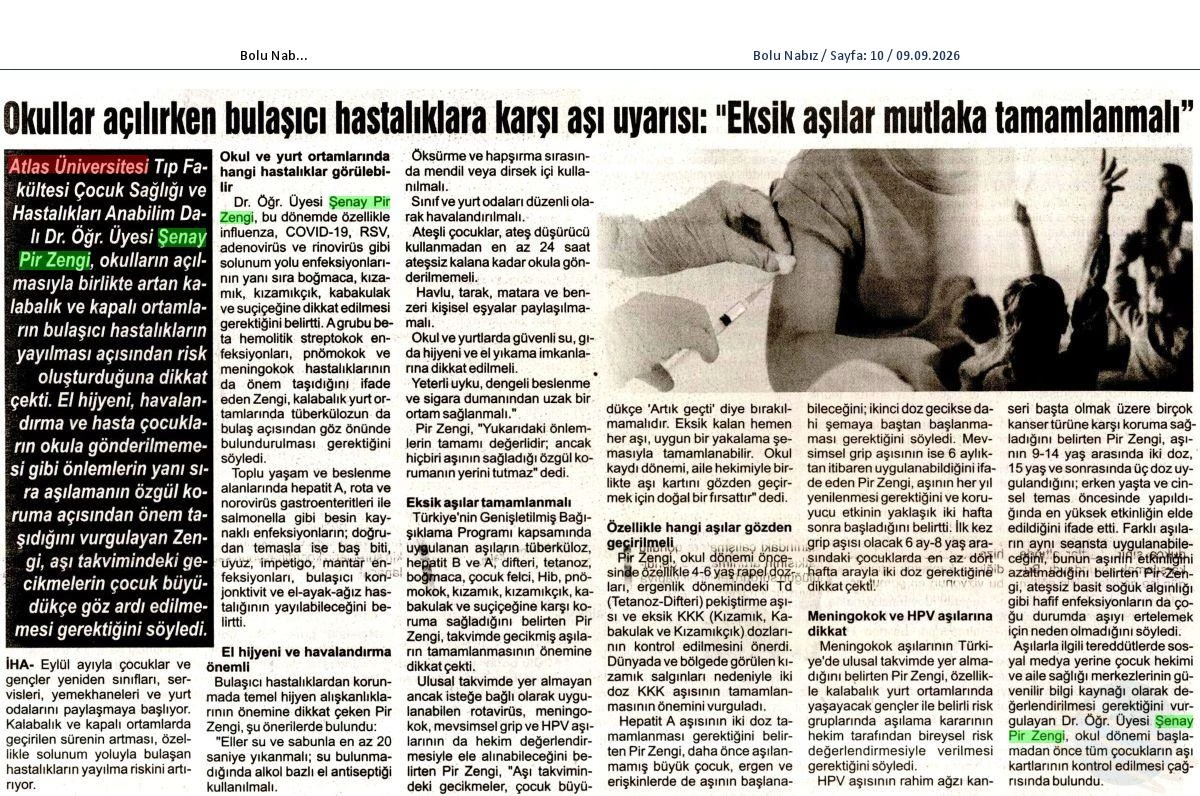
Dr. Şenay Pir Zengi, Assistant Professor, stated that meningococcal vaccines are not included in the national vaccination schedule in Türkiye, and that these vaccines can be administered optionally after a physician's evaluation.
MenACWY (conjugate quadrivalent vaccine)The commonly accepted regimen for adolescents is two doses: a first dose at 11–12 years old and a booster dose at 16 years old. If the first dose is given after the age of 16, a single dose is sufficient. If applied during infancy, the regimen varies depending on the product and the age of onset; this decision should be made in consultation with a pediatrician.
MenB (recombinant vaccine against serogroup B): In adolescents and young adults, it is usually administered in two doses; the interval between doses varies from at least 1 to 6 months depending on the product used.
Students who will stay in the dormitoryFor first-year university students who will be living in crowded environments such as barracks and student dormitories, and who have not been previously vaccinated or have incomplete vaccinations, a single dose of MenACWY vaccine and two doses of MenB vaccine are recommended. This increased risk is based particularly on epidemic data from Western countries and has not been shown to be equally relevant for our country; therefore, the application is not a routine requirement but a recommendation based on individual risk assessment. In addition, vaccination is explicitly recommended for individuals who have had their spleen removed, have complement deficiency, are living with HIV, relevant laboratory workers, and those traveling to Sub-Saharan Africa for Hajj/Umrah pilgrimages.
TimingFor a protective response to occur, it is advisable to administer the vaccine at least 2 weeks before arrival in the country.
Both doses of the Hepatitis A vaccine must be completed.
The Hepatitis A vaccine is administered in two doses at 18 and 24 months of age according to the national schedule. In older children, adolescents, and adults who have never received this vaccine, it can be started at any age after 12 months; immunity is completed with two doses at least 6 months apart. Completing these two doses is especially important for unvaccinated young people entering communal living spaces for the first time; even if the second dose is delayed, the vaccination schedule is not restarted from the beginning, but continues from where it left off.
The flu vaccine should be renewed every year.
The seasonal flu vaccine is recommended for everyone from 6 months of age who does not have a medical contraindication.
Priority groups include children with asthma, diabetes, heart and kidney disease, and immune deficiencies; pregnant women; individuals over 65 years of age; healthcare workers; and those living in the same household as babies under 6 months old.
Vaccines are not administered to babies under six months of age; these babies can only be protected if those around them are vaccinated. Because the influenza virus changes every year, the vaccine is also updated annually. Since protection begins approximately two weeks after vaccination, the ideal time is between late September and November. If this period is missed, getting vaccinated during the season is still worthwhile.
"For seasonal influenza vaccines, a single dose per year is sufficient for those aged 9 and over. For children aged 6 months to 8 years receiving their first influenza vaccine, two doses are required at least four weeks apart; in subsequent seasons, a single dose is administered. Requiring only one dose in this age group significantly reduces protection."
Vaccination records should be checked before school starts.
Dr. Şenay Pir Zengi, Assistant Professor, concluded her remarks by recommending that vaccination records be checked before the start of the school year.
"The vaccination card should be checked:" Before the start of the school year, especially booster doses for children aged 4-6, the Td (Tetanus-Diphtheria) booster vaccine during adolescence, and any missing MMR (Measles, Mumps, and Rubella) doses should be checked. Due to measles outbreaks seen worldwide and in the region, completing both doses of the MMR vaccine is important.
Don't miss out on the HPV vaccine: The HPV vaccine, which protects against many types of cancer, especially cervical cancer, is administered in two doses between the ages of 9 and 14, and in three doses from the age of 15 onwards. It is most effective when given at an early age, before sexual contact.
Vaccinations can be administered together on the same day: Administering different vaccines in the same session does not reduce effectiveness, does not significantly increase side effects, and increases the likelihood of completing the schedule by reducing the number of appointments.
Mild infections are not a barrier to vaccination: A simple cold without fever is not a reason to postpone vaccination. Unnecessary delays are the most common reason for forgetting about vaccination altogether.
The right source for addressing vaccine hesitancy: The claim that vaccines cause autism was refuted when the study on which it was based was retracted due to scientific fraud, and has been repeatedly disproven by studies involving millions of children since then. Questions about vaccines should be addressed to the child's doctor and family health center, not social media.”