





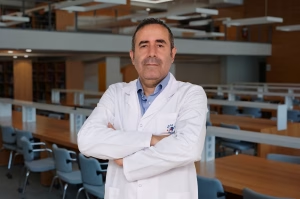




Dr. İlknur Yılmaz, Assistant Professor in the Department of Molecular Biology and Genetics (English) at Istanbul Atlas University's Faculty of Engineering and Natural Sciences, stated that the CRISPR gene editing method, which allows for extremely precise changes to be made to the DNA molecule inside the cell and can be described as a biological "genetic scissors," offers a ray of hope for the treatment of rare diseases, especially SMA.
Dr. İlknur Yılmaz, Assistant Professor in the Department of Molecular Biology and Genetics (English) at Istanbul Atlas University's Faculty of Engineering and Natural Sciences, made a statement on the occasion of World DNA Day on April 25th, which celebrates the discovery of DNA, the building block of life, evaluating the latest developments in the field of genetics and the groundbreaking CRISPR gene editing technology in the medical world:
Deciphering the structure of DNA has reshaped the foundations of modern medicine.
“DNA (Deoxyribonucleic Acid), in its most basic form, is the code of life and our biological alphabet. All the information needed for a living organism to form, grow, develop, and maintain its cellular functions is encoded within this enormous molecule. From our eye color to our height, from our susceptibility to diseases to our metabolic rate, all the characteristics that make us who we are are determined by DNA. Deciphering the structure of DNA has not only enabled humans to understand their own nature; it has also reshaped the foundations of biotechnology, pharmacology, and modern medicine, paving the way for us to intervene in diseases at the cellular level.”
DNA Analysis Plays a Vital Role
Dr. İlknur Yılmaz, Assistant Professor, noted that DNA-based studies are currently at the heart of the "personalized medicine" approach, stating, "Cancer research is the most striking example of this; by determining the genetic profile of the tumor, smart drugs that directly target cancerous cells are being developed. In addition, DNA analyses play a vital role in both the early diagnosis of hereditary diseases (such as cystic fibrosis, hemophilia, thalassemia), neurodegenerative diseases (Alzheimer's, Parkinson's), and cardiovascular disorders, as well as in taking preventive measures by determining genetic predispositions. Furthermore, in infection biology and vaccine technologies, especially recombinant vaccines, rapid solutions against global epidemics are being produced by directly utilizing our knowledge of DNA and RNA."
One of the Greatest Revolutions of the Century: CRISPR-Cas9 Technology
CRISPR-Cas9 technology is considered one of the greatest revolutions of this century in the scientific world. In its simplest terms, CRISPR is a biological "genetic scissors" that allows us to make extremely precise changes to the DNA molecule inside the cell. Developed by drawing inspiration from a natural defense mechanism that bacteria have developed against viruses, this method allows scientists to find a defective or diseased gene on DNA, cut out that region, or replace it with a healthy gene sequence. Its ability to perform operations much faster, cheaper, and more targeted (precision) than traditional genetic engineering methods makes CRISPR unique.
The Strongest Ray of Hope in Medicine's Hands
Dr. İlknur Yılmaz, Assistant Professor, noted that the CRISPR gene editing method offers a ray of hope for the treatment of rare diseases, especially SMA, and said, “The CRISPR gene editing method is the strongest ray of hope in medicine for the treatment of many rare genetic diseases, especially SMA (Spinal Muscular Atrophy). Approximately 80 percent of rare diseases are of genetic origin and are usually caused by a mutation (defect) in a single gene. While in the past only supportive treatments aimed at alleviating the symptoms of these diseases could be applied, thanks to CRISPR, the goal is to correct the root cause of the disease, that is, the faulty gene directly.”
It has the potential to provide lasting and definitive healing.
Dr. İlknur Yılmaz, Assistant Professor, stated that CRISPR-based clinical trials are rapidly progressing, especially in diseases such as sickle cell anemia, and added the following:
“We are even seeing that this treatment method has yielded successful results in humans for some blood diseases, and approval processes have begun. The greatest importance of these studies is that they have the potential to provide 'permanent and definitive cure' with a single intervention in genetics, freeing patients from lifelong, exhausting, and costly drug cycles. When integrated with identifying carrier parents and genetic screening at the embryo stage, CRISPR technology has the power to completely prevent the transmission of these diseases from generation to generation in the future.”
Positive Results Achieved in World's First CRISPR-Based Gene Therapy
The most concrete and historic example of this transformative power was recently seen in the world's first CRISPR-based gene therapy, approved by international health authorities (such as the FDA and MHRA). In these groundbreaking clinical trials conducted on patients with sickle cell anemia and beta-thalassemia (Mediterranean anemia), the patients' own stem cells, taken from their bone marrow, were edited in a laboratory setting using the CRISPR-Cas9 genetic scissors. This process eliminated the genetic inhibitory mechanism that prevented the cells from producing healthy 'fetal hemoglobin,' and the corrected cells were then transplanted back into the patients.
The results of the clinical trials were truly revolutionary for the medical world: almost all patients who had been condemned for years to severe pain crises (vaso-occlusive crises) requiring regular blood transfusions and hospitalization were completely cured of these crises and the need for blood transfusions after a single genetic intervention. This unprecedented success proved that breaking the lifelong cycle of disease by 'repairing' genetic defects at the cellular level is no longer science fiction, but a reality of modern medicine.
Studies on DMD have yielded positive results.
One of the most exciting examples of this revolutionary potential is the research on Duchenne Muscular Dystrophy (DMD), a disease that begins in childhood and leads to severe muscle wasting. DMD is caused by errors in the gene that codes for the 'dystrophin' protein, which provides muscle cell strength. In recent groundbreaking CRISPR studies conducted at leading international research centers, this faulty gene region that causes the disease has been directly intervened. Using CRISPR gene scissors, scientists have cut out the defective section of the DNA as if on a cutting board (exon skipping method) and corrected the gene's reading frame, enabling cells to produce functional dystrophin protein again. This method, successfully applied to diseased cell lines and advanced animal models, has been proven to prevent the loss of muscle strength that had stalled in heart and skeletal muscle function and to provide a dramatic improvement in muscle structure.”
These studies provide a promising foundation for clinical trials.
Dr. İlknur Yılmaz concluded her remarks by saying: “Although not yet widely used in human trials, these studies have laid a promising foundation for human clinical trials that aim to completely halt the disease by repairing the genetic root cause at the cellular level, rather than offering temporary solutions that slow the progression of the disease.”