







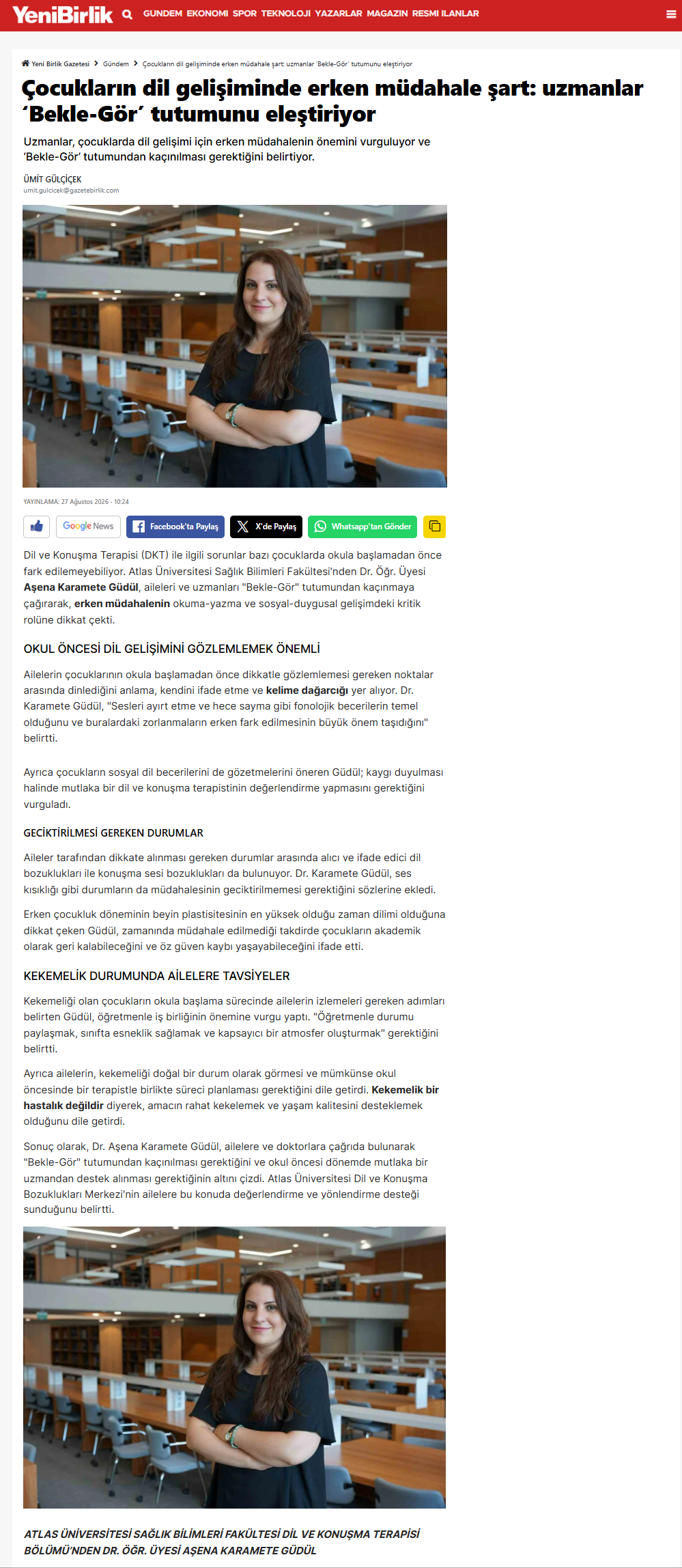
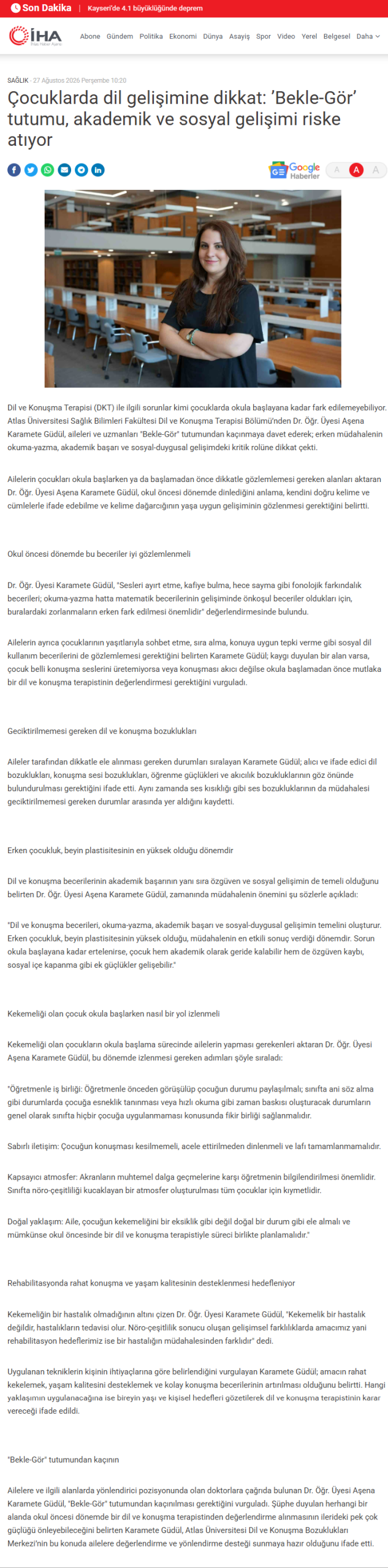

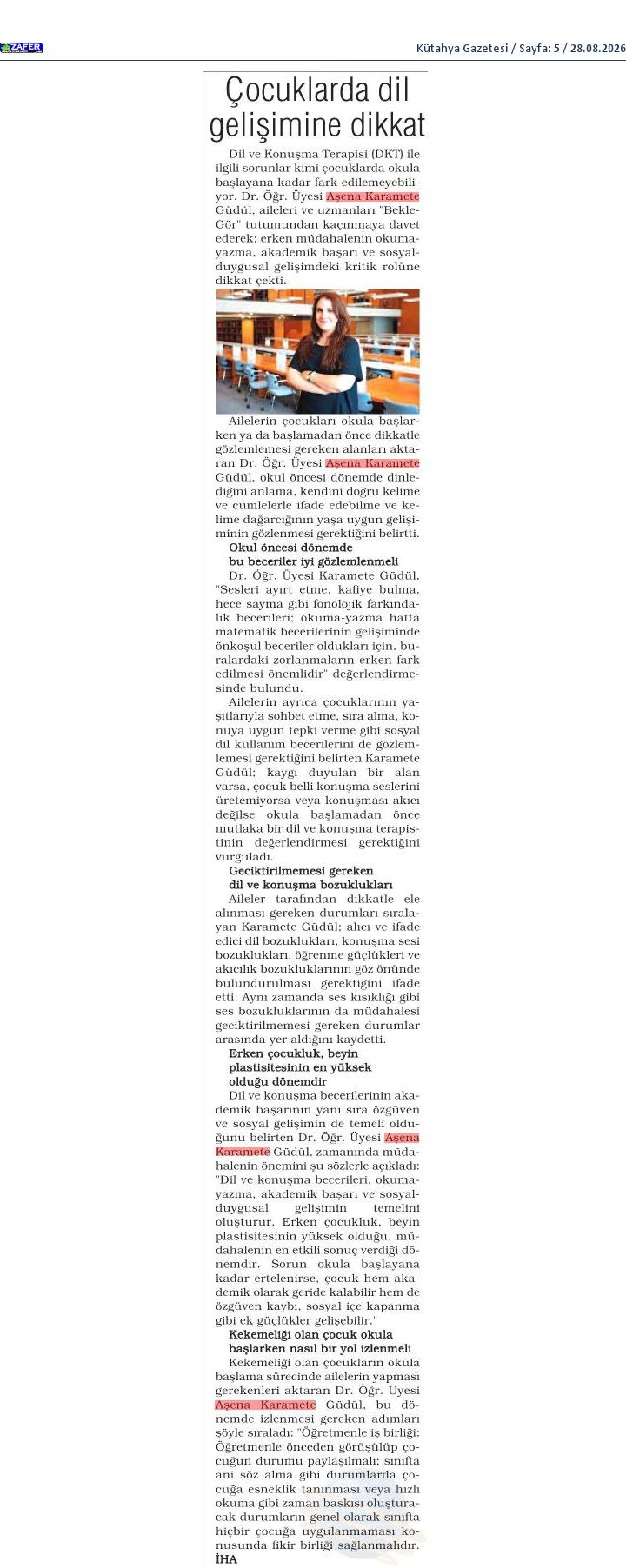
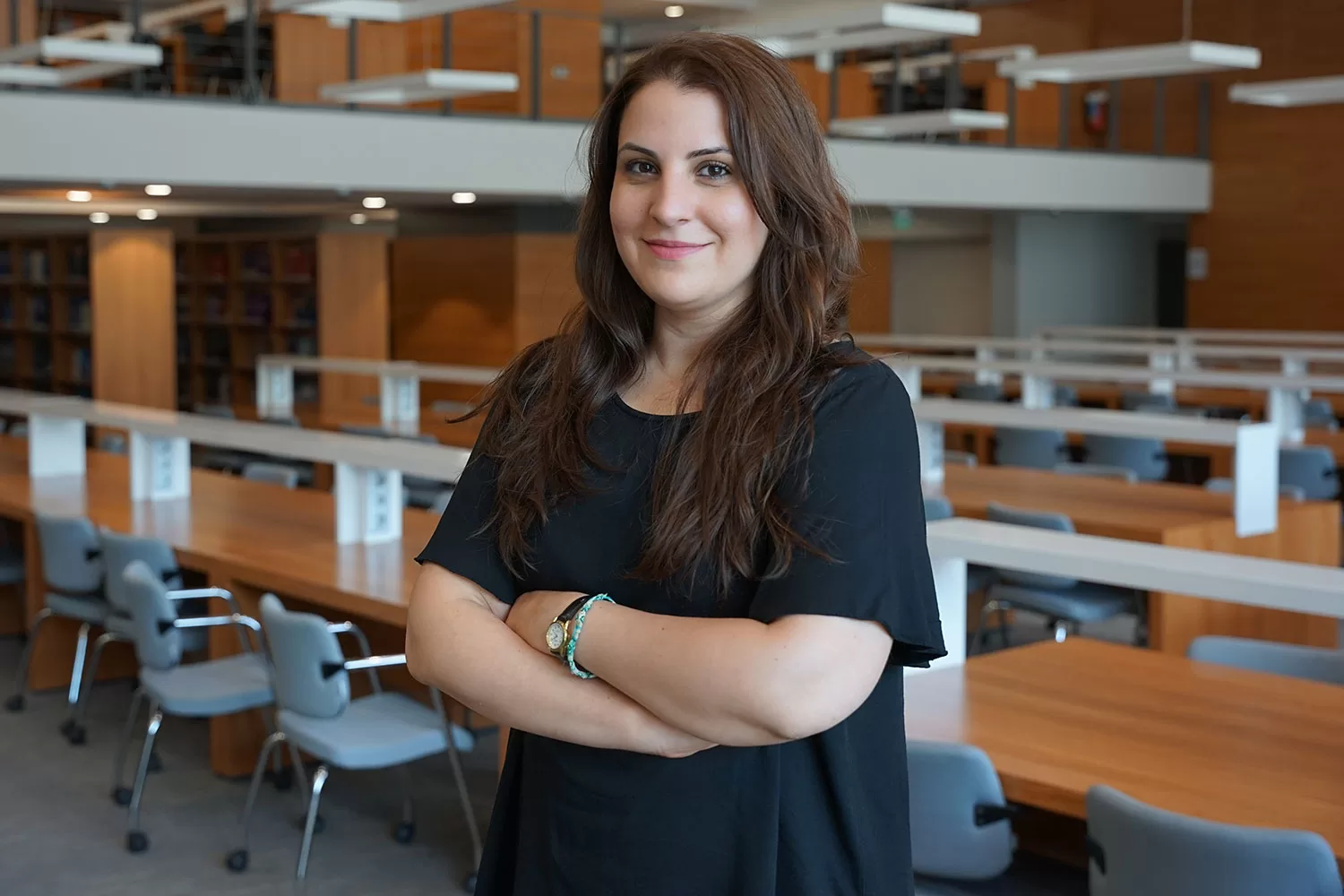
Dr. Aşena Karamete Güdül, Assistant Professor in the Department of Speech and Language Therapy at Atlas University Faculty of Health Sciences, stated that there are areas that families should carefully observe when their children start school or before they start.
Dr. Aşena Karamete Güdül, Assistant Professor, stated the following:
“In the preschool period, it is necessary to observe listening comprehension, the ability to express oneself with correct words and sentences, and the age-appropriate development of vocabulary.”
These skills should be carefully observed during the preschool period.
Phonological awareness skills, such as distinguishing sounds, finding rhymes, and counting syllables, are prerequisites for the development of reading, writing, and even mathematical skills; therefore, early identification of difficulties in these areas is important.
Families should also observe their children's social language skills, such as conversing with peers, taking turns, and responding appropriately to situations. If there is any concern, such as the child being unable to produce certain speech sounds or not speaking fluently, an evaluation by a speech and language therapist is absolutely necessary before starting school.
Attention to Speech and Language Disorders That Should Not Be Delayed
Here are some important issues that families should carefully consider: receptive and expressive language disorders, speech sound disorders, learning disabilities, and fluency disorders.
Voice disorders such as hoarseness should also be treated promptly.
Early childhood is the period when brain plasticity is at its highest.
Language and speech skills are fundamental not only to academic success but also to self-confidence and social development. Early and timely intervention is therefore of great importance.
Language and speech skills form the foundation of reading, writing, academic achievement, and social-emotional development. Early childhood is the period when brain plasticity is high and intervention yields the most effective results. If the problem is postponed until the child starts school, they may fall behind academically and develop additional difficulties such as loss of self-confidence and social withdrawal.
What approach should be taken when a child with a stutter starts school?
Dr. Aşena Karamete Güdül, Assistant Professor, explained what families should do during the school starting process for children with stuttering, listing the steps to be followed during this period as follows:
- Collaboration with the teacher: The teacher should be contacted beforehand to discuss the child's situation; a consensus should be reached on allowing flexibility for the child in situations such as unexpectedly asking to speak in class, or on generally avoiding time-pressured activities like speed reading for any child in the class.
- Patient communication: The child's speech should not be interrupted; it should be listened to without rushing, and their sentences should not be completed for them.
- Enveloping atmosphereIt is important to inform the teacher about potential peer bullying. Creating a neuro-diversity-embracing atmosphere in the classroom is valuable for all children.
- Natural approachFamilies should treat their child's stuttering as a natural condition rather than a deficiency, and if possible, plan the process together with a speech and language therapist before preschool.
The goal of rehabilitation is to support comfortable speech and improve quality of life.
Underlining that stuttering is not a disease, Assistant Professor Dr. Karamete Güdül stated the following:
“Stuttering is not a disease; diseases can be treated. However, in developmental differences resulting from neurodiversity, our goal—that is, our rehabilitation objectives—are different from interventions for a disease.”
The techniques used are determined according to the individual's needs. The goal is to facilitate comfortable stuttering, support quality of life, and improve easy speaking skills. The speech and language therapist will decide which approach to apply, taking into account the individual's age and personal goals.
Avoid a "wait-and-see" approach!
Dr. Aşena Karamete Güdül, Assistant Professor, appealed to families and doctors in relevant fields to "wait and see."" He concluded his remarks by emphasizing that such an attitude should be avoided:
“Receiving an assessment from a speech and language therapist in any area of concern during the preschool years can prevent many future difficulties. Atlas University Speech and Language Disorders Center is ready to offer assessment and referral support to families in this regard.”