



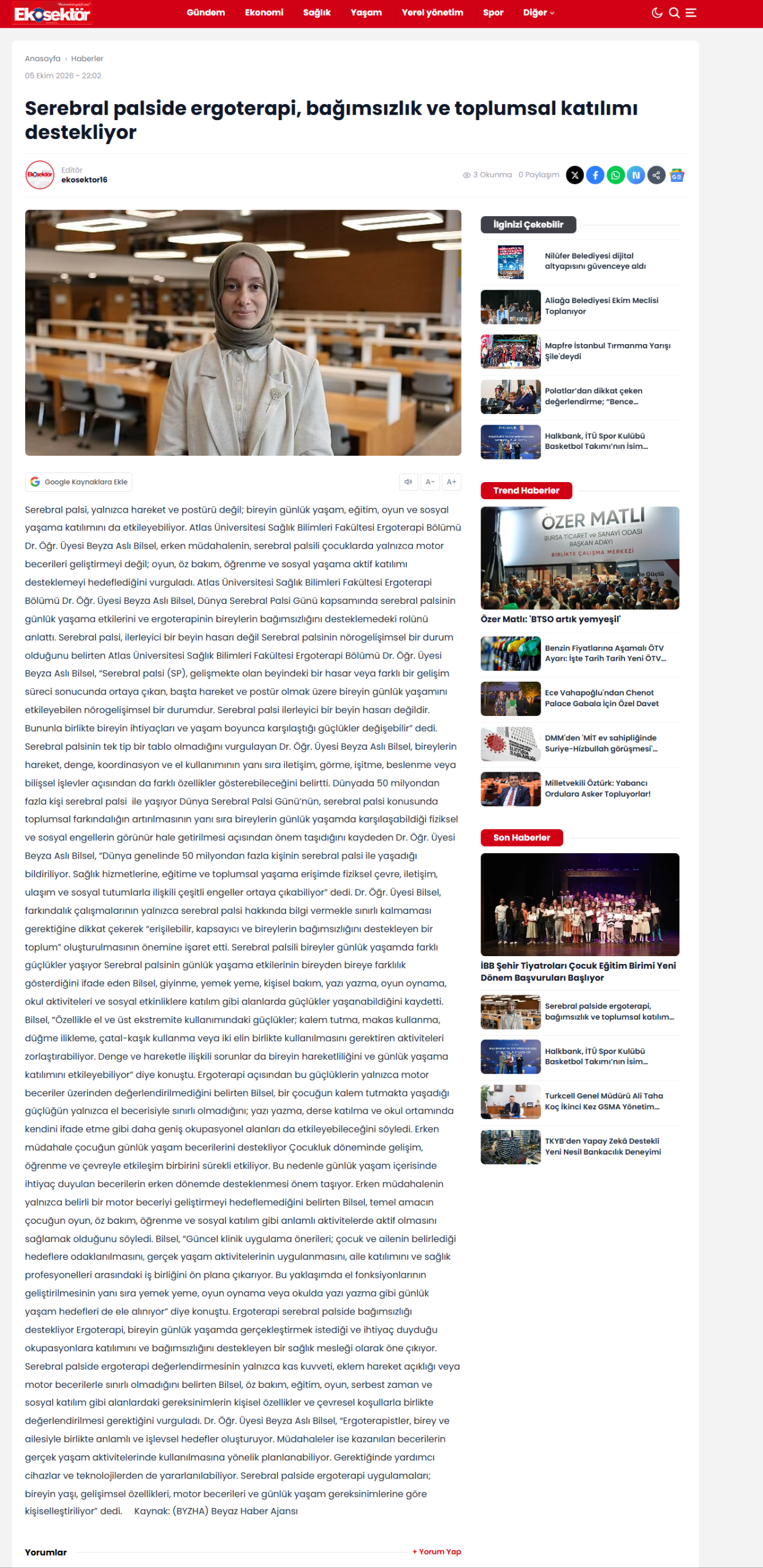
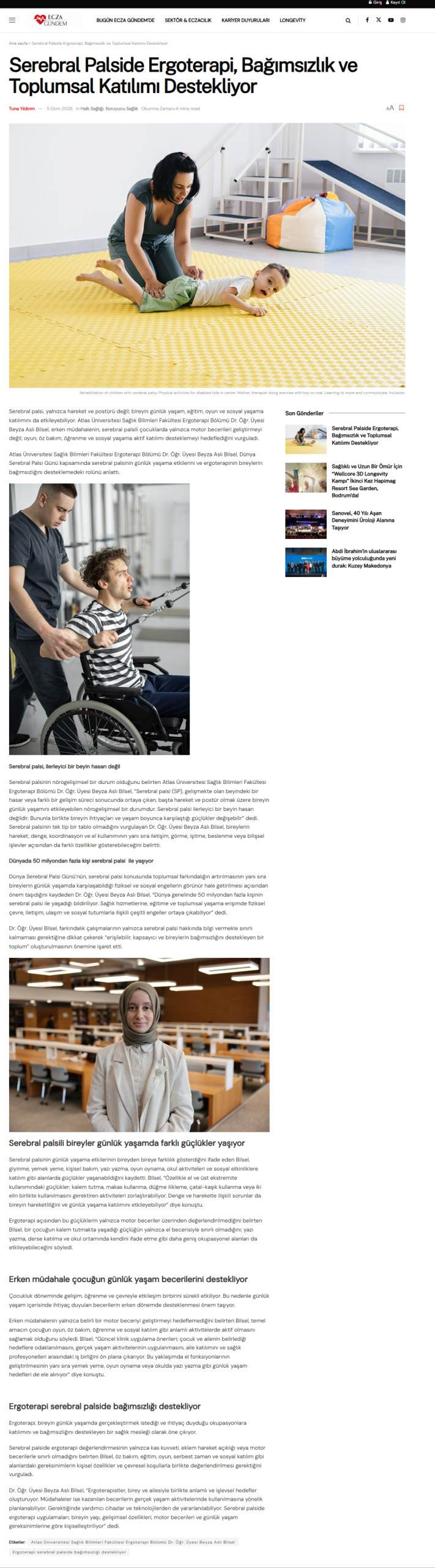
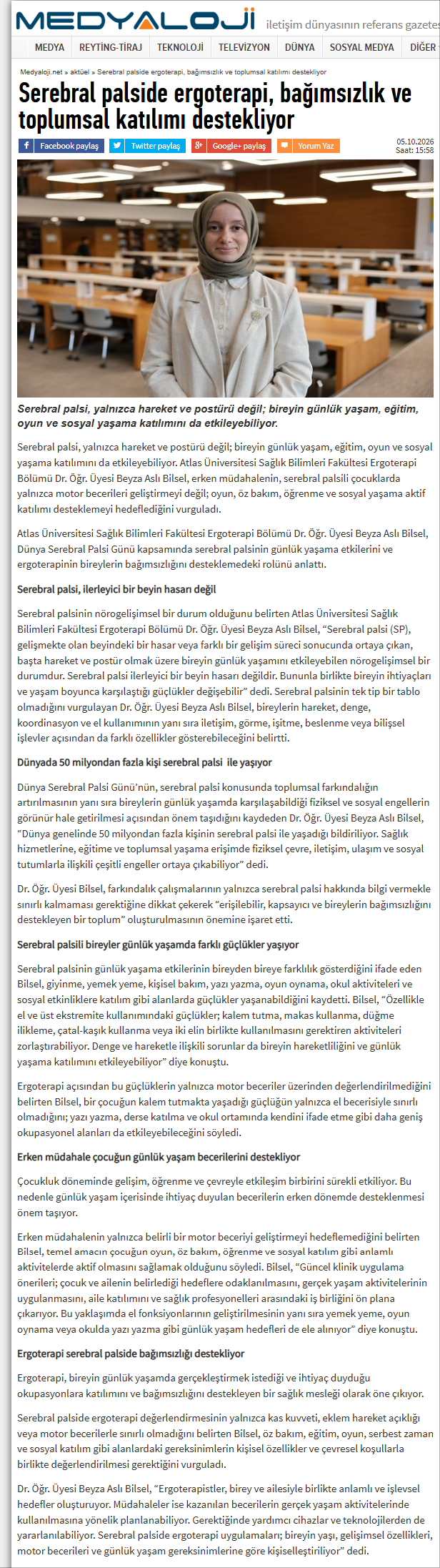
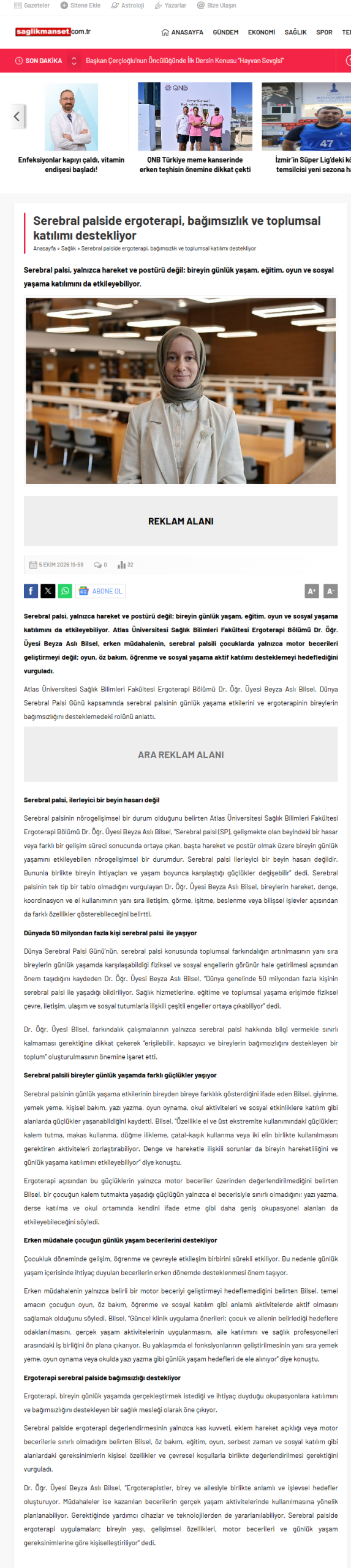
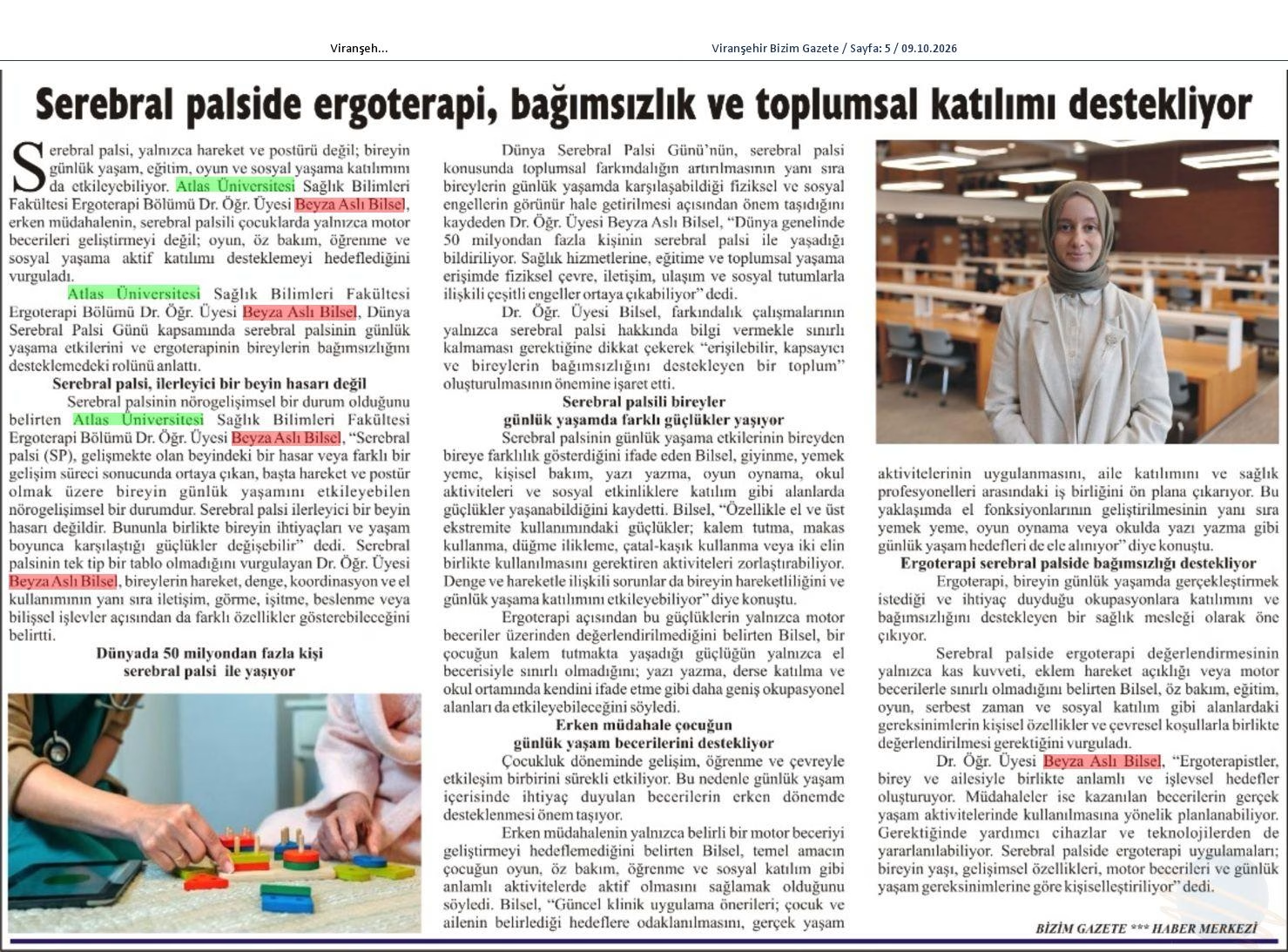
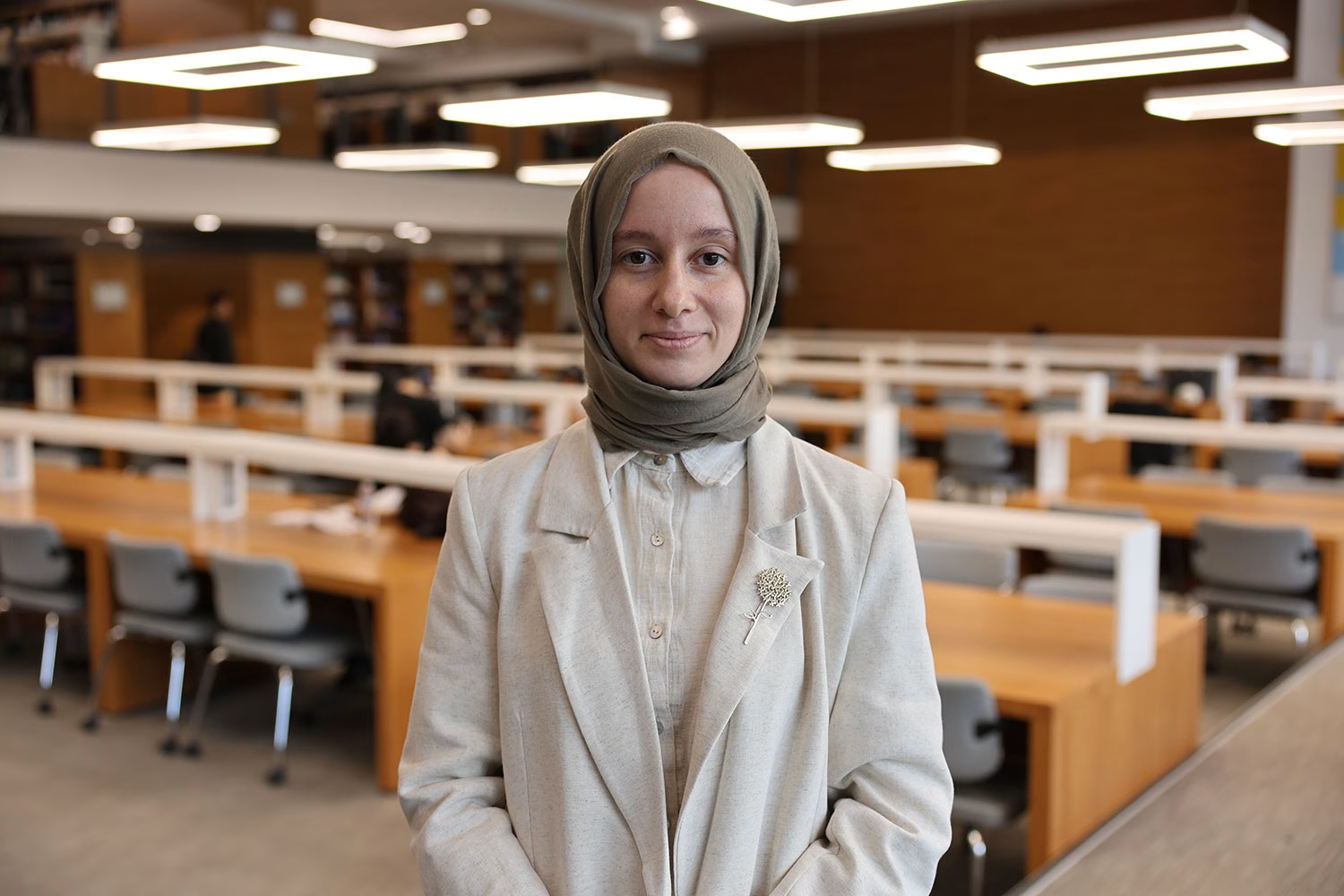
Dr. Beyza Aslı Bilsel, Assistant Professor in the Occupational Therapy Department of the Faculty of Health Sciences at Atlas University, spoke about the effects of cerebral palsy on daily life and the role of occupational therapy in supporting individuals' independence, as part of World Cerebral Palsy Day.
Cerebral palsy is not a progressive brain injury.
Dr. Beyza Aslı Bilsel, Assistant Professor, He made the following assessments:
“Cerebral palsy (CP) is a neurodevelopmental condition resulting from damage to the developing brain or an altered developmental process, which can affect an individual's daily life, primarily affecting movement and posture. Cerebral palsy is not a progressive brain injury. However, an individual's needs and the challenges they face throughout life may change.”
Emphasizing that cerebral palsy is not a single, uniform condition, Assistant Professor Beyza Aslı Bilsel stated that individuals may exhibit different characteristics in terms of movement, balance, coordination, and hand use, as well as communication, vision, hearing, nutrition, or cognitive functions.
More than 50 million people worldwide live with cerebral palsy.
Dr. Beyza Aslı Bilsel, Assistant Professor, noted that World Cerebral Palsy Day is important not only for raising public awareness about cerebral palsy but also for making visible the physical and social barriers that individuals may encounter in daily life, and said the following:
“It is reported that more than 50 million people worldwide live with cerebral palsy. Various barriers can arise in accessing healthcare, education, and social life, related to the physical environment, communication, transportation, and social attitudes. It is important that awareness campaigns go beyond simply providing information about cerebral palsy; they also aim to create an accessible, inclusive society that supports the independence of individuals.”
Individuals with Cerebral Palsy Experience Various Difficulties in Daily Life
The effects of cerebral palsy on daily life vary from person to person. Difficulties may arise in areas such as dressing, eating, personal hygiene, writing, playing, participating in school activities, and social events.
Difficulties, particularly those involving the use of the hands and upper extremities, can make activities such as holding a pen, using scissors, buttoning, using a fork and spoon, or those requiring the use of both hands simultaneously, difficult. Balance and movement-related problems can also affect an individual's mobility and participation in daily life.
From an occupational therapy perspective, these difficulties are not assessed solely through the lens of motor skills. A child's difficulty holding a pen is not limited to hand dexterity; it can also affect broader occupational areas such as writing, participating in class, and expressing oneself in a school environment.
Early intervention supports a child's daily living skills.
Development, learning, and interaction with the environment constantly influence each other during childhood. Therefore, supporting the development of skills needed in daily life at an early age is important.
Bilsel stated that early intervention does not only aim to improve a specific motor skill, but the main goal is to ensure that the child is active in meaningful activities such as play, self-care, learning, and social participation.
Dr. Beyza Aslı Bilsel, Assistant Professor, stated the following:
“Current clinical practice recommendations emphasize focusing on goals set by the child and family, implementing real-life activities, family involvement, and collaboration among healthcare professionals. This approach addresses not only the development of hand functions but also daily living goals such as eating, playing, or writing at school.”
Occupational Therapy Supports Independence in Cerebral Palsy
Occupational therapy stands out as a healthcare profession that supports individuals' participation in and independence from occupations they wish to perform and need in daily life.
Bilsel stated that occupational therapy assessment in cerebral palsy is not limited solely to muscle strength, range of motion, or motor skills, emphasizing that needs in areas such as self-care, education, play, leisure time, and social participation should be evaluated together with personal characteristics and environmental conditions.
Dr. Beyza Aslı Bilsel, Assistant Professor, concluded her remarks as follows:
“Occupational therapists work with the individual and their family to establish meaningful and functional goals. Interventions are planned to enable the use of acquired skills in real-life activities. Assistive devices and technologies can also be used when necessary. Occupational therapy applications in cerebral palsy are personalized according to the individual's age, developmental characteristics, motor skills, and daily living needs.”