






Industrialization, population growth, urbanization, and rapid increases in energy use are increasing pressure on natural resources; while overuse of water resources, alteration of watersheds, and destruction of natural ecosystems are making problems such as drought, irregular rainfall, and water pollution more visible.
The Importance of World Water Monitoring Day, September 18th
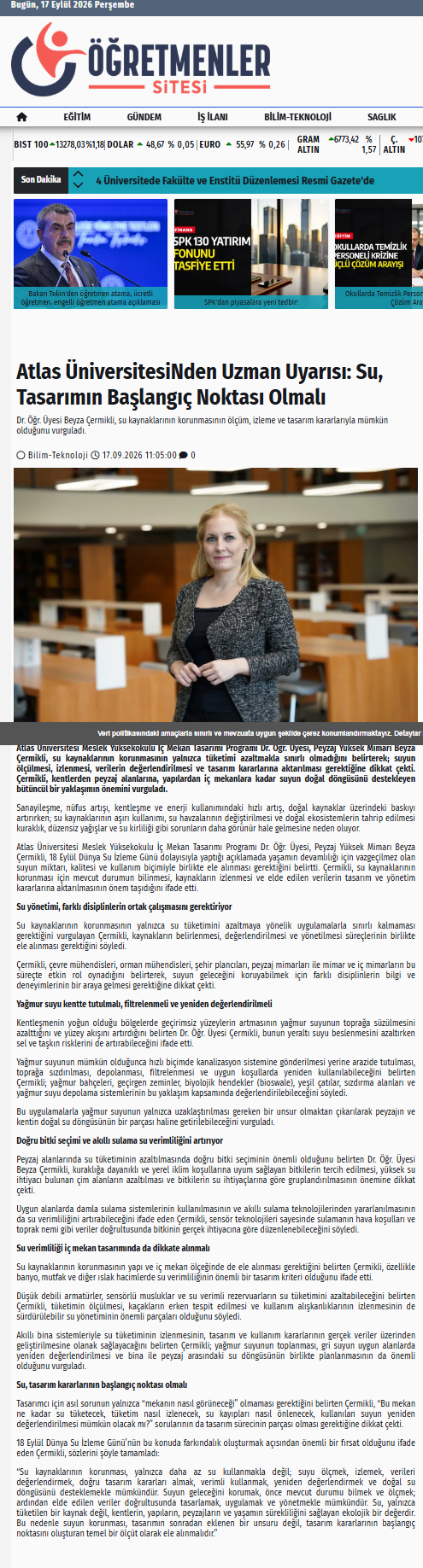
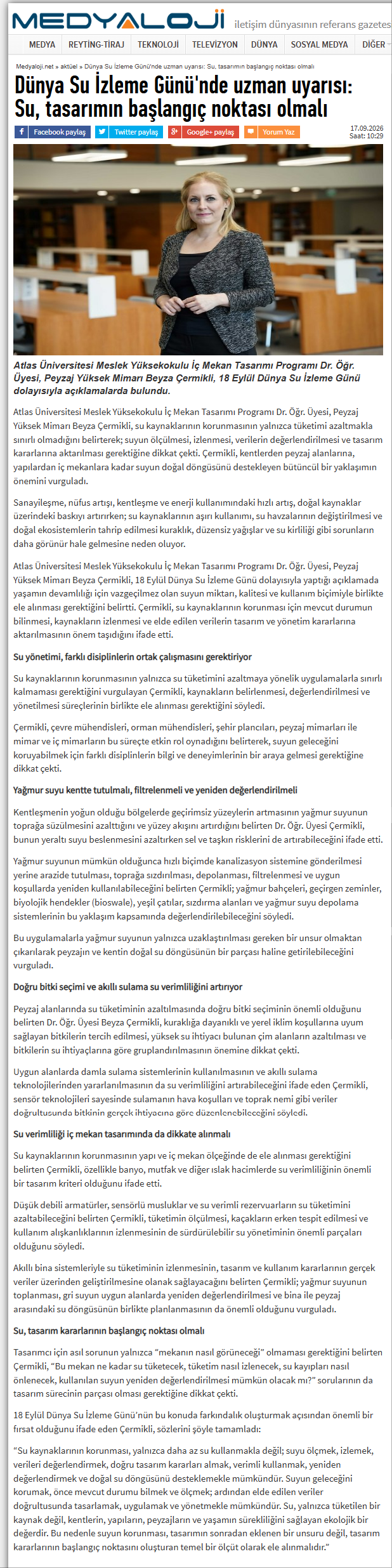
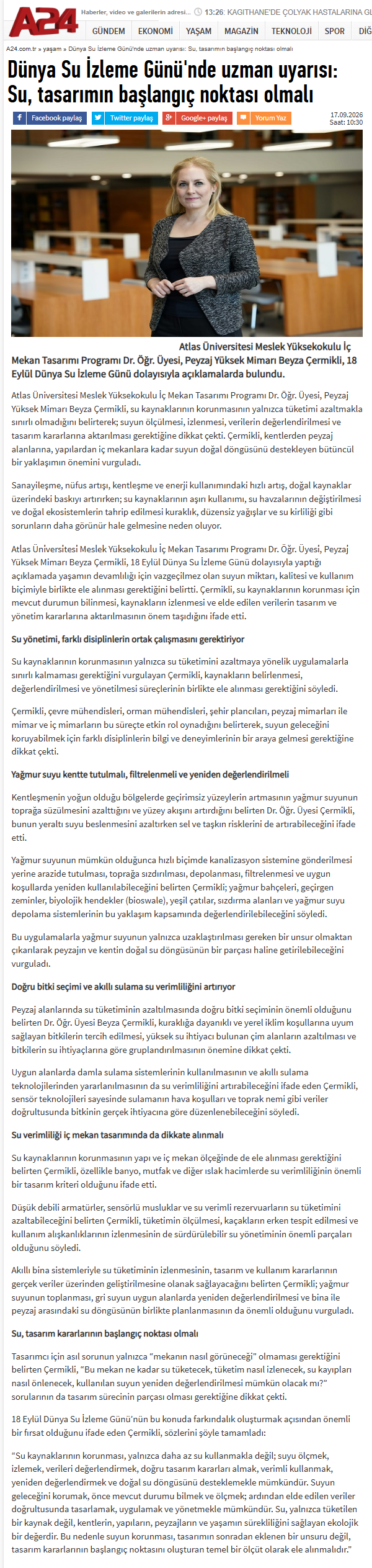
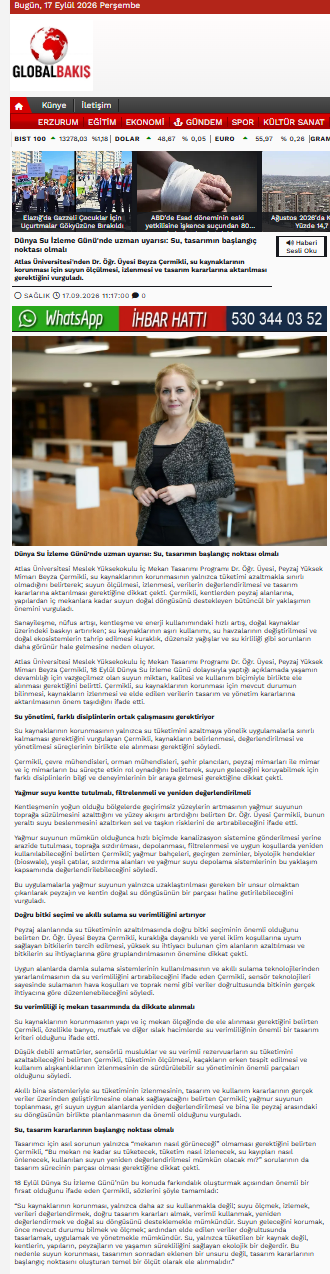
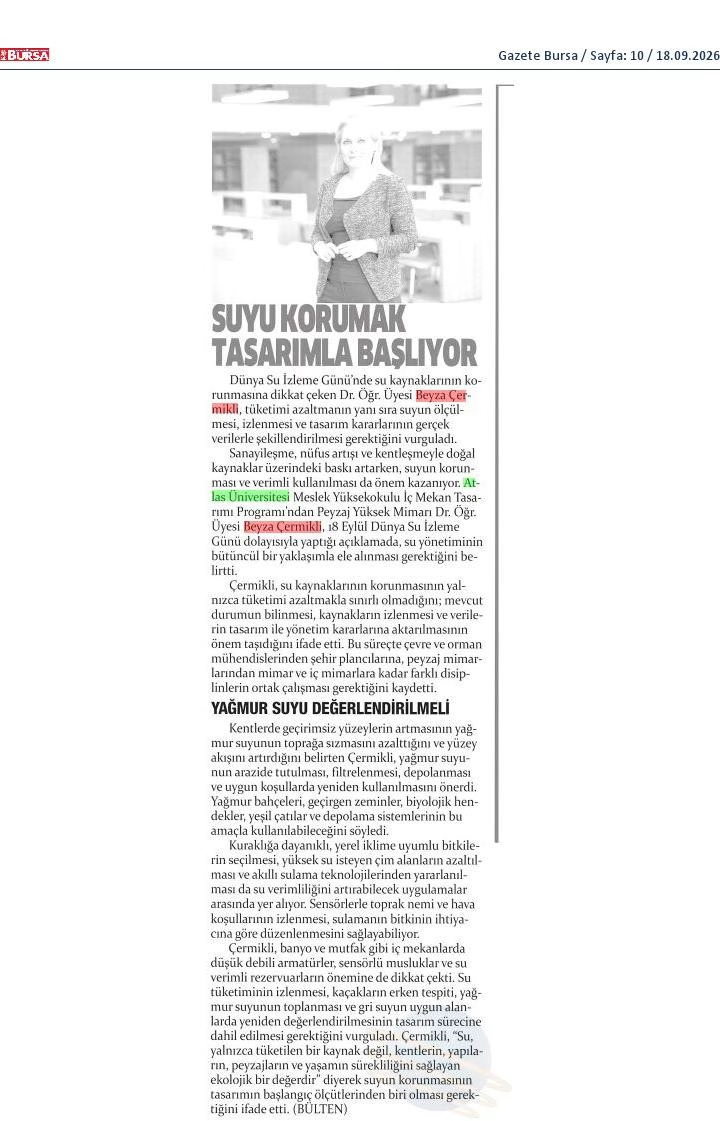
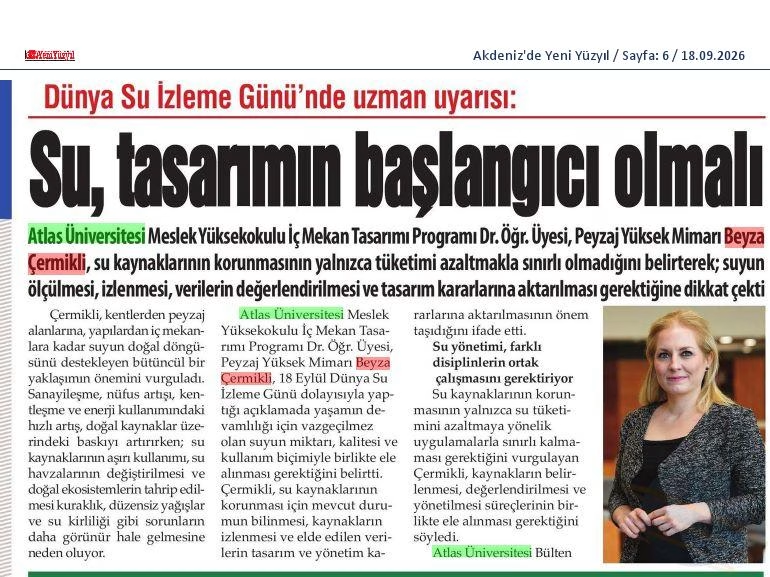
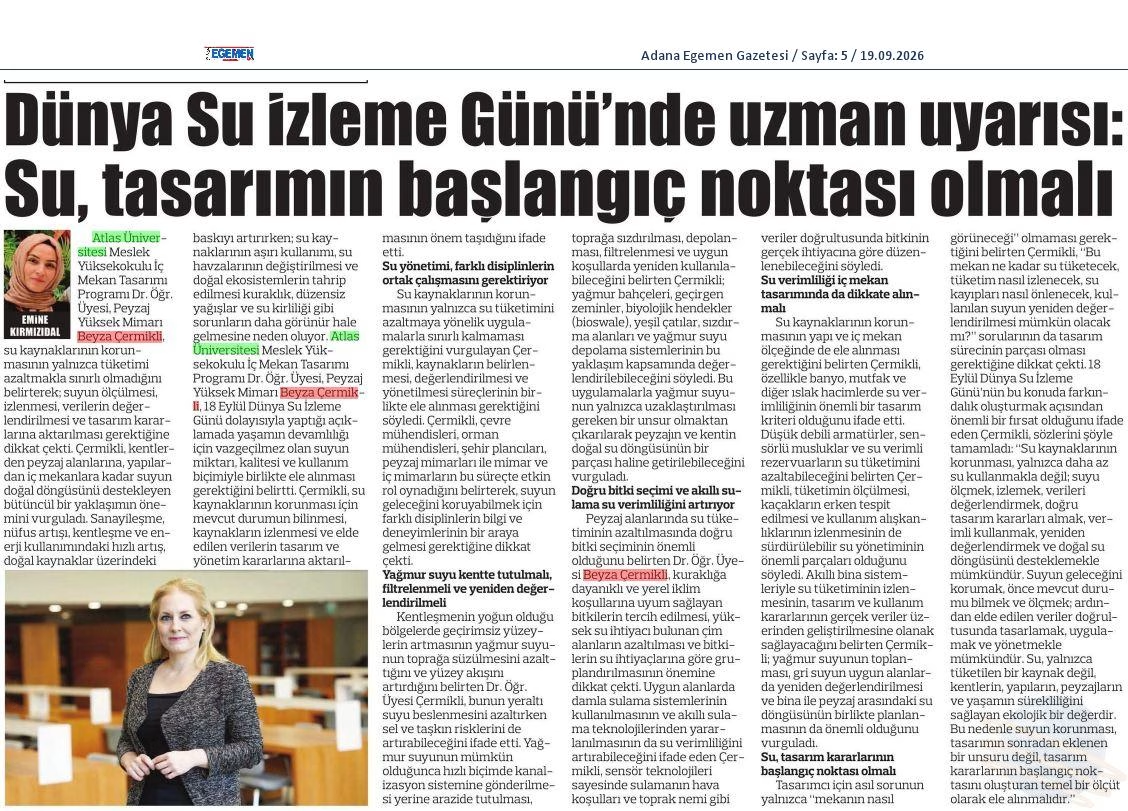
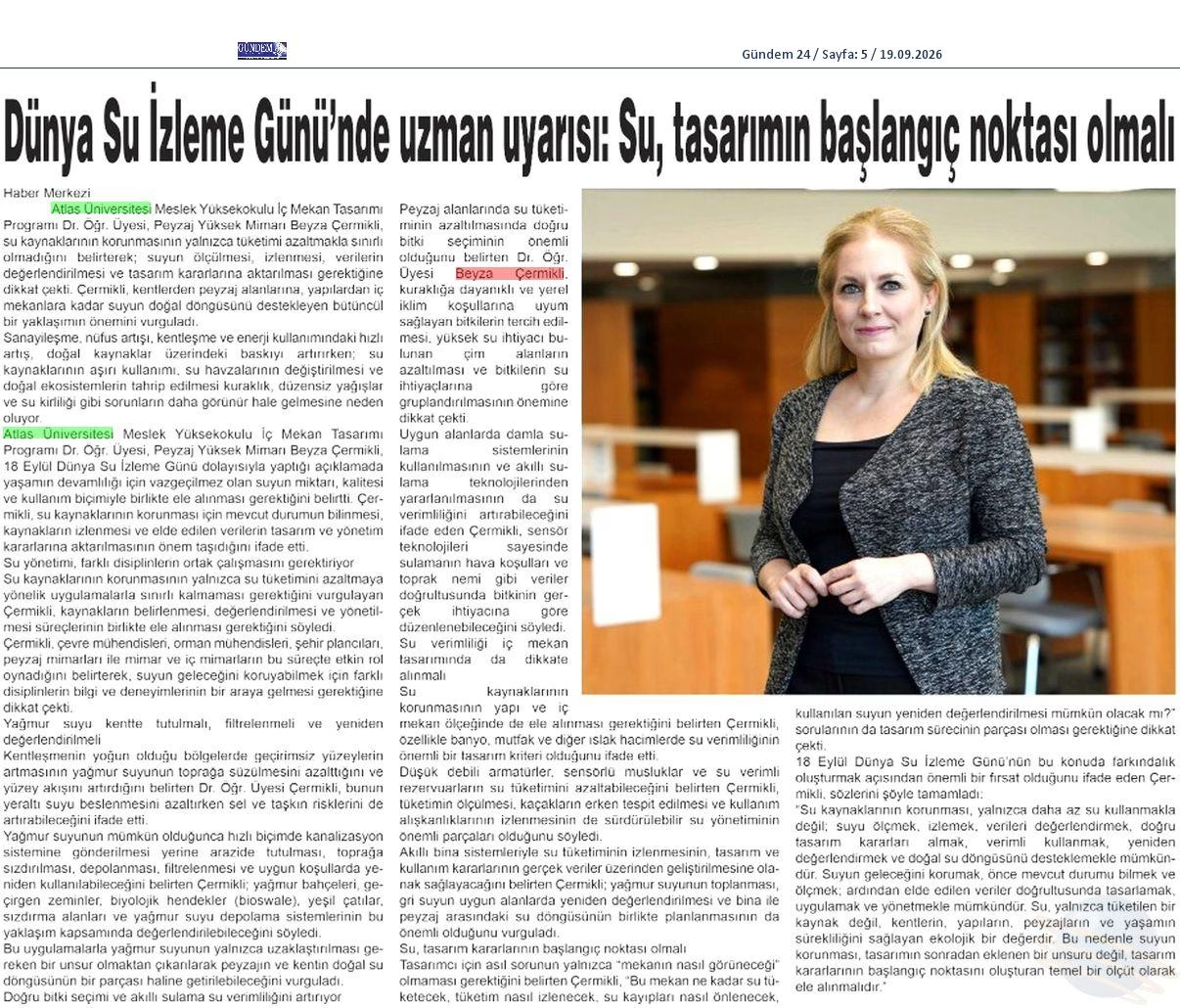
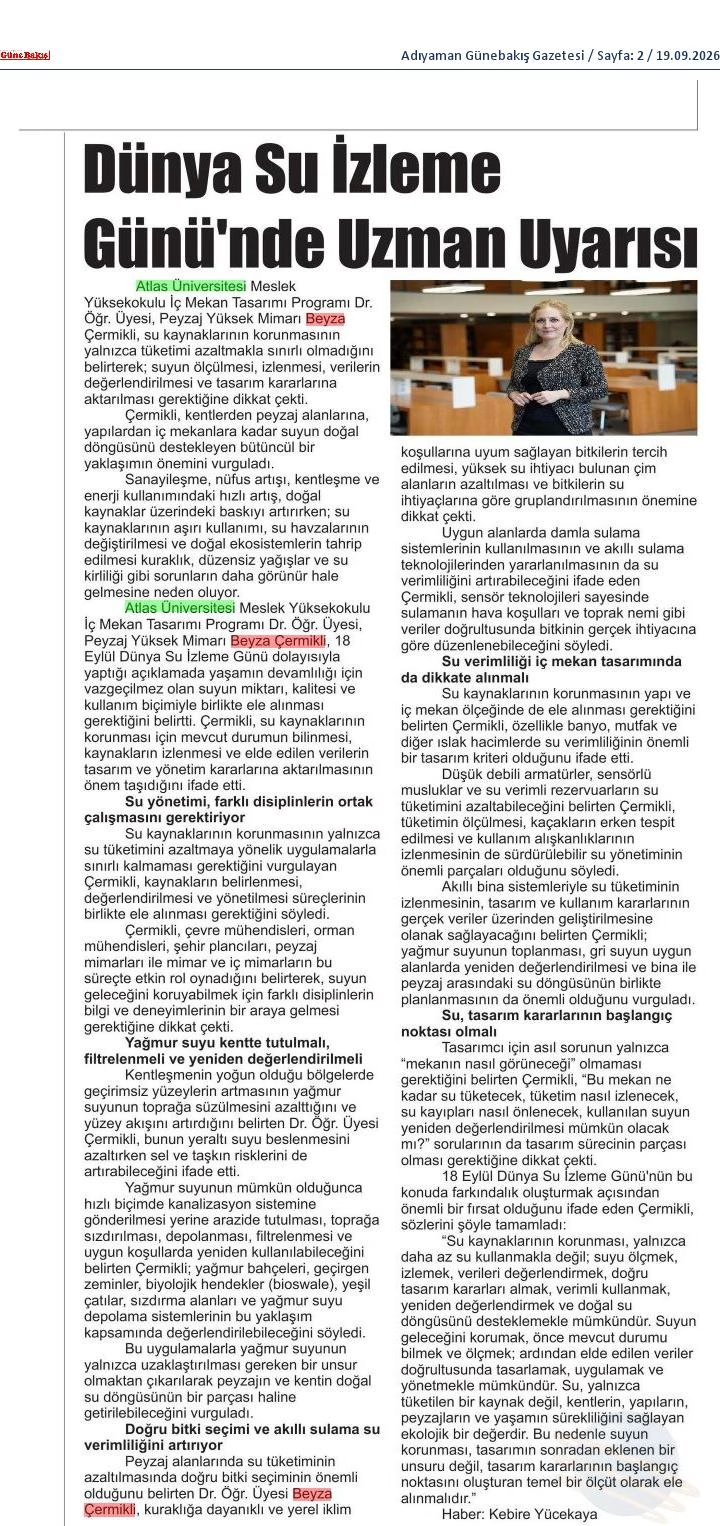
Dr. Beyza Çermikli, Assistant Professor and Landscape Architect in the Interior Design Program at Atlas University Vocational School, stated in a statement on September 18th, World Water Monitoring Day, that the quantity, quality, and usage of water, which is indispensable for the continuity of life, should be considered together. Çermikli emphasized the importance of knowing the current situation, monitoring resources, and incorporating the obtained data into design and management decisions for the conservation of water resources.
Water management requires collaboration among different disciplines.
Dr. Beyza Çermikli, Assistant Professor, made the following assessment:
“The conservation of water resources should not be limited solely to practices aimed at reducing water consumption. The processes of identifying, evaluating, and managing resources must be considered together.”
Environmental engineers, forestry engineers, urban planners, landscape architects, architects, and interior designers play an active role in this process. Bringing together the knowledge and experience of different disciplines is necessary to protect the future of water.
Rainwater should be collected, filtered, and recycled in the city.
In densely urbanized areas, the increase in impermeable surfaces reduces the infiltration of rainwater into the soil and increases surface runoff. This, in turn, reduces groundwater recharge and can increase the risk of floods.
Instead of sending rainwater into the sewage system as quickly as possible, it should be retained on the land, infiltrated into the soil, stored, filtered, and reused under appropriate conditions. Rain gardens, permeable soils, bioswales, green roofs, infiltration areas, and rainwater storage systems can be considered within the scope of this approach.
With these applications, rainwater can be transformed from something that simply needs to be removed into an integral part of the landscape and the city's natural water cycle.
Choosing the Right Plants and Using Smart Irrigation Increases Water Efficiency.
Dr. Beyza Çermikli, Assistant Professor, stated that the correct plant selection is important in reducing water consumption in landscaping areas, and emphasized the importance of preferring drought-resistant plants that adapt to local climate conditions, reducing lawn areas with high water requirements, and grouping plants according to their water needs.
“Using drip irrigation systems in appropriate areas and leveraging smart irrigation technologies can also increase water efficiency. Thanks to sensor technologies, irrigation can be adjusted according to the plant's actual needs based on data such as weather conditions and soil moisture.”
Water efficiency should also be considered in interior design.
Çermikli stated that the conservation of water resources should also be addressed at the building and interior space level, and emphasized that water efficiency is an important design criterion, especially in bathrooms, kitchens, and other wet areas.
Dr. Beyza Çermikli, Assistant Professor, stated the following:
“Low-flow fixtures, sensor-operated taps, and water-efficient cisterns can reduce water consumption. Measuring consumption, early detection of leaks, and monitoring usage habits are also important components of sustainable water management.”
Monitoring water consumption with smart building systems will allow design and usage decisions to be developed based on real data. Harvesting rainwater, recycling greywater in appropriate areas, and planning the water cycle between the building and the landscape together are also important.”
Water should be the starting point for design decisions.
Çermikli stated that the designer's main concern shouldn't be just "how the space will look," but also emphasized that questions such as "How much water will this space consume, how will consumption be monitored, how will water losses be prevented, and will it be possible to reuse the water used?" should be part of the design process.
Stating that World Water Monitoring Day on September 18th is an important opportunity to raise awareness on this issue, Çermikli concluded her remarks as follows:
“Conserving water resources is not only about using less water; it's also about measuring, monitoring, evaluating data, making sound design decisions, using water efficiently, reusing it, and supporting the natural water cycle.”
Protecting the future of water is only possible by first knowing and measuring the current situation; then, designing, implementing, and managing based on the data obtained.
Water is not merely a resource to be consumed, but an ecological asset that ensures the continuity of cities, buildings, landscapes, and life itself. Therefore, water conservation should not be considered an afterthought in design, but rather a fundamental criterion forming the starting point of design decisions.”