







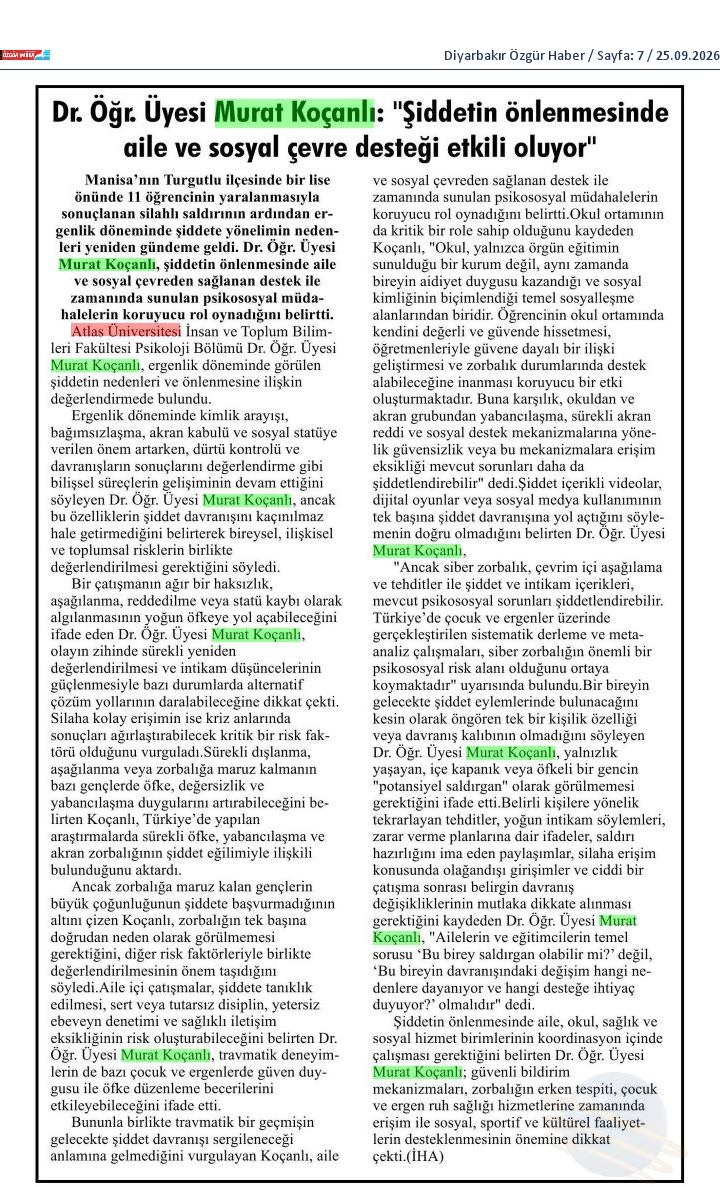
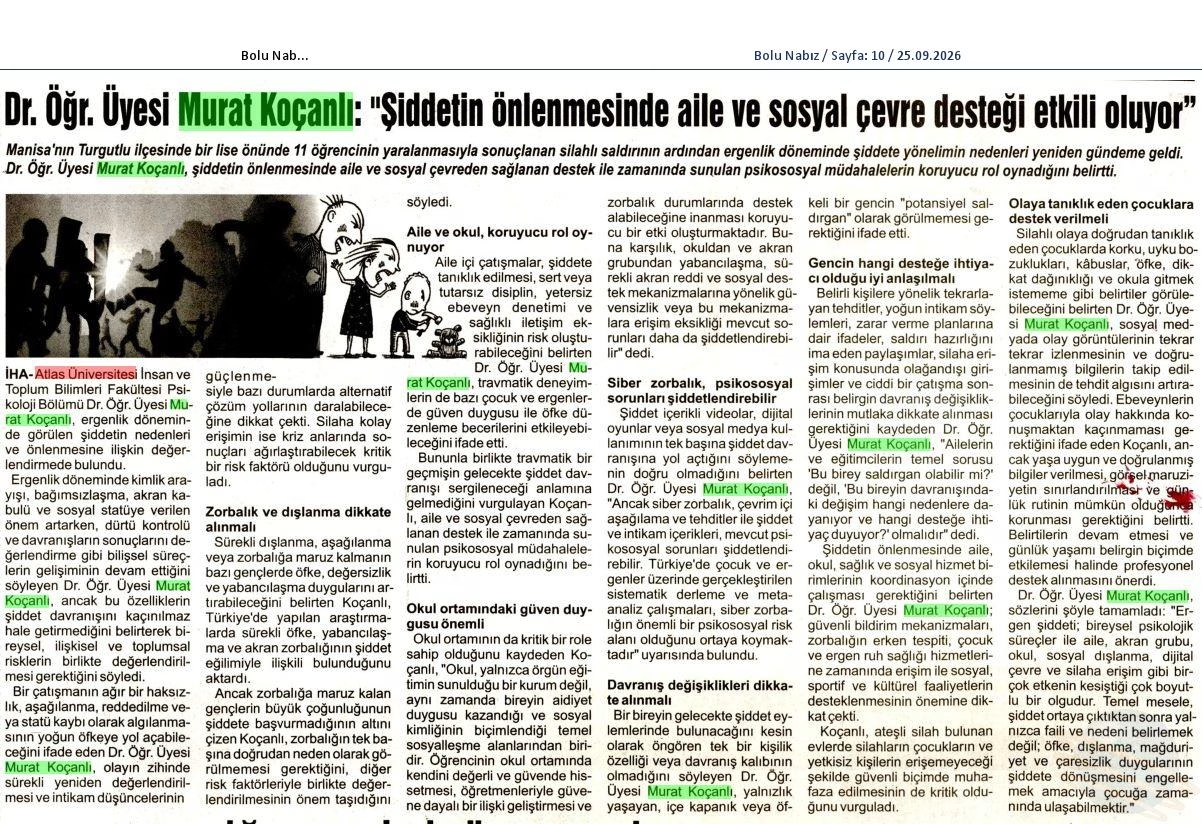
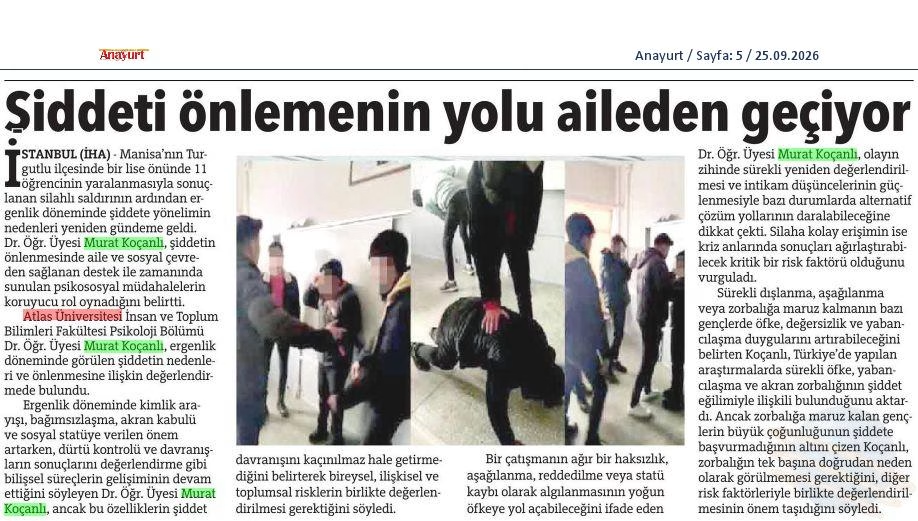
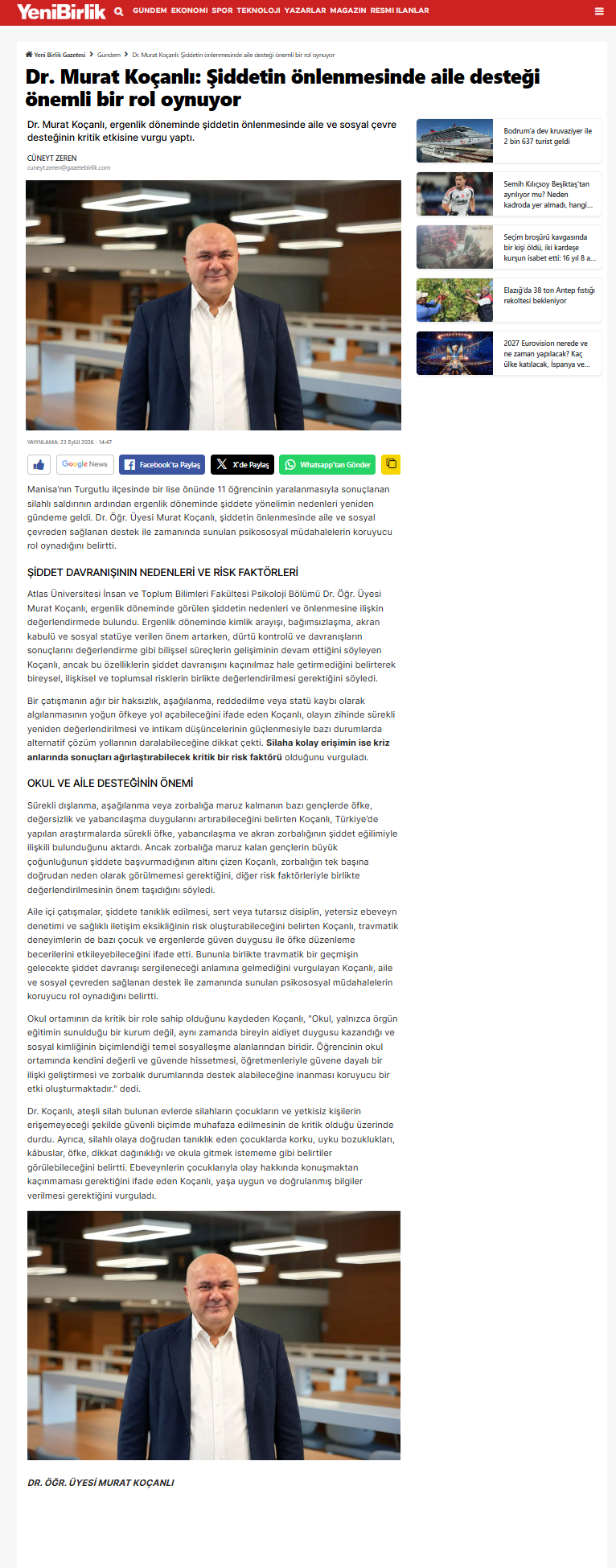
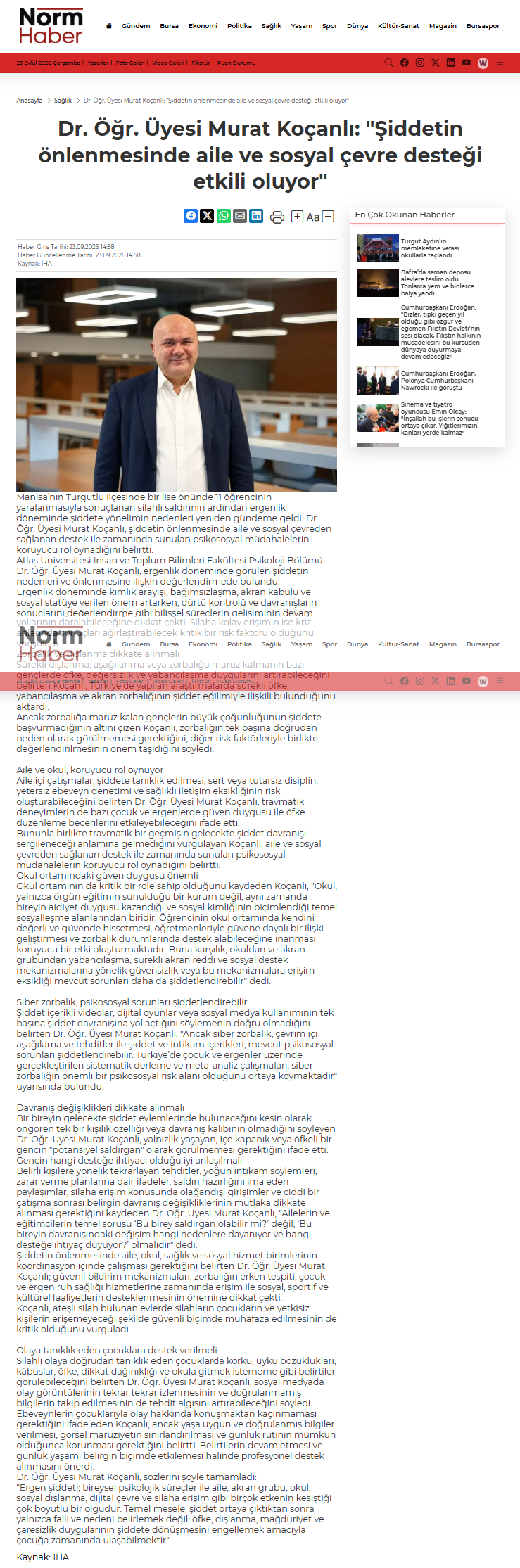
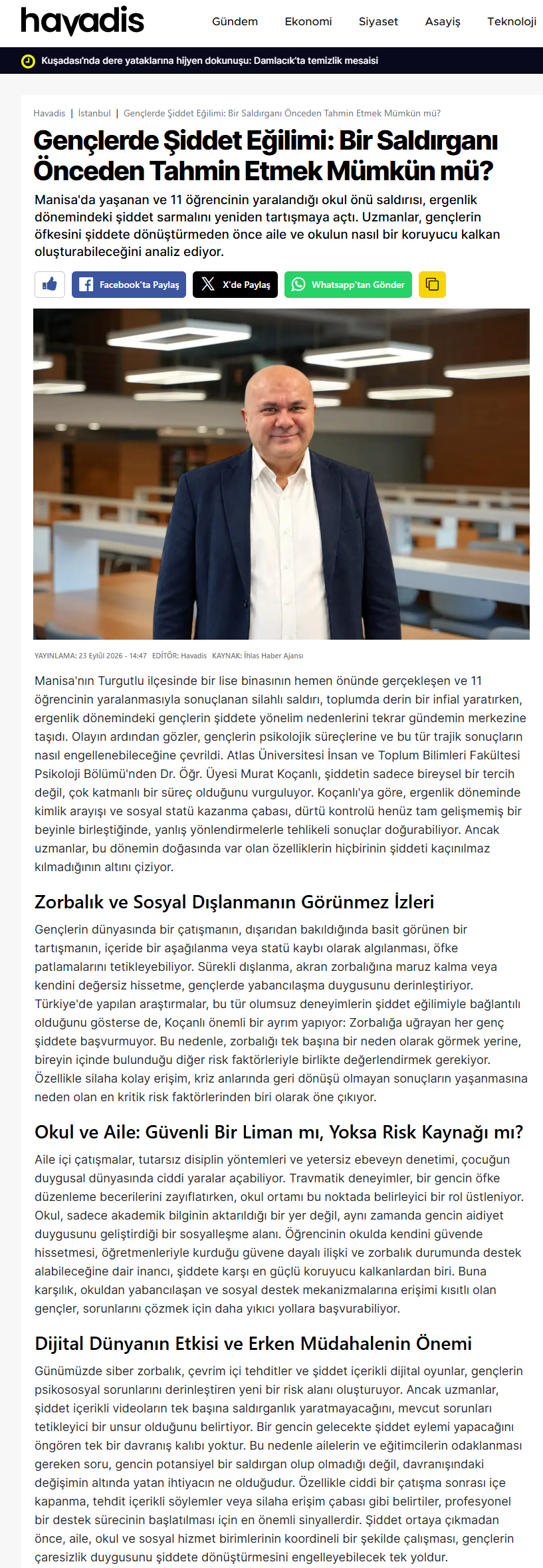
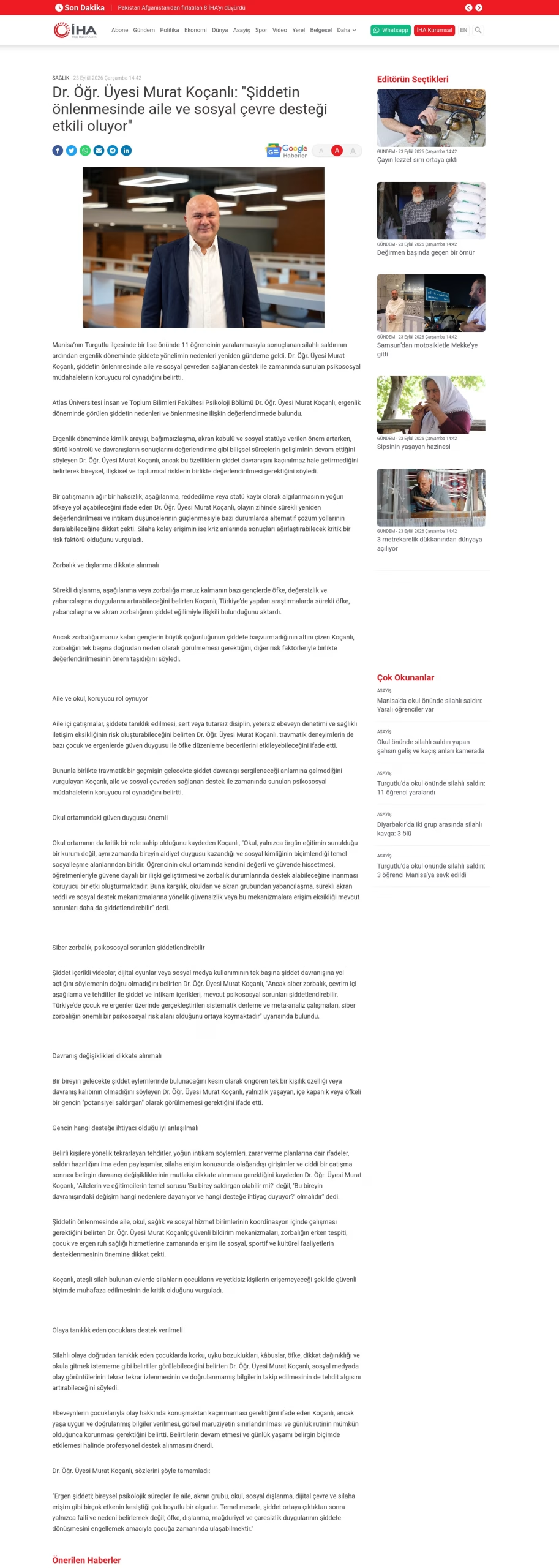


Dr. Murat Koçanlı, Assistant Professor in the Psychology Department of the Faculty of Human and Social Sciences at Atlas University, provided an assessment of the causes and prevention of violence observed during adolescence.
Cognitive process development continues during adolescence.
Dr. Murat Koçanlı's assessments are as follows:
“During adolescence, while the search for identity, independence, peer acceptance, and the importance placed on social status increase, cognitive processes such as impulse control and evaluating the consequences of actions continue to develop. However, these characteristics do not make violent behavior inevitable. Individual, relational, and social risks must be evaluated together.”
Perceiving a conflict as a grave injustice, humiliation, rejection, or loss of status can lead to intense anger. Constantly re-evaluating the event in one's mind and the strengthening of thoughts of revenge can, in some cases, narrow alternative solutions.
Easy access to weapons is considered a critical risk factor that can exacerbate consequences during times of crisis.
Bullying and exclusion must be taken into account.
Constant exclusion, humiliation, or bullying can increase feelings of anger, worthlessness, and alienation in some young people. Studies conducted in Türkiye have found that chronic anger, alienation, and peer bullying are associated with a tendency towards violence.
However, the vast majority of young people who are bullied do not resort to violence. Bullying should not be considered the sole direct cause; it is important to evaluate it in conjunction with other risk factors.
Family and School Play a Protective Role
Family conflicts, witnessing violence, harsh or inconsistent discipline, inadequate parental supervision, and a lack of healthy communication are all risk factors for the emergence of violence. Traumatic experiences can also affect trust and anger regulation skills in some children and adolescents. However, a traumatic past does not necessarily mean that a person will exhibit violent behavior in the future.
"Support from family and social environment, along with timely psychosocial interventions, are critically important in playing a protective role."
A sense of security in the school environment is important.
Dr. Murat Koçanlı, Assistant Professor, noted that the school environment also plays a critical role, and continued as follows:
“School is not only an institution where formal education is provided, but also one of the fundamental socialization areas where individuals gain a sense of belonging and their social identity is shaped.”
A student feeling valued and safe in the school environment, developing a trusting relationship with their teachers, and believing they can receive support in cases of bullying has a protective effect.
Conversely, alienation from school and peer groups, persistent peer rejection, and a lack of trust in or access to social support mechanisms can exacerbate existing problems.
Cyberbullying can exacerbate psychosocial problems.
It is not accurate to say that violent videos, digital games, or social media use alone lead to violent behavior. However, cyberbullying, online humiliation and threats, and violent and revenge-related content can exacerbate existing psychosocial problems.
Systematic reviews and meta-analyses conducted on children and adolescents in Türkiye reveal that cyberbullying is a significant psychosocial risk area.
Behavioral changes should be taken into account.
There is no single personality trait or behavioral pattern that definitively predicts an individual's future violent behavior. A lonely, withdrawn, or angry young person should not be viewed as a "potential aggressor."
The support a young person needs must be clearly understood.
“Repeated threats against specific individuals, intense rhetoric of revenge, statements about plans to cause harm, posts implying preparation for an attack, unusual attempts to access weapons, and significant behavioral changes following a serious conflict must be taken seriously.”
The fundamental question for families and educators should not be, 'Could this individual be aggressive?' but rather, 'What are the reasons behind the change in this individual's behavior, and what support do they need?'
Social, sporting and cultural activities should be supported.
Dr. Murat Koçanlı, Assistant Professor, stated that family, school, health, and social service units should work in coordination to prevent violence; he drew attention to the importance of safe reporting mechanisms, early detection of bullying, timely access to child and adolescent mental health services, and support for social, sports, and cultural activities.
Koçanlı emphasized that in homes where firearms are found, it is also critical that the weapons are stored securely, out of reach of children and unauthorized persons.
Children who witnessed the incident should be given support.
Dr. Murat Koçanlı stated that children who directly witness armed incidents may exhibit symptoms such as fear, sleep disorders, nightmares, anger, attention deficit, and reluctance to go to school, adding that repeatedly watching footage of the incident on social media and following unverified information can also increase the perception of threat.
Koçanlı stated that parents should not avoid talking to their children about the incident, but emphasized the importance of providing age-appropriate and verified information, limiting visual exposure, and maintaining daily routines as much as possible. She recommended seeking professional help if symptoms persist and significantly impact daily life.
The key issue is reaching the child in time.
Dr. Murat Koçanlı, Assistant Professor, concluded his remarks as follows:
“Adolescent violence is a multidimensional phenomenon where individual psychological processes intersect with many factors such as family, peer group, school, social exclusion, digital environment, and access to weapons.”
The key issue is not just identifying the perpetrator and the cause after violence occurs, but reaching the child in a timely manner to prevent feelings of anger, exclusion, victimization, and helplessness from turning into violence.”