








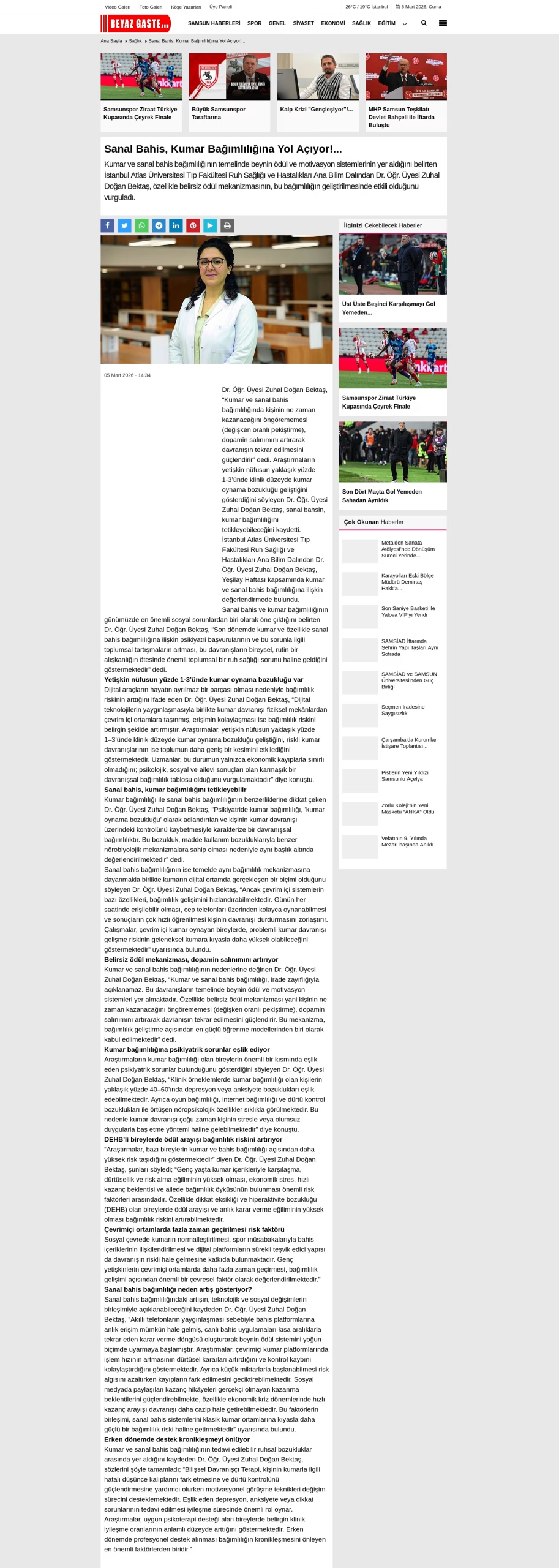
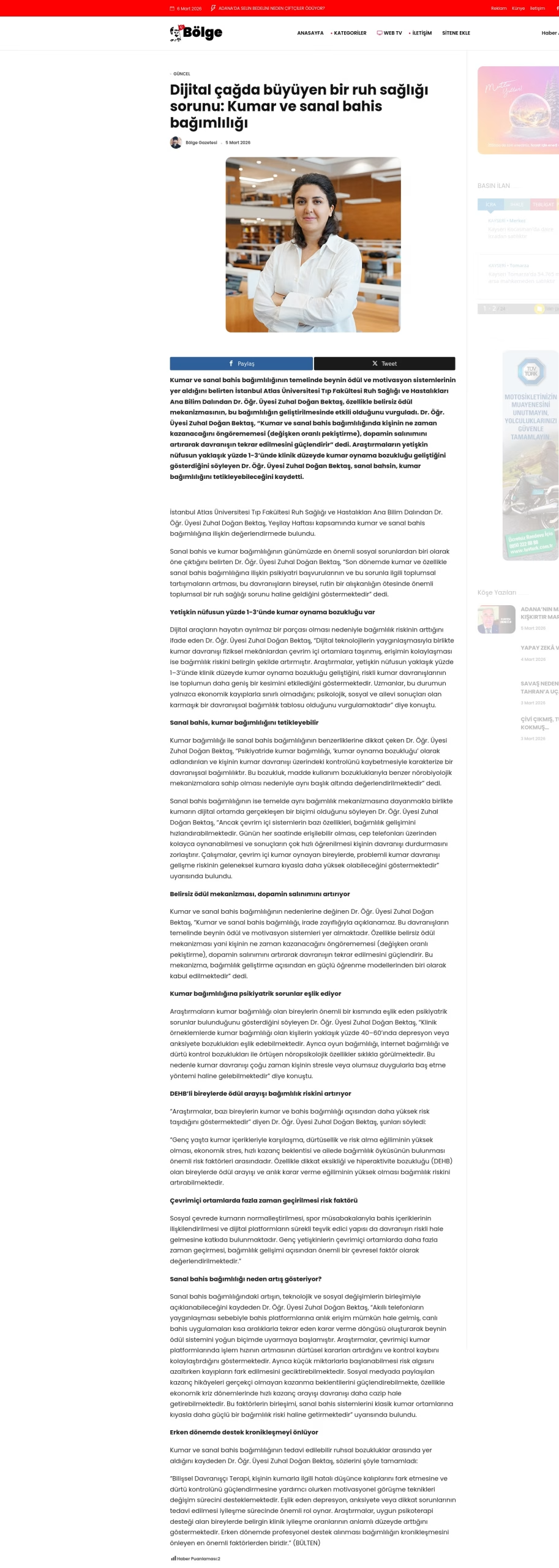
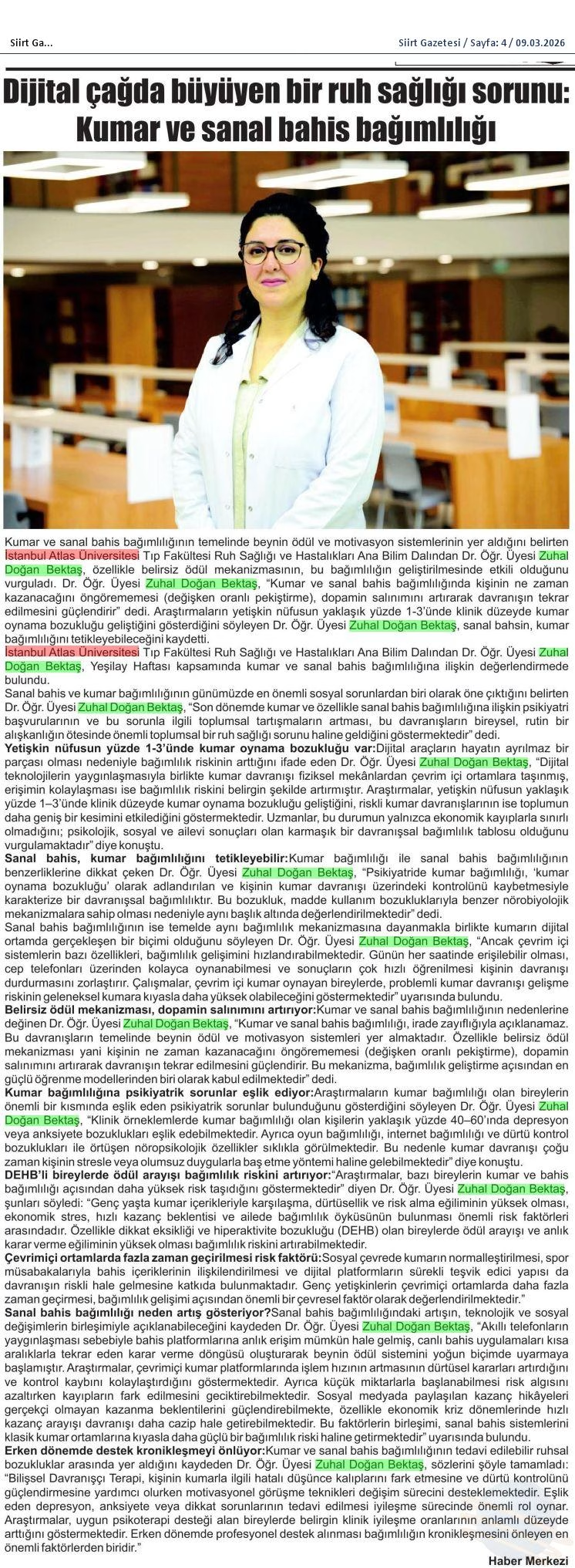

Dr. Zuhal Doğan Bektaş, Assistant Professor, stated that research shows approximately 1-3% of the adult population develops clinical-level gambling disorder, and noted that online betting can trigger gambling addiction.
Dr. Zuhal Doğan Bektaş, Assistant Professor at the Department of Mental Health and Diseases, Istanbul Atlas University Faculty of Medicine, made an assessment regarding gambling and online betting addiction within the scope of Yeşilay Week.
One of the major social problems…
Dr. Zuhal Doğan Bektaş, Assistant Professor, stated that online betting and gambling addiction has emerged as one of the most significant social problems today.
"The recent increase in psychiatric referrals related to gambling and especially online betting addiction, and the public discussions surrounding this issue, indicate that these behaviors have become a significant societal mental health problem, beyond being an individual, routine habit," he said.
Gambling disorder affects 1-3% of the adult population.
Dr. Zuhal Doğan Bektaş, Assistant Professor, stated that the risk of addiction has increased because digital tools have become an integral part of life, and said the following:
“With the widespread adoption of digital technologies, gambling behavior has shifted from physical spaces to online environments, and increased accessibility has significantly increased the risk of addiction. Research indicates that approximately 1–3% of the adult population develops clinically significant gambling disorders, and risky gambling behaviors affect a wider segment of society. Experts emphasize that this is not limited to economic losses; it is a complex behavioral addiction with psychological, social, and family consequences.”
Online betting can trigger gambling addiction.
In psychiatry, gambling addiction, also known as 'gambling disorder,' is a behavioral addiction characterized by a loss of control over one's gambling behavior. This disorder is considered under the same heading as substance use disorders because it shares similar neurobiological mechanisms.
Virtual gambling addiction, while fundamentally based on the same addiction mechanism, is a form of gambling that takes place in a digital environment. However, certain features of online systems can accelerate the development of addiction. Accessibility at any time of day, ease of playing via mobile phones, and the rapid learning of results make it difficult for individuals to stop the behavior. Studies show that individuals who gamble online may have a higher risk of developing problematic gambling behavior compared to traditional gambling.”
The ambiguous reward mechanism increases dopamine release.
Dr. Zuhal Doğan Bektaş, Assistant Professor, addressing the causes of gambling and online betting addiction, stated, “Gambling and online betting addiction cannot be explained by weakness of will. The brain's reward and motivation systems lie at the root of these behaviors. In particular, the uncertain reward mechanism, meaning the inability to predict when one will win (variable rate reinforcement), increases dopamine release, strengthening the repetition of the behavior. This mechanism is considered one of the strongest learning models for developing addiction.”
Gambling addiction is often accompanied by psychiatric problems.
Dr. Zuhal Doğan Bektaş, Assistant Professor, stated that research shows a significant portion of individuals with gambling addiction have co-occurring psychiatric problems, and added the following:
“In clinical samples, approximately 40–60% of individuals with gambling addiction may also have comorbid depression or anxiety disorders. Furthermore, neuropsychological features overlapping with gaming addiction, internet addiction, and impulse control disorders are frequently observed. Therefore, gambling behavior often becomes a way for individuals to cope with stress or negative emotions.”
Reward-seeking behavior in individuals with ADHD increases the risk of addiction.
Research indicates that some individuals are at higher risk for gambling and betting addiction. Exposure to gambling content at a young age, high impulsivity and risk-taking tendencies, economic stress, the expectation of quick gains, and a family history of addiction are significant risk factors. In particular, individuals with attention deficit hyperactivity disorder (ADHD), with their high tendency towards reward seeking and impulsive decision-making, can increase the risk of addiction.
Spending too much time online is a risk factor.
The normalization of gambling in social settings, the association of sports competitions with betting content, and the constantly encouraging nature of digital platforms also contribute to making the behavior risky. The fact that young adults spend more time online is considered a significant environmental factor in the development of addiction.
Why is online gambling addiction on the rise?
Dr. Zuhal Doğan Bektaş, Assistant Professor, noted that the increase in online betting addiction can be explained by a combination of technological and social changes, stating: “Due to the widespread use of smartphones, instant access to betting platforms has become possible, and live betting applications create a repetitive decision-making cycle at short intervals, intensely stimulating the brain's reward system. Research shows that increased transaction speed on online gambling platforms increases impulsive decisions and facilitates loss of control. Furthermore, the ability to start with small amounts reduces risk perception and can delay the realization of losses. Winning stories shared on social media can reinforce unrealistic expectations of winning, making the pursuit of quick profits even more attractive, especially during economic crises. The combination of these factors makes online betting systems a stronger addiction risk compared to traditional gambling environments.”
Early Support Prevents Chronic Disease.
Dr. Zuhal Doğan Bektaş, Assistant Professor, noted that gambling and online betting addiction are among the treatable mental disorders, and concluded her remarks as follows:
“Cognitive Behavioral Therapy helps individuals recognize their faulty thought patterns related to gambling and strengthen impulse control, while motivational interviewing techniques support the change process. Treating co-occurring depression, anxiety, or attention problems plays a significant role in the recovery process. Research shows that individuals who receive appropriate psychotherapy support experience significantly increased rates of clinical improvement. Seeking professional help early is one of the most important factors in preventing addiction from becoming chronic.”