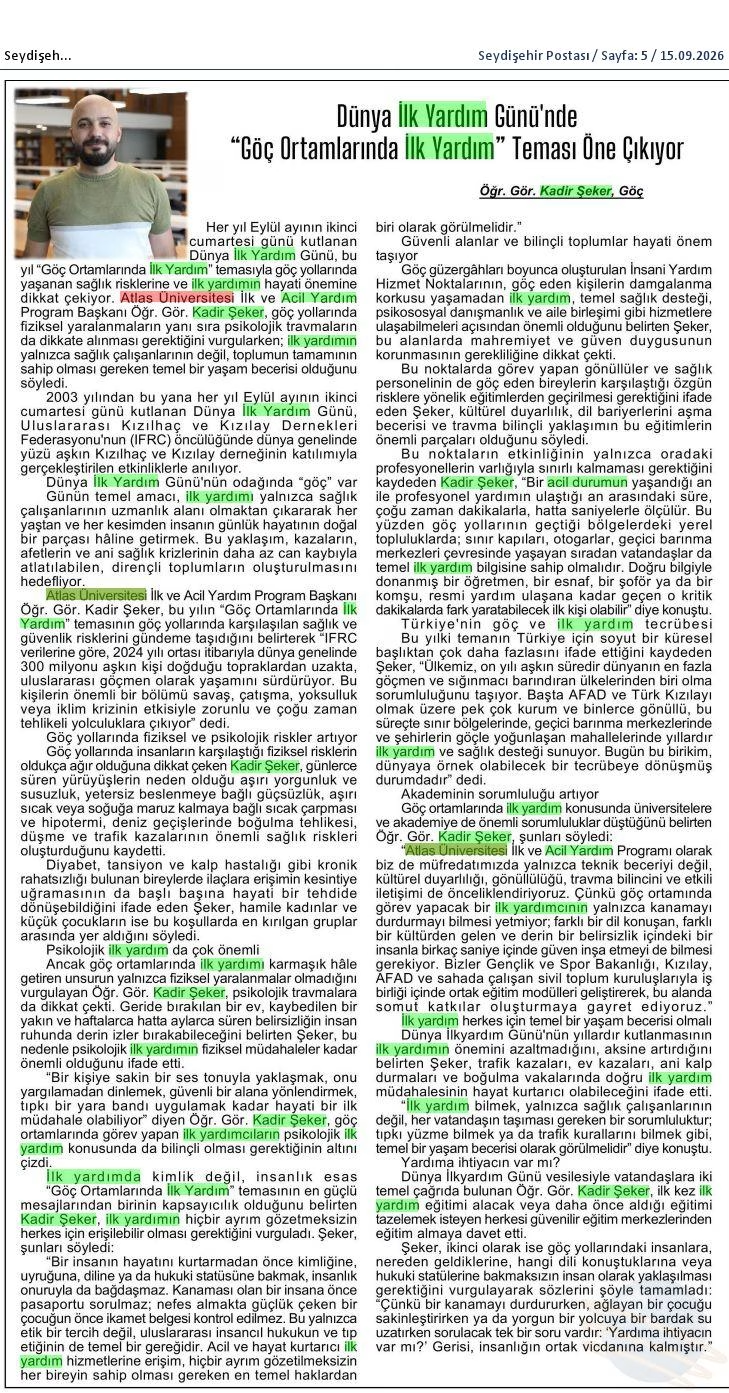
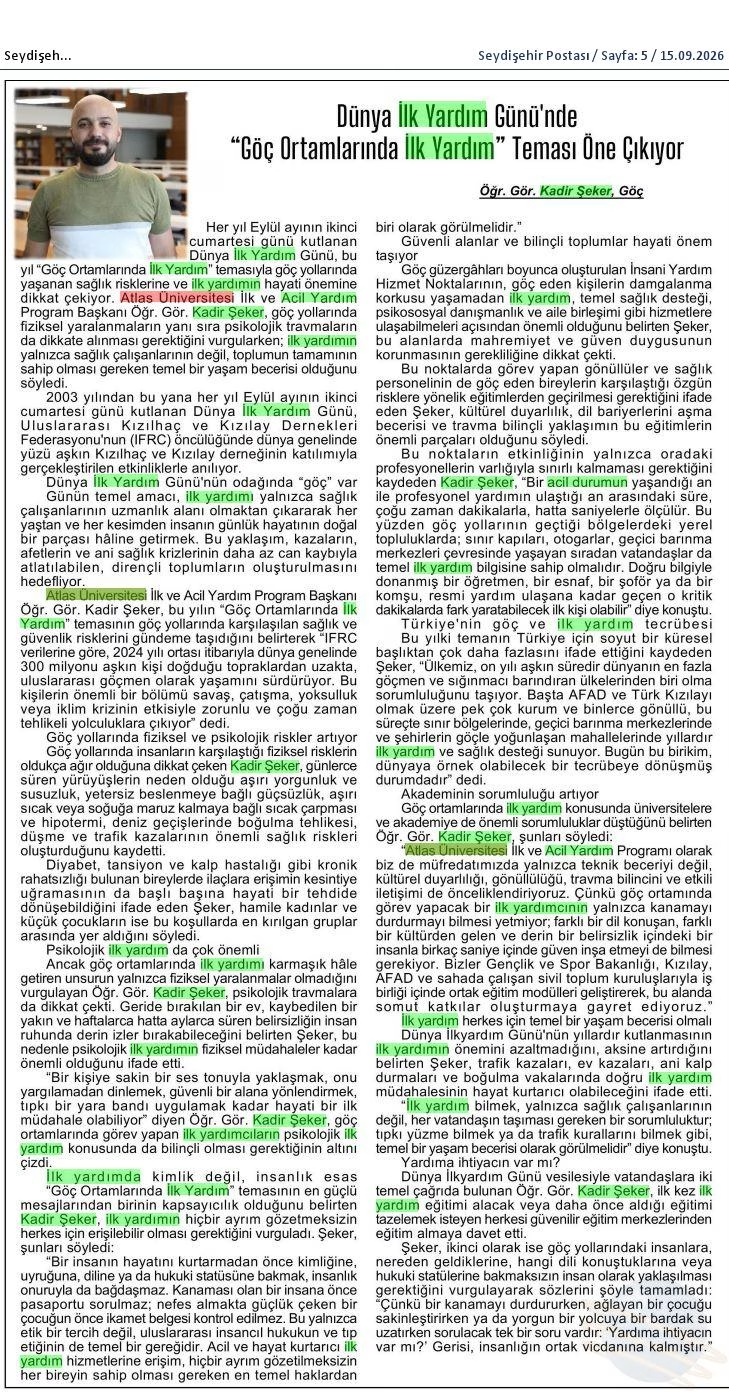
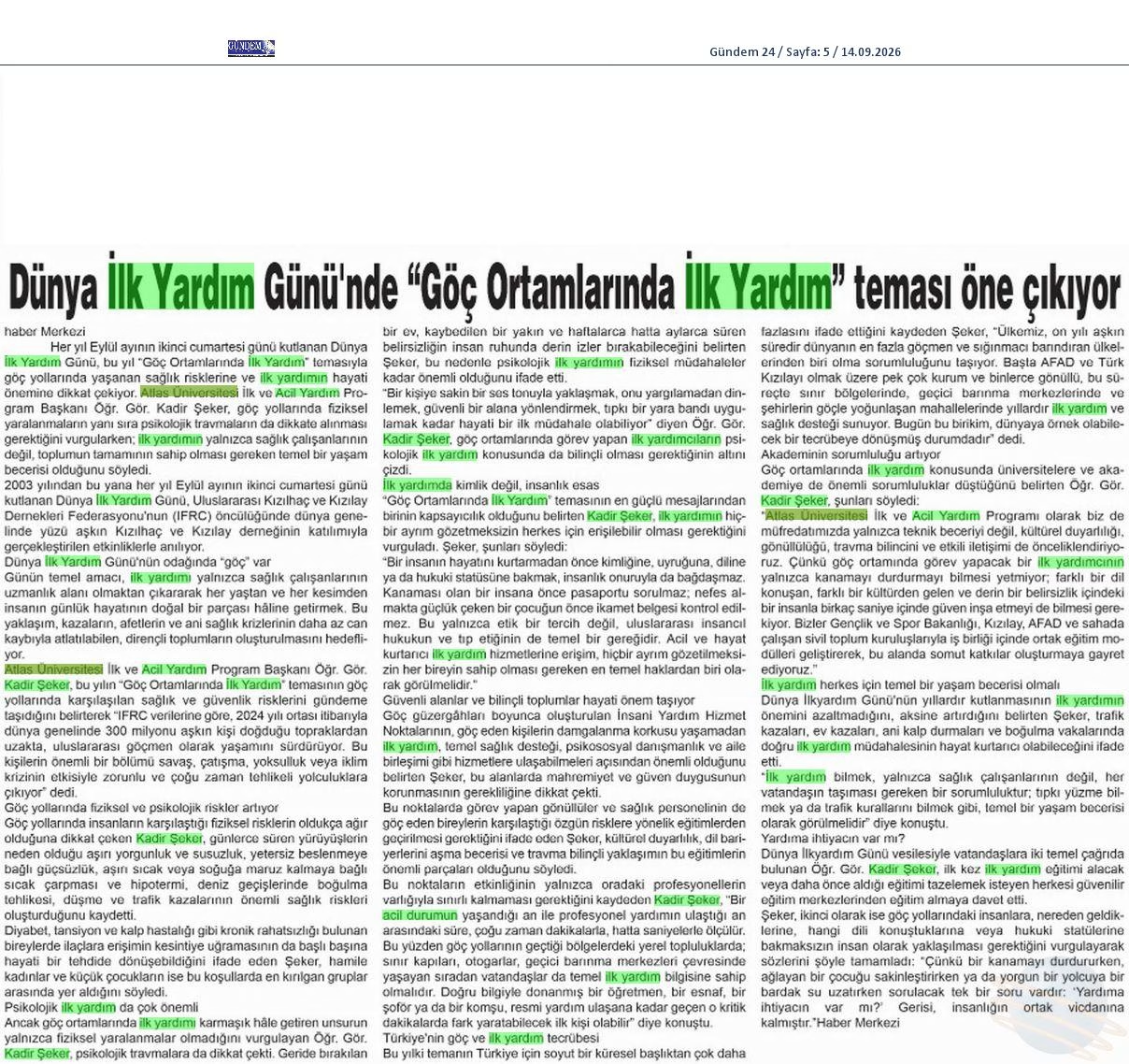



World First Aid Day, celebrated every year on the second Saturday of September since 2003, is commemorated with events organized by the International Federation of Red Cross and Red Crescent Societies (IFRC) and involving more than one hundred Red Cross and Red Crescent societies worldwide.
World First Aid Day focuses on "Migration".
The main goal of the day is to make first aid a natural part of daily life for people of all ages and backgrounds, rather than just the expertise of healthcare professionals. This approach aims to build resilient societies where accidents, disasters, and sudden health crises can be overcome with fewer casualties.
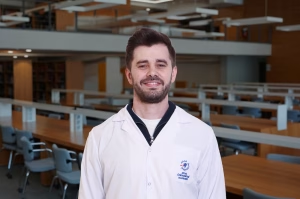
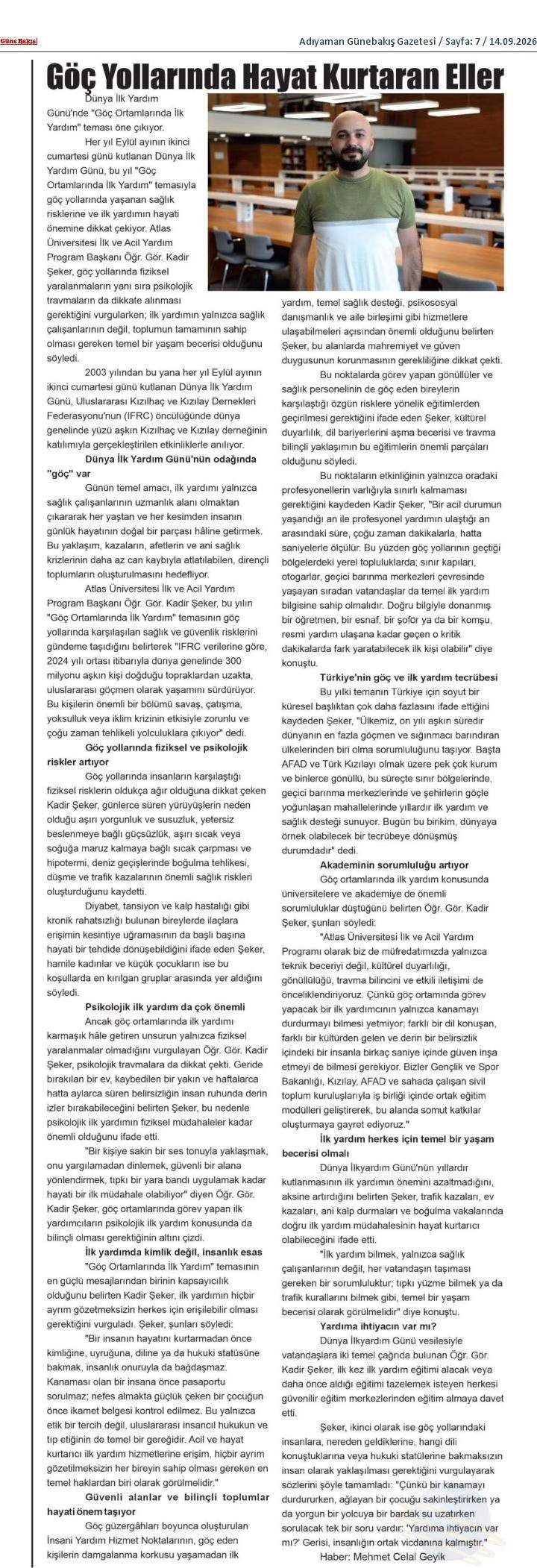
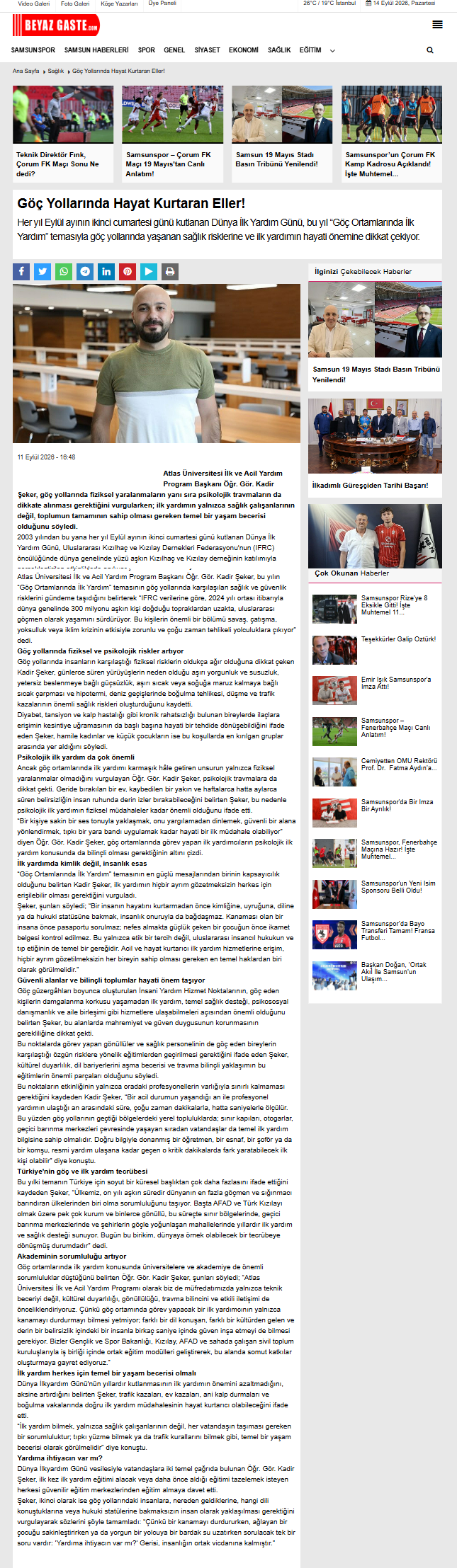
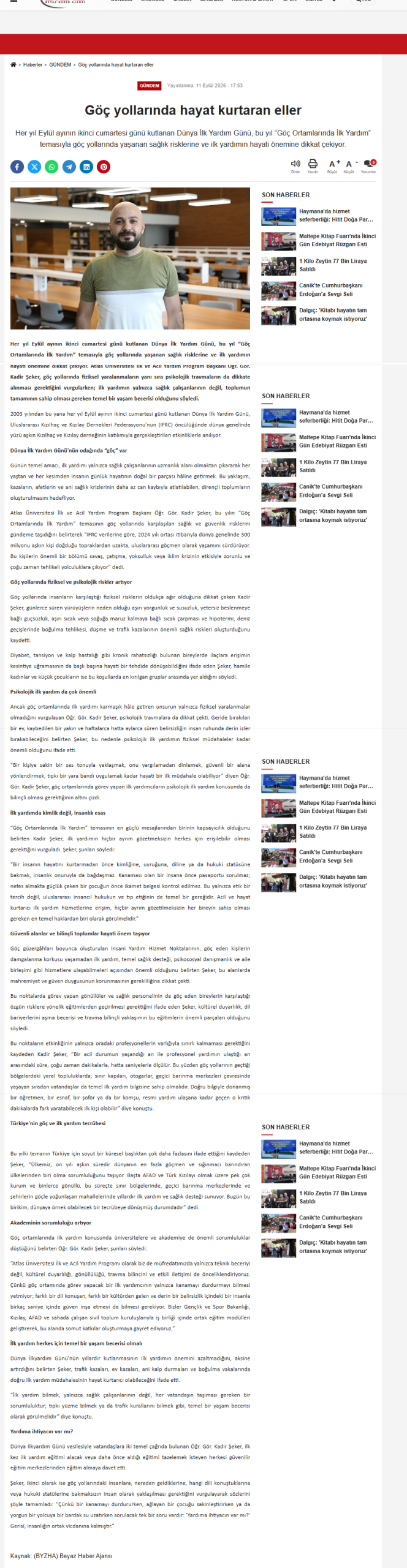
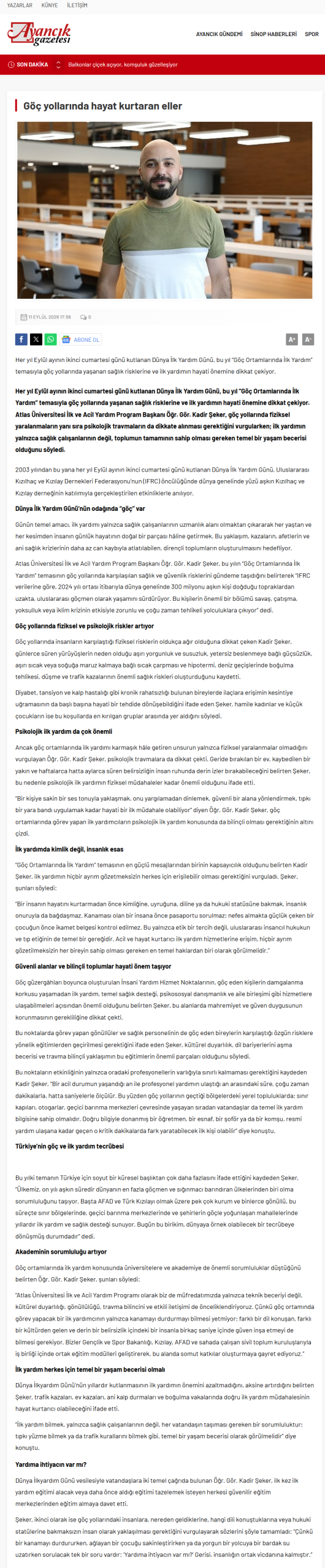
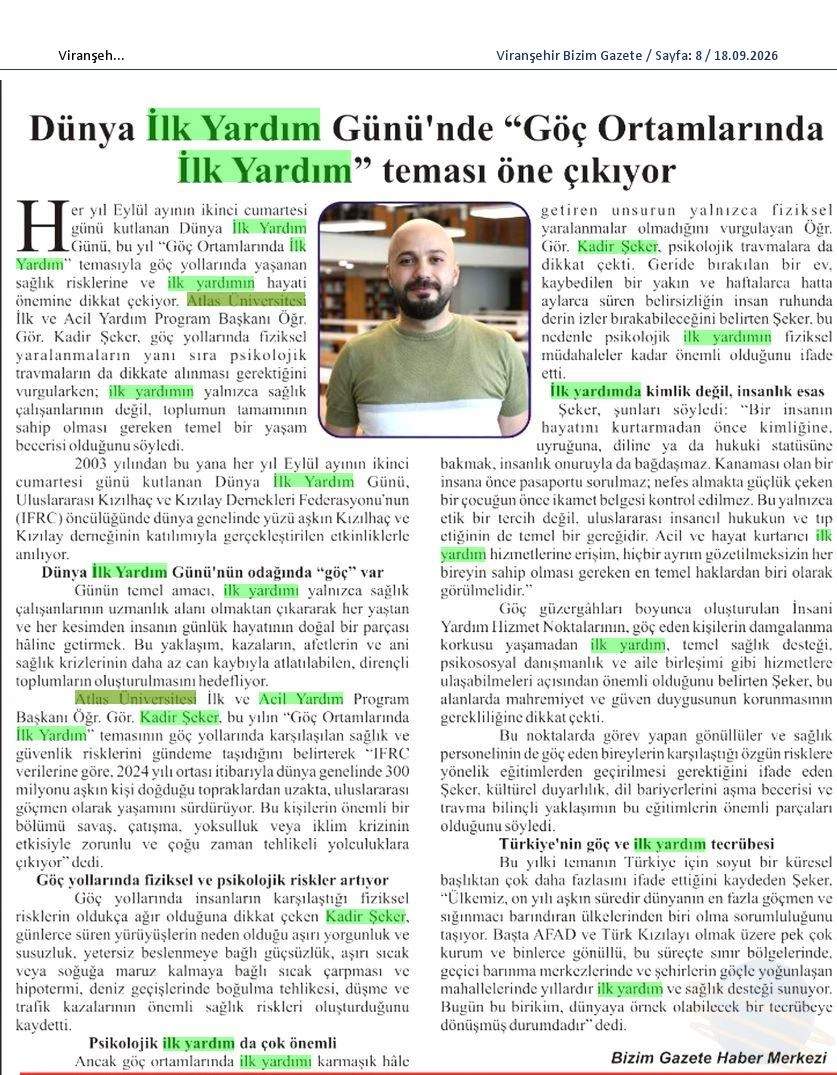
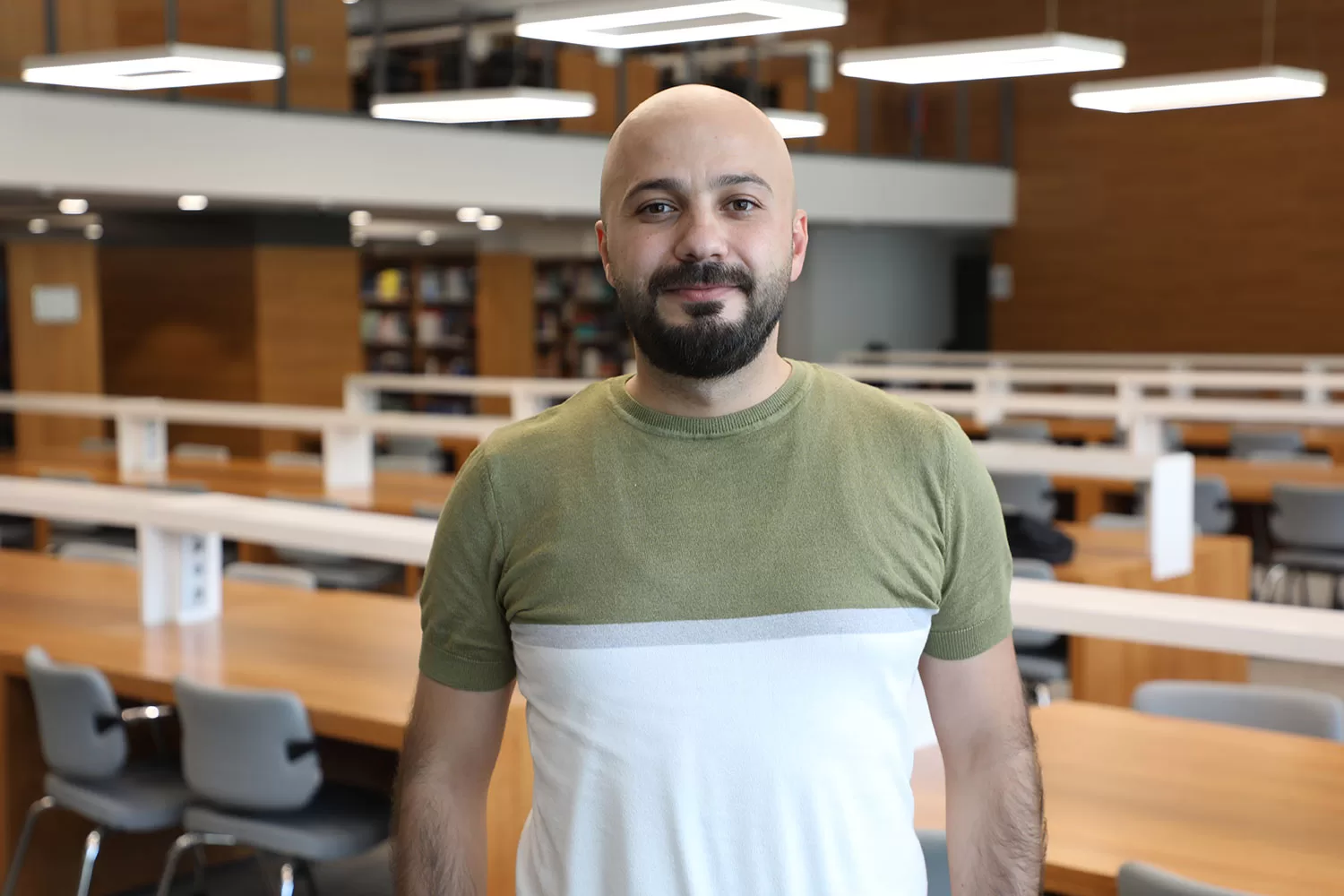
Atlas University Melek Vocational School First and Emergency Aid Program Head, Lecturer Kadir Şeker, stated that this year's theme, "First Aid in Migration Environments," highlights the health and safety risks encountered on migration routes, adding, "According to IFRC data, as of mid-2024, more than 300 million people worldwide are living as international migrants, far from their homeland. A significant portion of these individuals are forced to undertake dangerous journeys due to war, conflict, poverty, or the effects of the climate crisis."
Physical and Psychological Risks Increase Along Migration Routes
Kadir Şeker pointed out that the physical risks people face on migration routes are quite severe, noting that extreme fatigue and dehydration caused by days of walking, weakness due to malnutrition, heatstroke and hypothermia due to exposure to extreme heat or cold, the risk of drowning during sea crossings, falls, and traffic accidents pose significant health risks.
Şeker stated that interruptions in access to medication can pose a life-threatening risk for individuals with chronic conditions such as diabetes, hypertension, and heart disease, and added that pregnant women and young children are among the most vulnerable groups in these circumstances.
Psychological first aid is also very important.
However, Lecturer Kadir Şeker emphasized that physical injuries are not the only factor complicating first aid in migration settings, drawing attention to psychological trauma as well. He stated that leaving behind a home, losing a loved one, and weeks or even months of uncertainty can leave deep scars on a person's psyche, and therefore, psychological first aid is as important as physical interventions.
"Approaching someone with a calm tone of voice, listening to them without judgment, and guiding them to a safe space can be as vital a first aid measure as applying a bandage," said Lecturer Kadir Şeker, emphasizing that first responders working in migration environments should also be aware of psychological first aid.
In first aid, humanity should be the priority, not identity.
Stating that one of the strongest messages of the "First Aid in Migration Environments" theme is inclusivity, Kadir Şeker emphasized that first aid should be accessible to everyone without discrimination. Şeker said the following:
“To consider a person’s identity, nationality, language, or legal status before saving their life is incompatible with human dignity. You don’t ask a bleeding person for their passport first; you don’t check a child struggling to breathe for their residence permit. This is not only an ethical choice, but also a fundamental requirement of international humanitarian law and medical ethics. Access to emergency and life-saving first aid services should be considered one of the most basic rights that every individual should have, without discrimination.”
Safe Spaces and Informed Communities Are Vital.
Şeker stated that the Humanitarian Aid Service Points established along migration routes are important for enabling migrants to access services such as first aid, basic health support, psychosocial counseling, and family reunification without fear of stigmatization, and emphasized the need to protect privacy and security in these areas.
Şeker stated that volunteers and healthcare personnel working at these points should also undergo training on the unique risks faced by migrant individuals, adding that cultural sensitivity, the ability to overcome language barriers, and a trauma-aware approach are important components of this training.
Noting that the effectiveness of these points should not be limited solely to the presence of professionals there, Kadir Şeker said, “The time between an emergency occurring and professional help arriving is often measured in minutes, even seconds. Therefore, ordinary citizens living in local communities in areas where migration routes pass; around border crossings, bus stations, and temporary shelters should also have basic first aid knowledge. A teacher, a shopkeeper, a driver, or a neighbor equipped with the right information can be the first person to make a difference in those critical minutes until official help arrives.”
Türkiye's Experience with Migration and First Aid
Noting that this year's theme represents much more than an abstract global title for Turkey, Şeker said, “For over a decade, our country has borne the responsibility of being one of the countries hosting the largest number of migrants and refugees in the world. Many institutions, primarily AFAD and the Turkish Red Crescent, and thousands of volunteers have been providing first aid and health support for years in border regions, temporary shelters, and neighborhoods in cities heavily populated by migrants. Today, this experience has transformed into an example for the world.”
The Academy's Responsibility is Increasing
Lecturer Kadir Şeker stated that universities and academia also have important responsibilities regarding first aid in migration environments, and said the following:
“At Atlas University's Emergency and First Aid Program, we prioritize not only technical skills but also cultural sensitivity, volunteerism, trauma awareness, and effective communication in our curriculum. Because a first responder working in a migration environment needs more than just knowing how to stop bleeding; they also need to know how to build trust within seconds with someone who speaks a different language, comes from a different culture, and is in a state of profound uncertainty. We strive to make concrete contributions in this field by developing joint training modules in cooperation with the Ministry of Youth and Sports, the Turkish Red Crescent, AFAD (Disaster and Emergency Management Presidency of Turkey), and civil society organizations working in the field.”
First aid should be a basic life skill for everyone.
Şeker stated that the fact that World First Aid Day has been celebrated for years has not diminished the importance of first aid, but rather increased it, adding that correct first aid intervention can be life-saving in cases of traffic accidents, home accidents, sudden cardiac arrest, and drowning.
“Knowing first aid is a responsibility that every citizen, not just healthcare professionals, should bear; it should be considered a basic life skill, just like knowing how to swim or knowing traffic rules,” he said.
Do you need help?
On the occasion of World First Aid Day, Lecturer Kadir Şeker made two main appeals to citizens, inviting everyone who will receive first aid training for the first time or who wants to refresh their previous training to receive training from reliable training centers.
Secondly, Şeker emphasized that people on migration routes should be treated as human beings, regardless of their origin, language, or legal status, and concluded her remarks as follows:
“Because when stopping bleeding, calming a crying child, or offering a weary traveler a glass of water, there is only one question to ask: ‘Do you need help?’ The rest is up to the collective conscience of humanity.”