










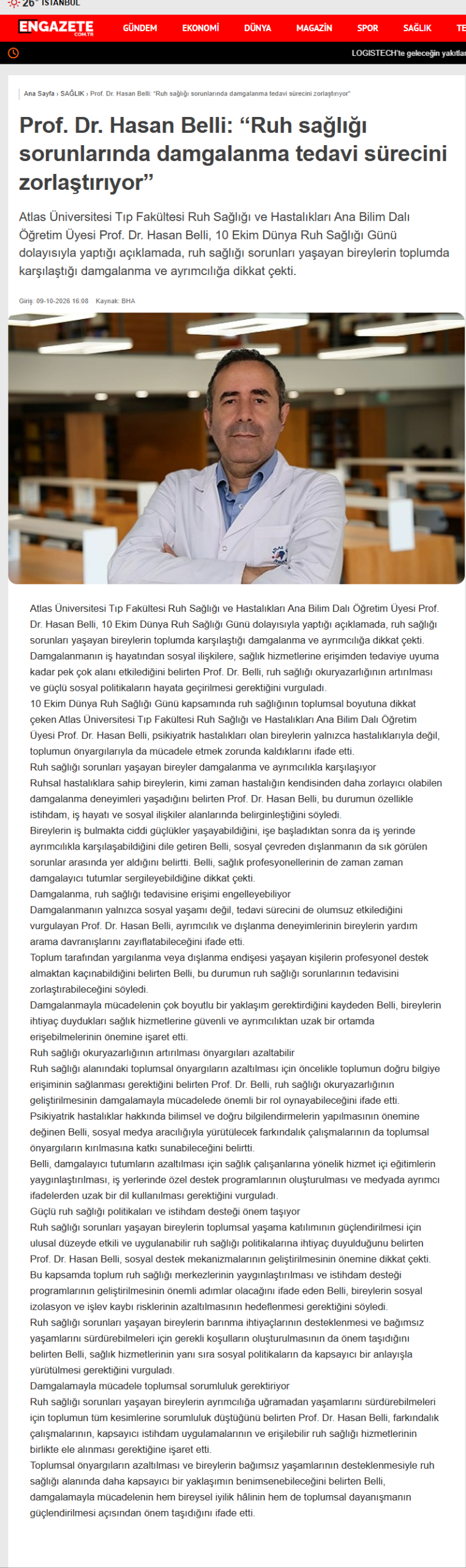
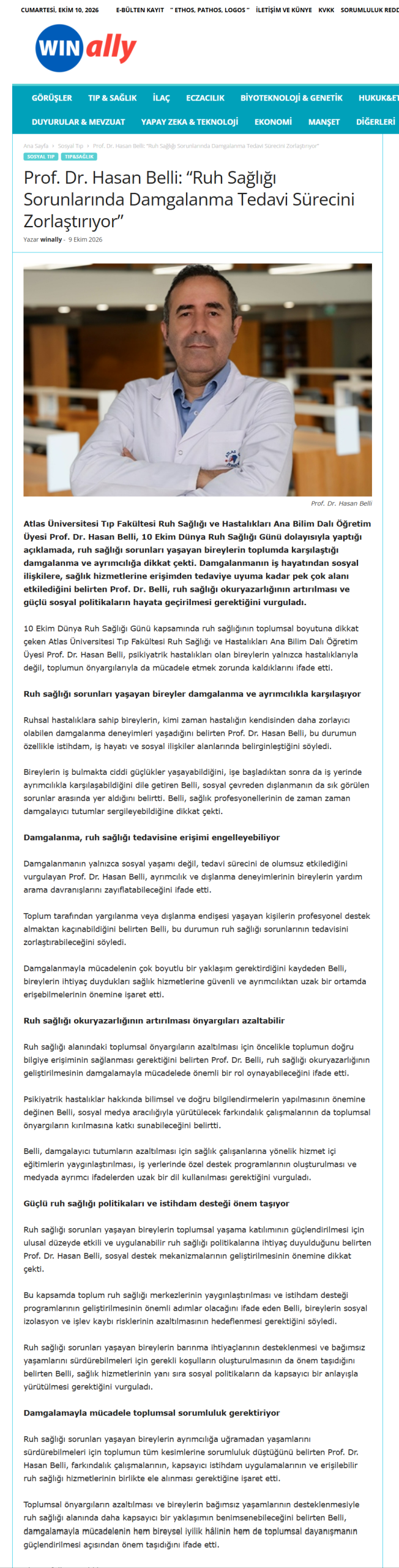
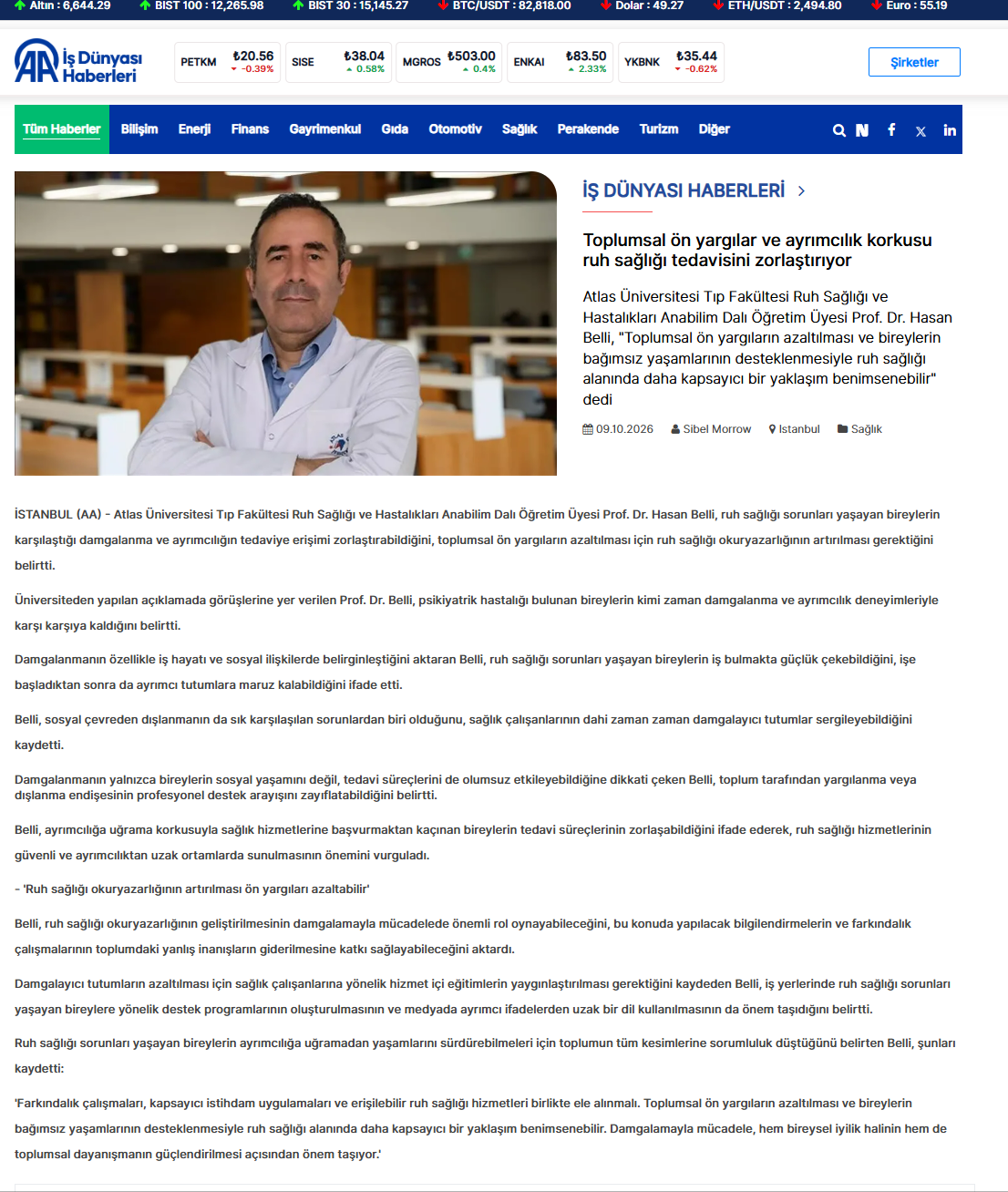
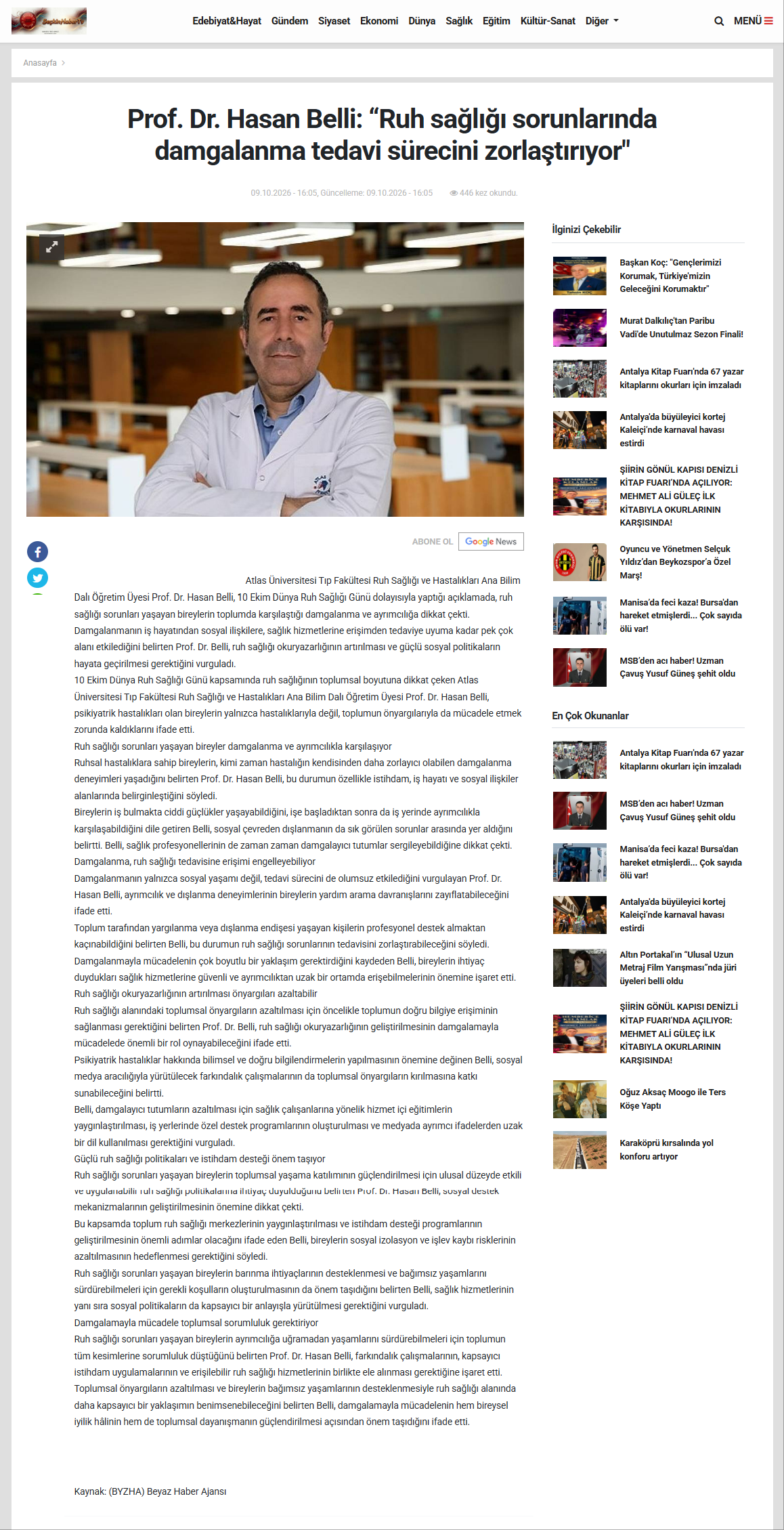

On the occasion of World Mental Health Day on October 10th, Prof. Dr. Hasan Belli, a faculty member of the Department of Psychiatry at Atlas University Faculty of Medicine, drew attention to the social dimension of mental health, stating that individuals with psychiatric illnesses have to struggle not only with their illnesses but also with the prejudices of society.
Individuals experiencing mental health issues face stigma and discrimination.
Professor Dr. Hasan Belli stated that individuals with mental illnesses sometimes experience stigma that can be more challenging than the illness itself, and that this is particularly evident in the areas of employment, work life, and social relationships.
Belli stated that individuals may experience significant difficulties in finding employment and may face discrimination in the workplace even after starting a job, adding that social exclusion is also a common problem. Belli also pointed out that healthcare professionals can sometimes exhibit stigmatizing attitudes.
Stigma can hinder access to mental health treatment.
Professor Dr. Hasan Belli emphasized that stigma negatively affects not only social life but also the treatment process, stating that experiences of discrimination and exclusion can weaken individuals' help-seeking behavior.
Belli stated that people who fear being judged or ostracized by society may avoid seeking professional help, and that this can make the treatment of mental health problems more difficult.
Noting that combating stigma requires a multifaceted approach, Belli emphasized the importance of individuals being able to access the health services they need in a safe and non-discriminatory environment.
Improving mental health literacy can reduce prejudice.
Professor Dr. Belli stated that ensuring the public has access to accurate information is the first step in reducing societal prejudices in the field of mental health, and that improving mental health literacy can play a significant role in combating stigma.
Belli emphasized the importance of providing scientific and accurate information about psychiatric illnesses, and stated that awareness campaigns conducted through social media could also contribute to breaking down societal prejudices.
Belli emphasized that, in order to reduce stigmatizing attitudes, in-service training for healthcare workers should be expanded, special support programs should be created in workplaces, and discriminatory language should be used in the media.
Strong mental health policies and employment support are important.
Professor Dr. Hasan Belli stated that effective and implementable national mental health policies are needed to strengthen the participation of individuals with mental health problems in social life, and emphasized the importance of developing social support mechanisms.
Belli stated that expanding community mental health centers and developing employment support programs would be important steps in this regard, adding that the goal should be to reduce the risks of social isolation and functional impairment for individuals.
Belli stated that it is also important to support the housing needs of individuals with mental health problems and to create the necessary conditions for them to lead independent lives, emphasizing that social policies, as well as health services, should be implemented with an inclusive approach.
Combating Stigma Requires Social Responsibility.
Professor Dr. Hasan Belli stated that it is the responsibility of all segments of society to ensure that individuals with mental health problems can live their lives without discrimination, and pointed out that awareness campaigns, inclusive employment practices, and accessible mental health services should be addressed together.
Belli stated that a more inclusive approach to mental health can be adopted by reducing social prejudices and supporting individuals' independent lives, adding that combating stigma is important for strengthening both individual well-being and social solidarity.