










The significance of the Türkiye-Iraq oil agreement:
“The new energy and pipeline agreements signed between Türkiye and Iraq are not only about overcoming chronic issues in bilateral relations, but also a strategically significant achievement that fundamentally changes global energy geopolitics.”
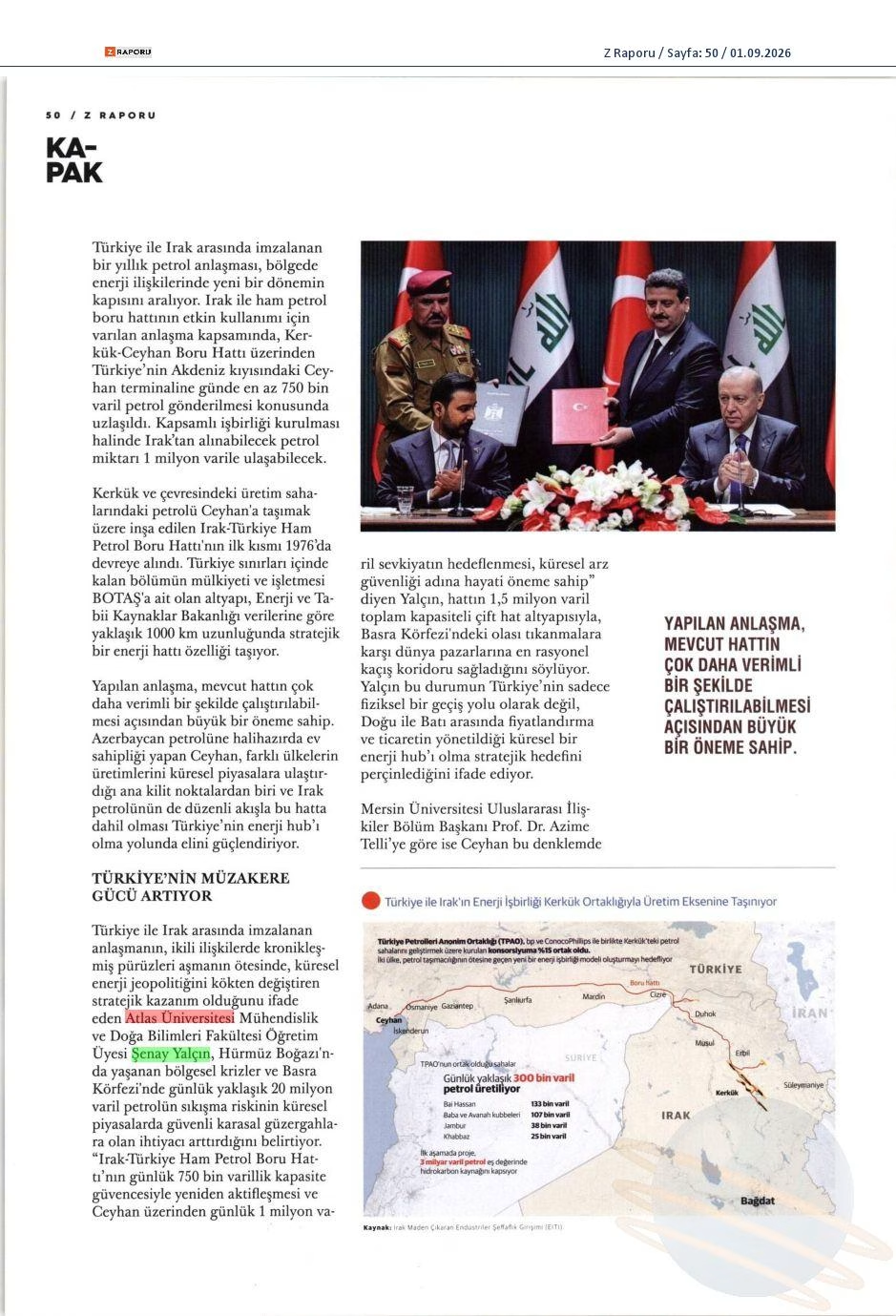
As a prime example, regional crises in the Strait of Hormuz and the risk of a daily oil bottleneck of approximately 20 million barrels in the Persian Gulf have increased the need for secure land routes in global markets. In this critical conjuncture, the reactivation of the Iraq-Turkey Crude Oil Pipeline with a guaranteed capacity of 750 barrels per day and the target of shipping 1 million barrels per day via Ceyhan are of vital importance for global supply security.
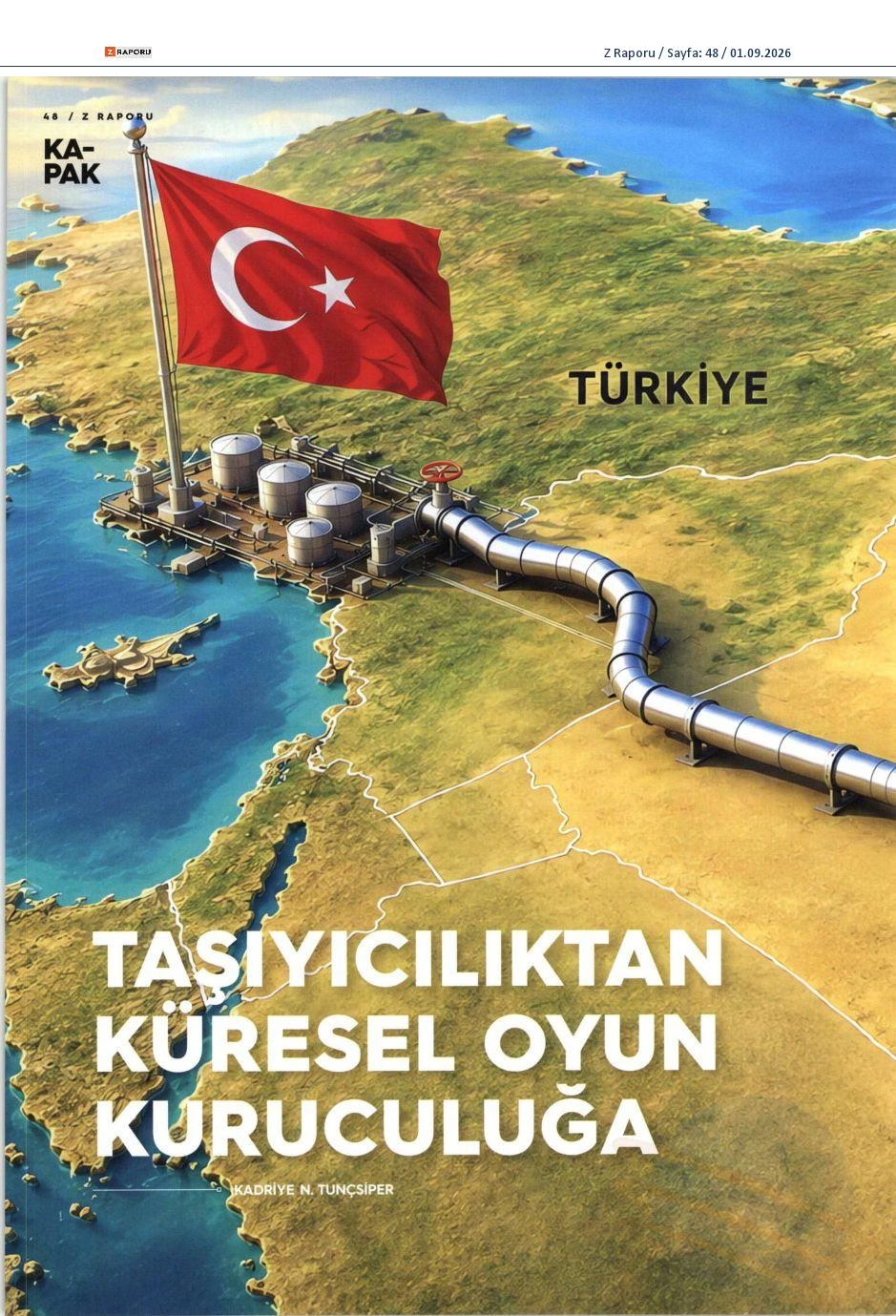
Turkey, with its dual-line infrastructure stretching from Silopi to Ceyhan and a total capacity of 1,5 million barrels, offers the most rational escape corridor to world markets in the event of potential congestion in the Persian Gulf. This directly reinforces Türkiye's strategic goal of becoming not just a physical transit route, but a global energy hub where pricing and trade are managed between East and West.
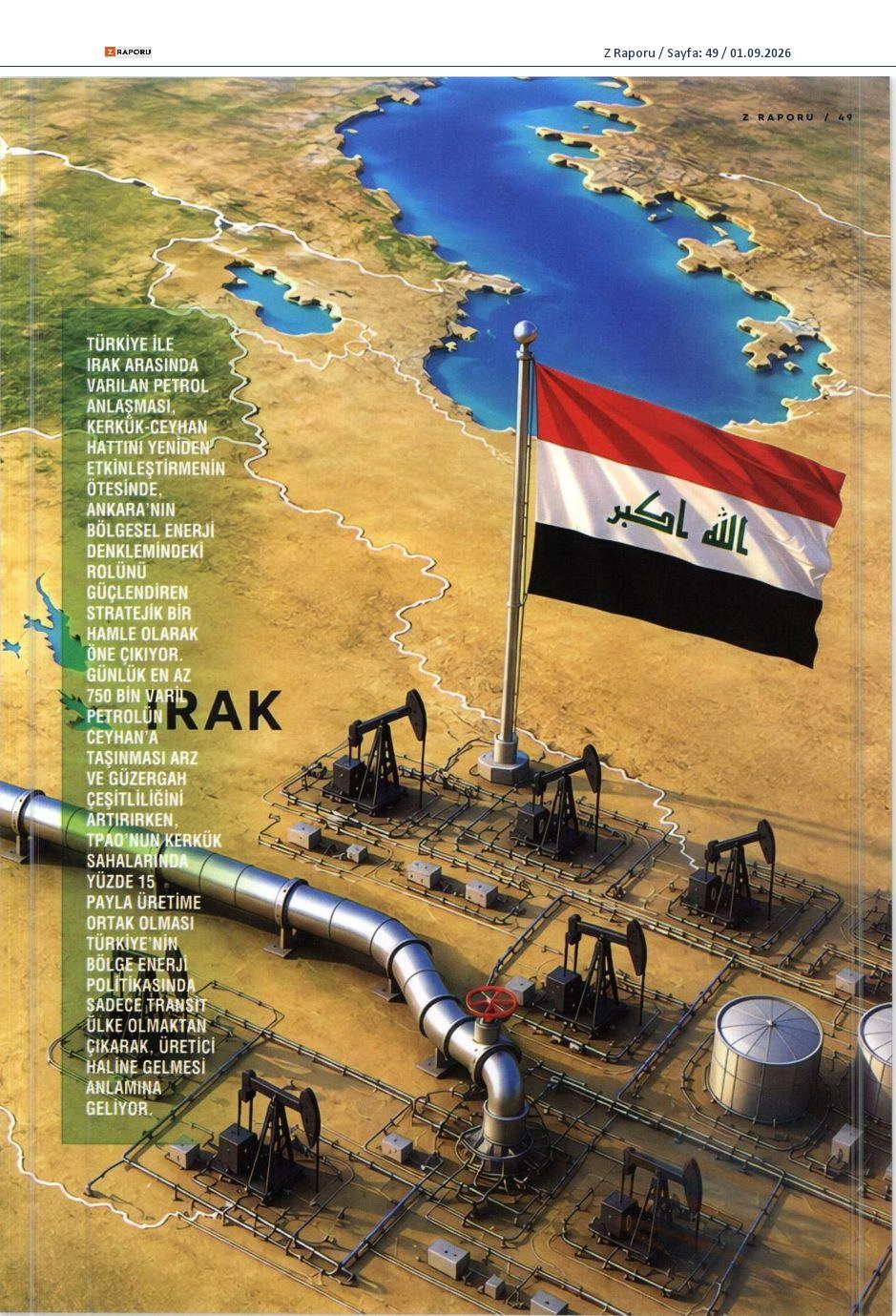
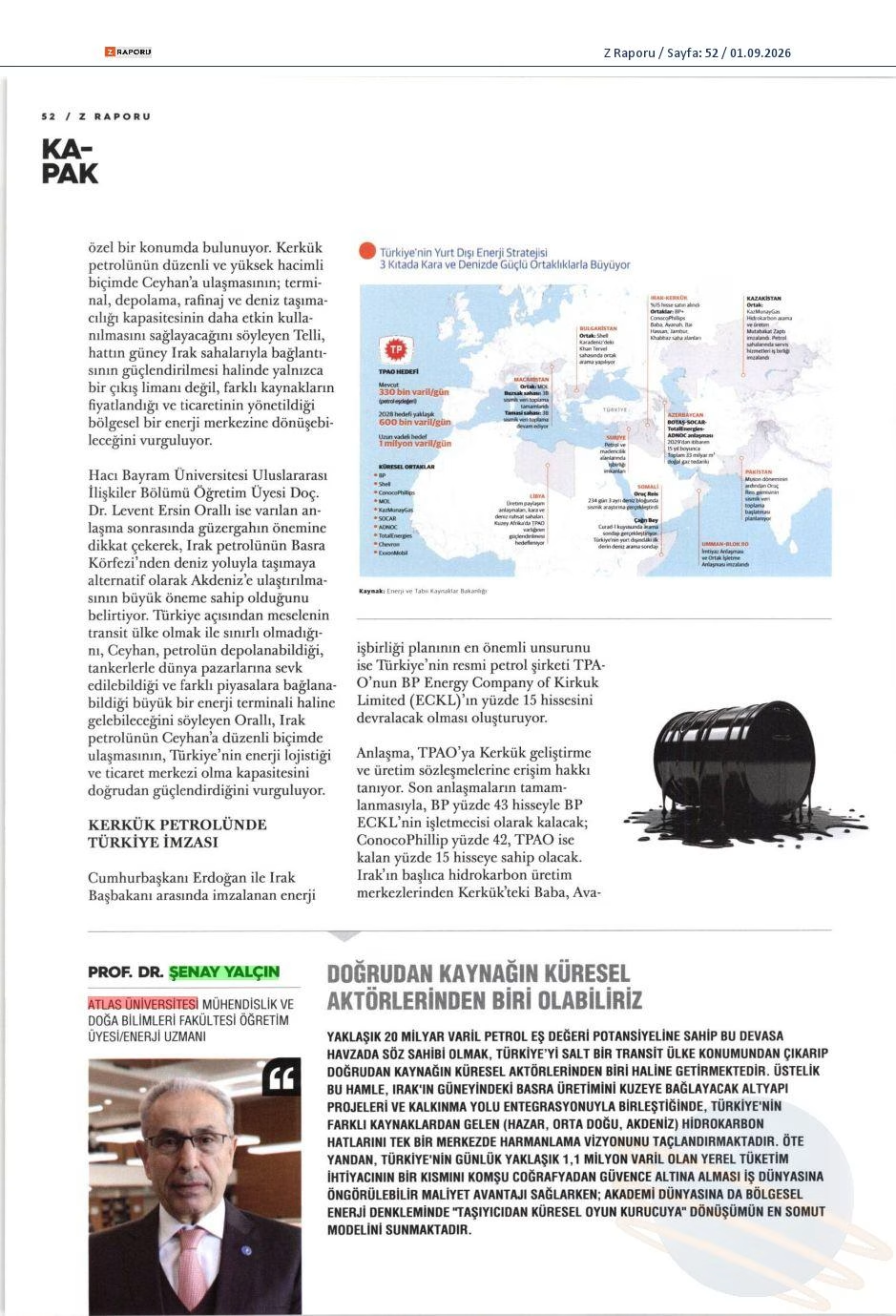
The most radical aspect of this collaboration, from a business and energy diplomacy perspective, is that Turkish Petroleum Corporation (TPAO) will acquire a 15 percent stake in the consortium operating the Kirkuk field, thereby gaining a producer identity.
Having a say in this vast basin, which has a potential of approximately 20 billion barrels of oil equivalent, would transform Türkiye from a mere transit country into a direct global player in the resource.
Moreover, this move, combined with infrastructure projects that will connect Basra production in southern Iraq to the north and the integration of the Development Route, crowns Türkiye's vision of blending hydrocarbon pipelines from different sources (Caspian, Middle East, Mediterranean) into a single hub.
On the other hand, securing a portion of Türkiye's daily local consumption needs of approximately 1,1 million barrels from neighboring regions provides the business world with a predictable cost advantage, while offering the academic world the most concrete model of the transformation from "carrier to global game changer" in the regional energy equation.