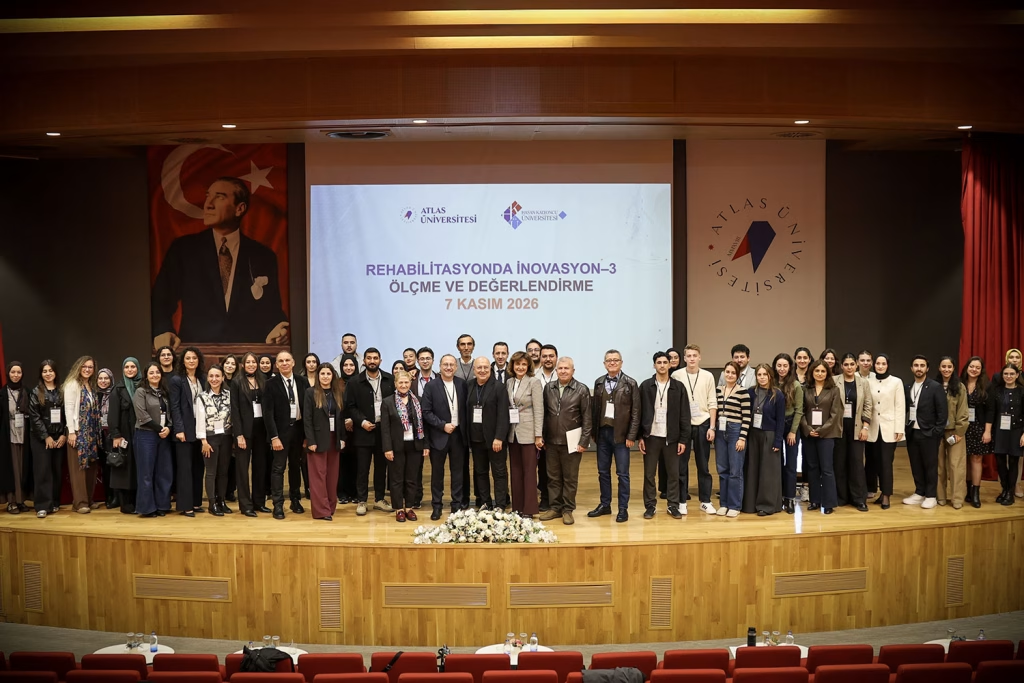


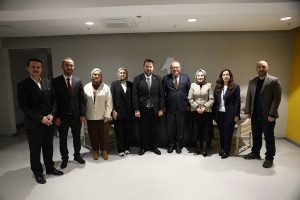
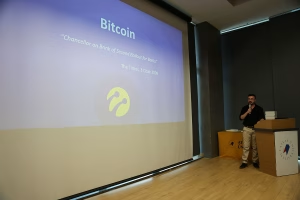
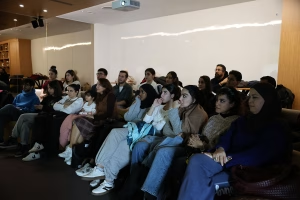
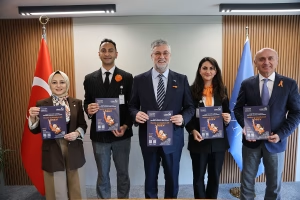
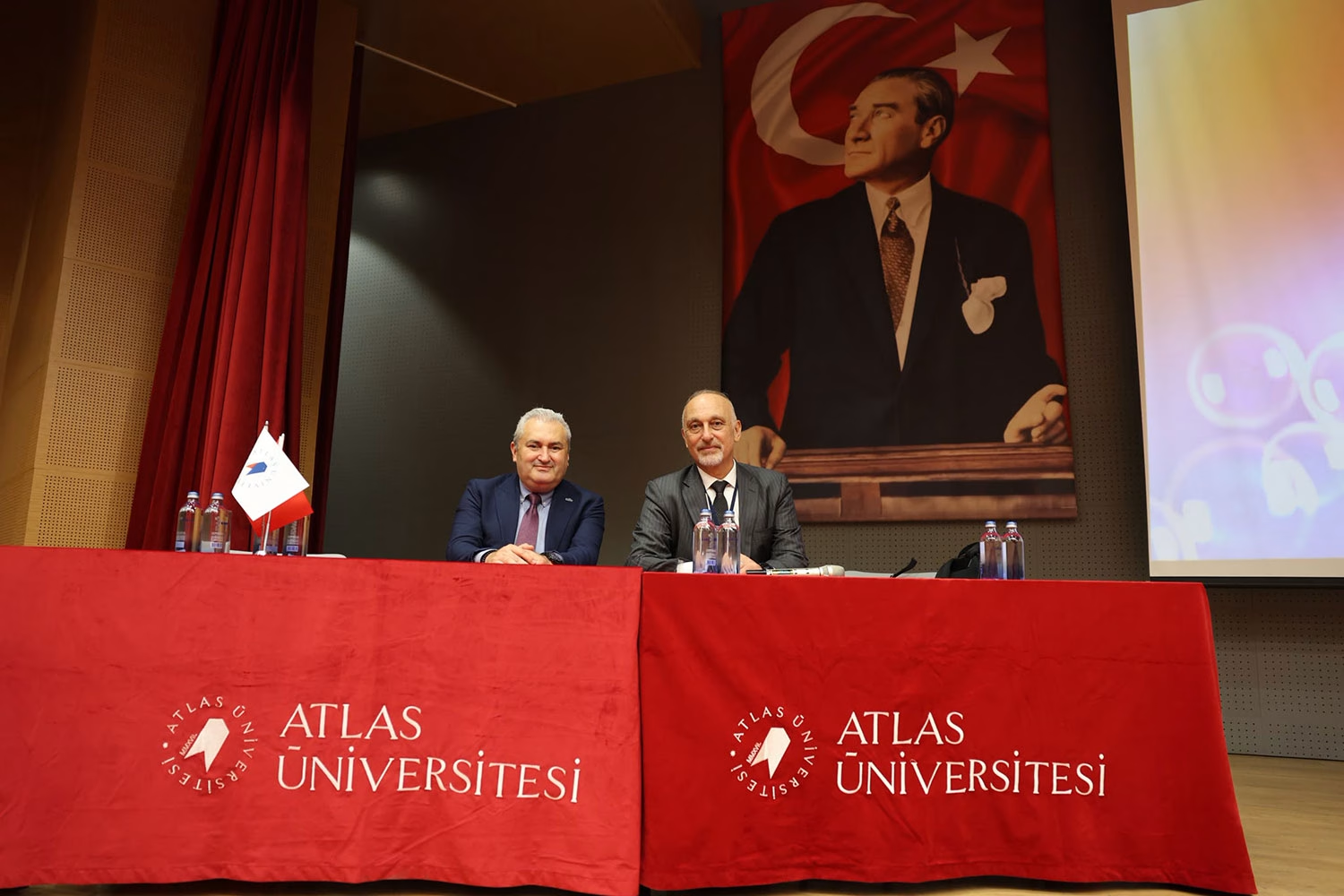
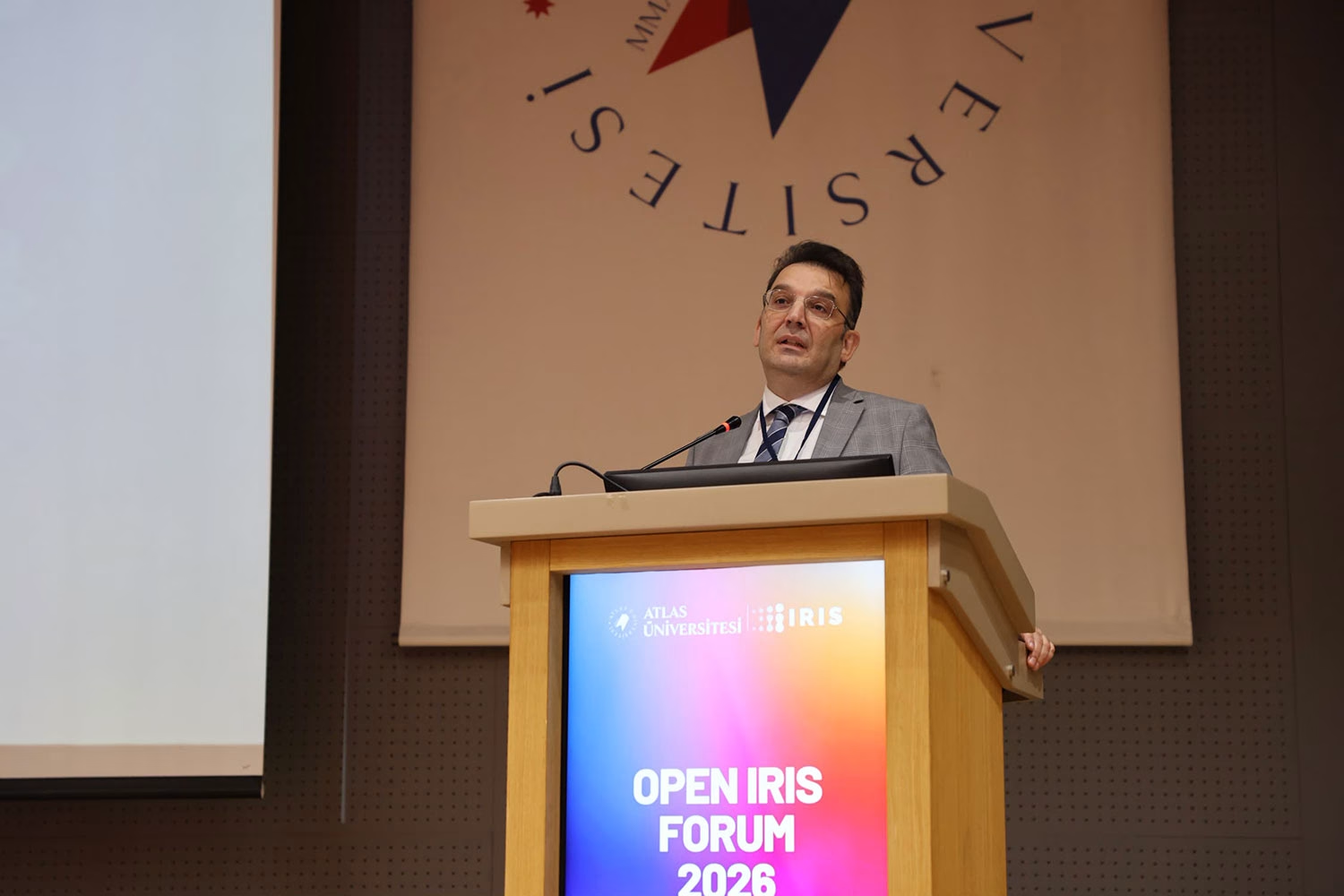
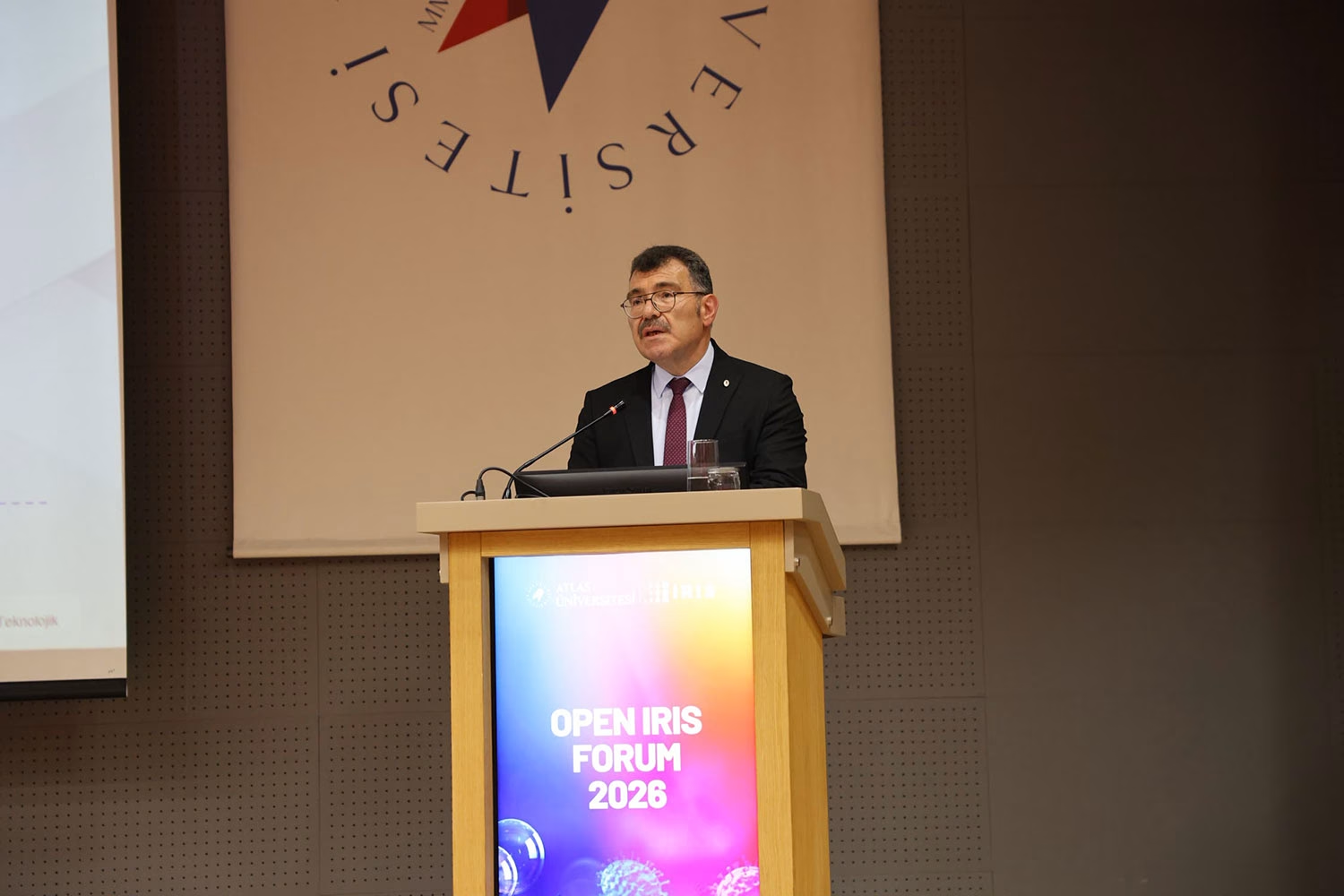
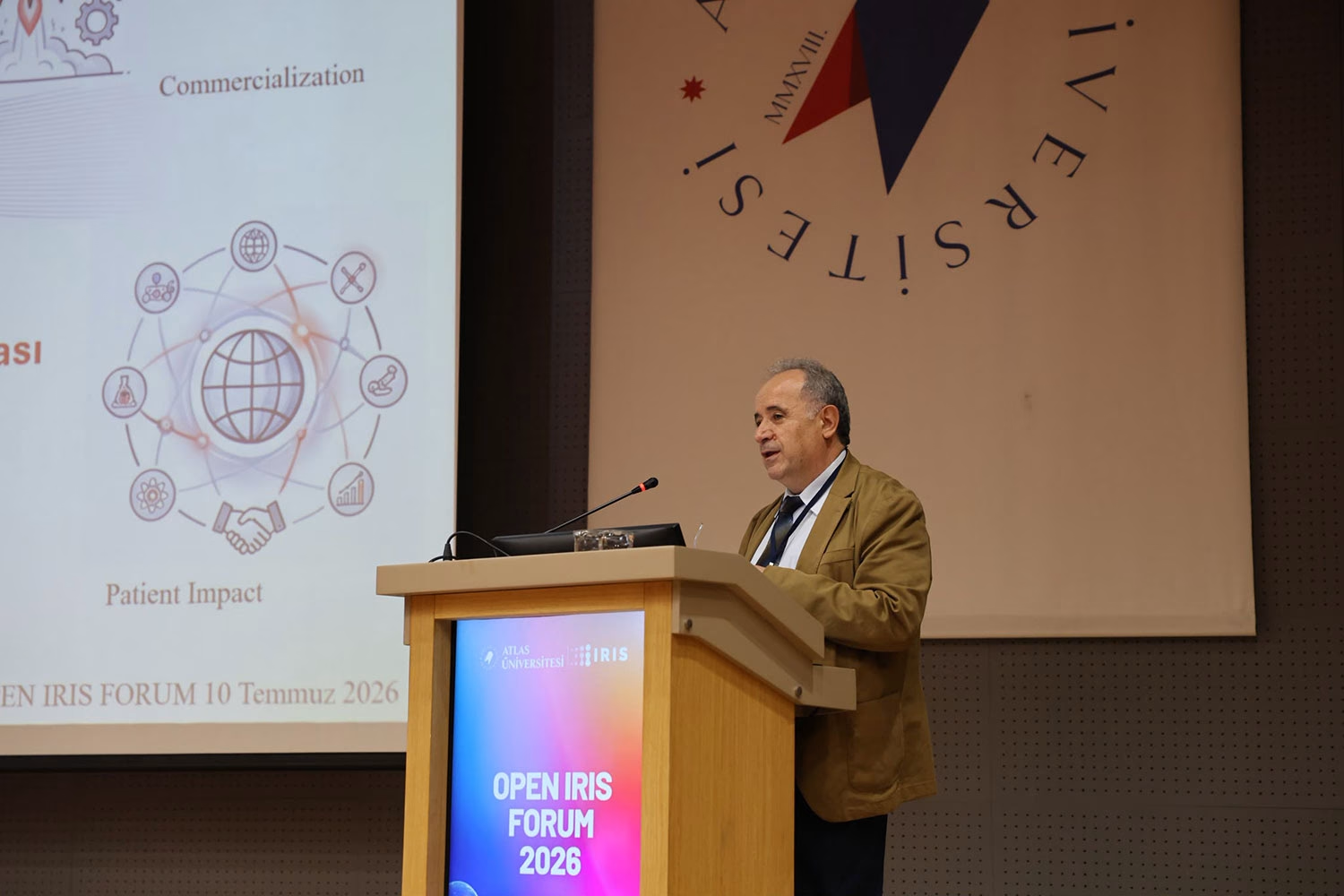
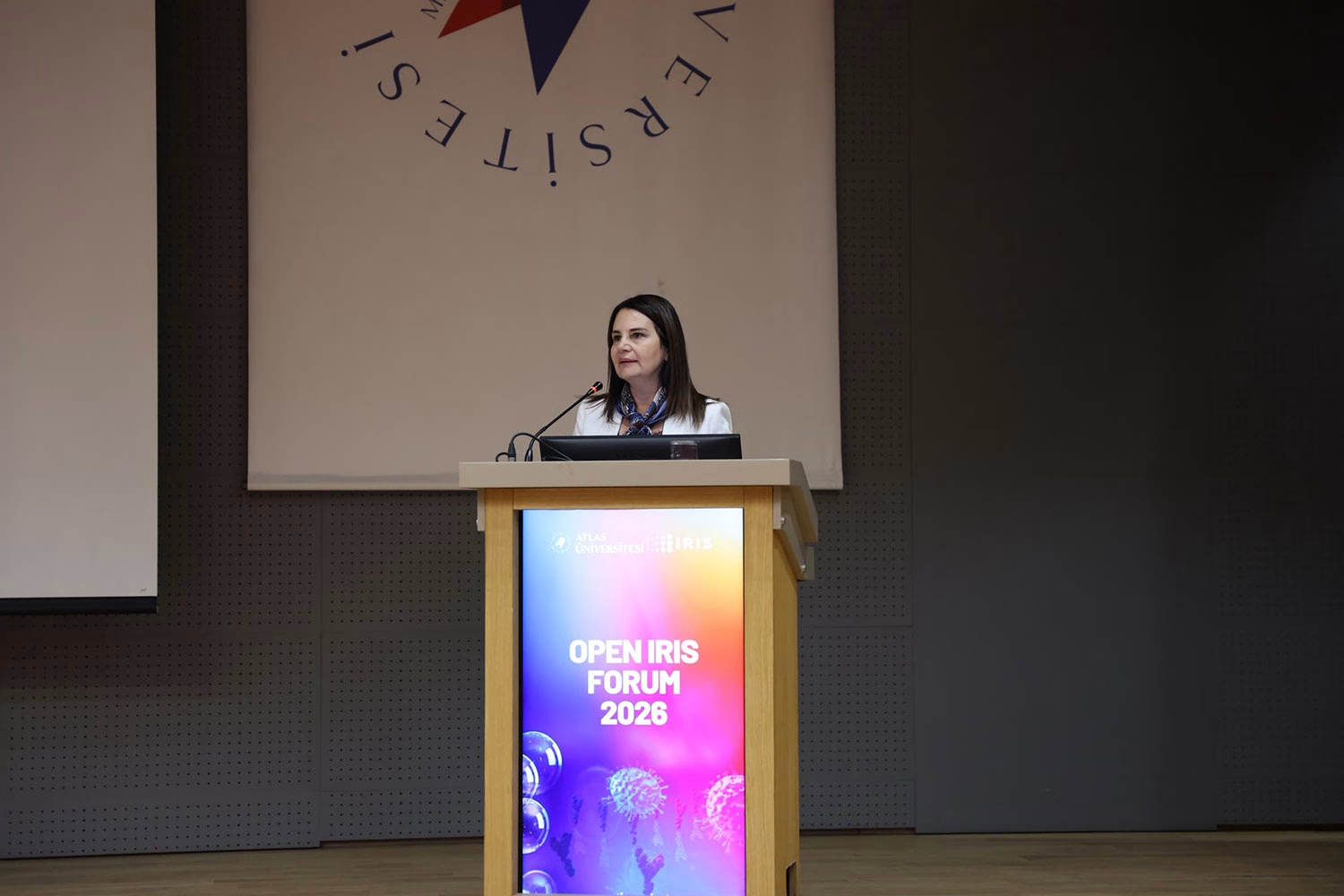
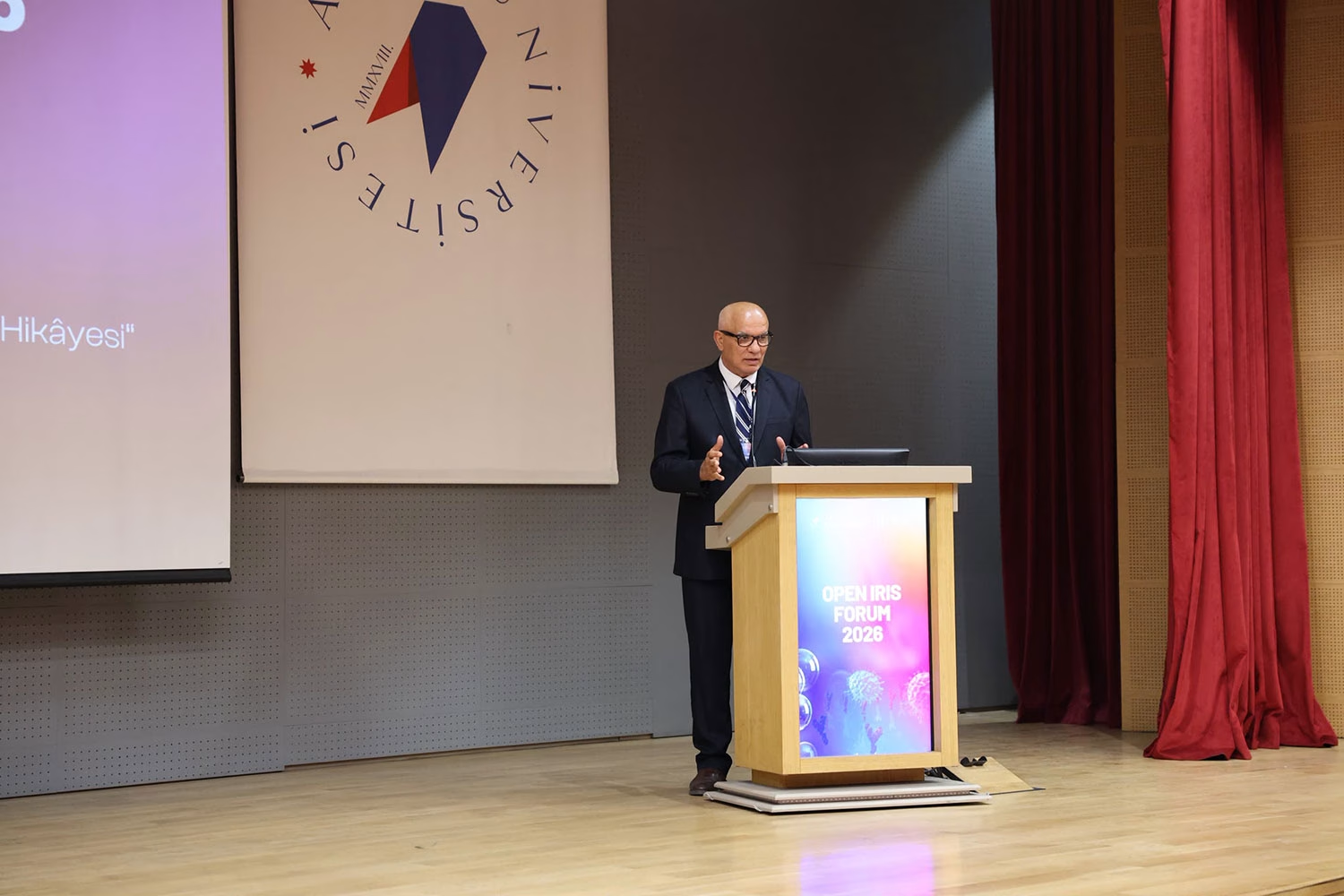
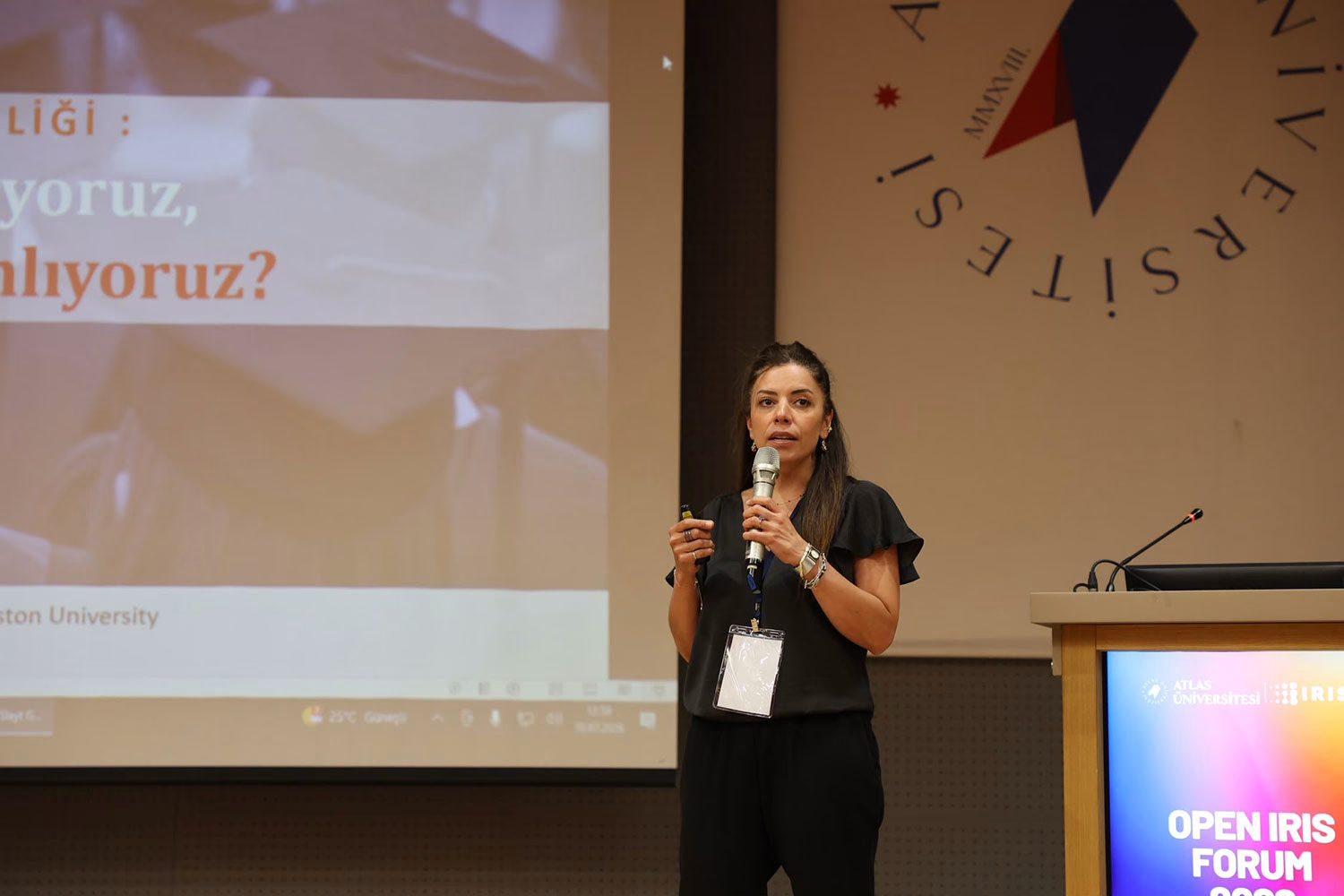
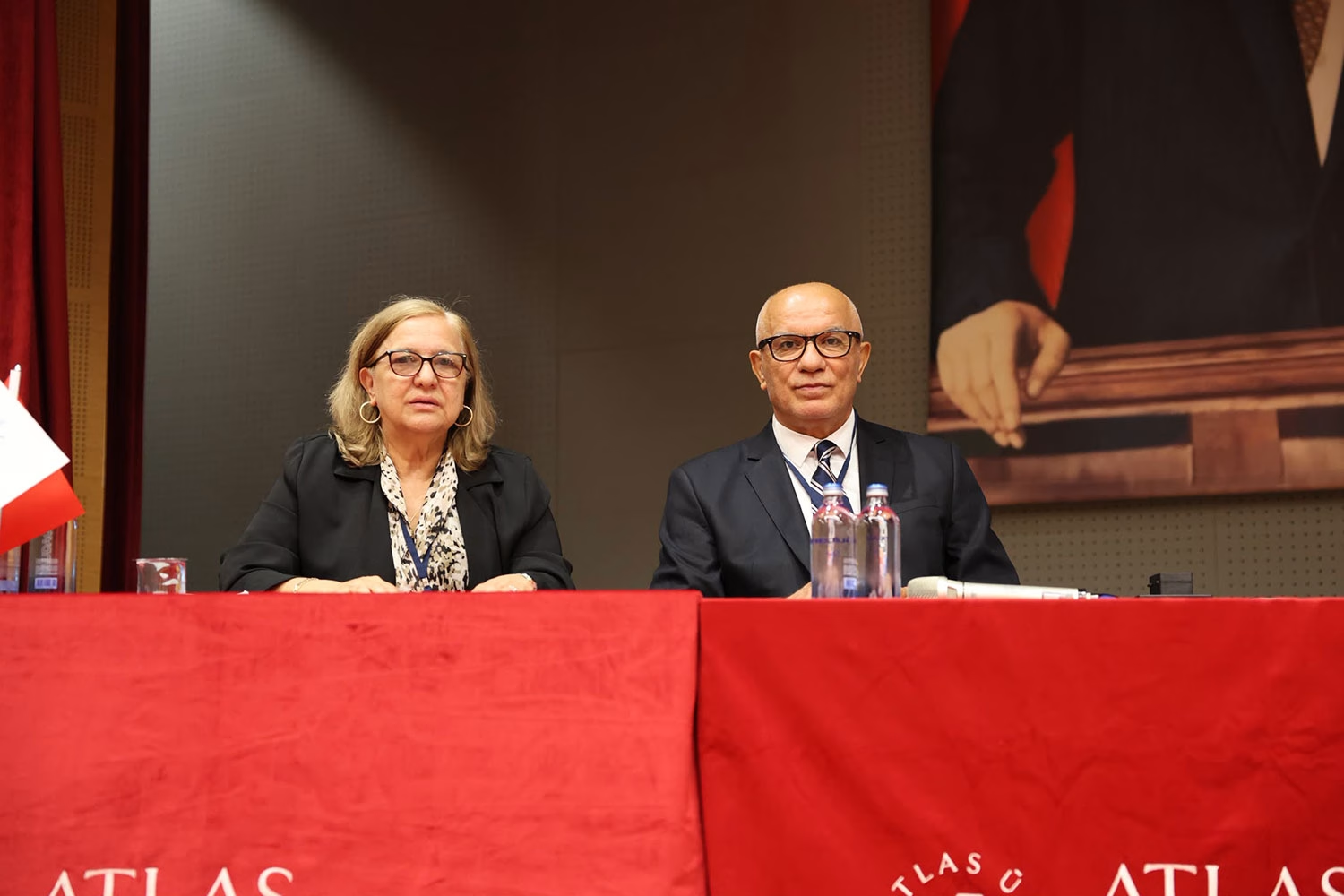
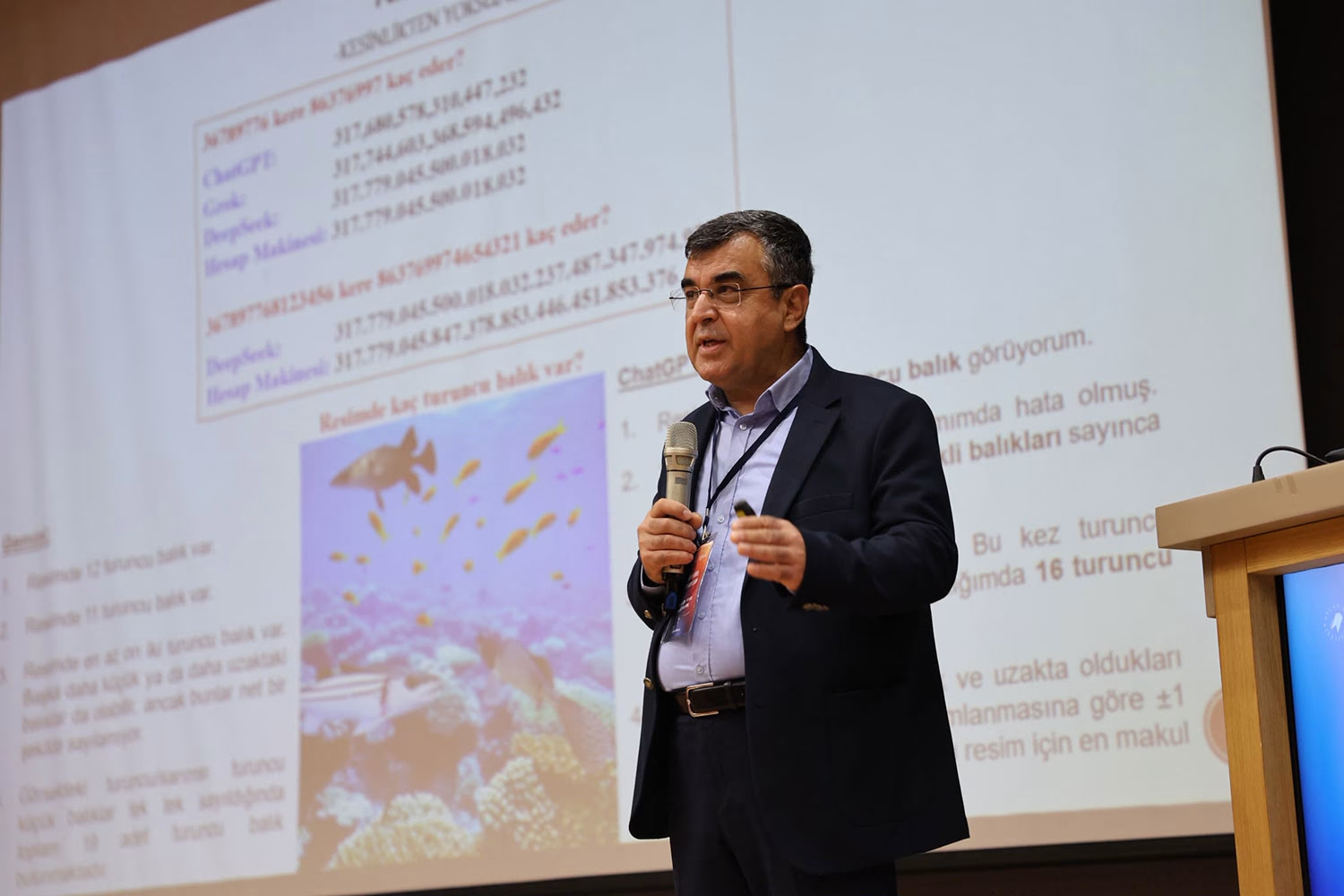
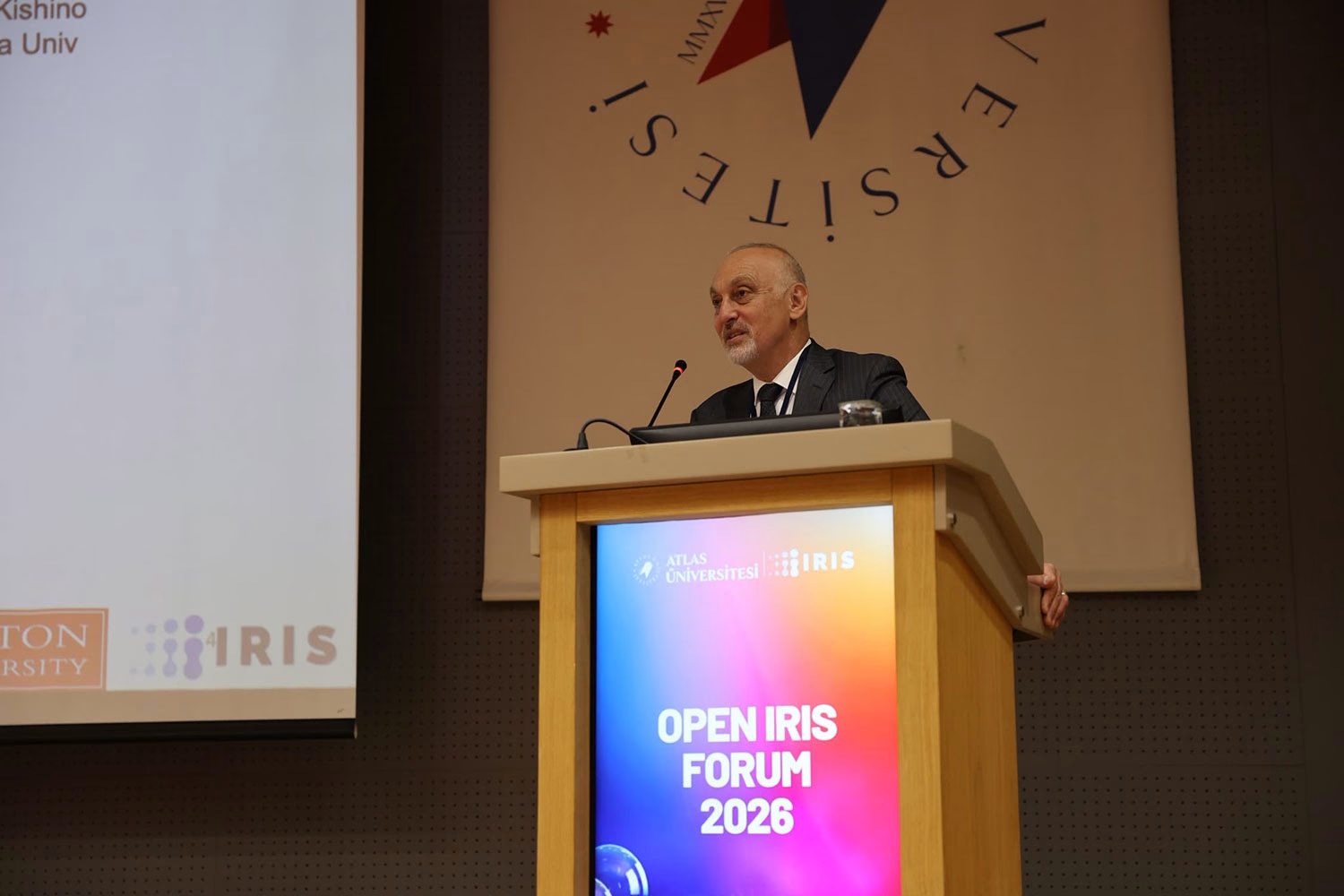
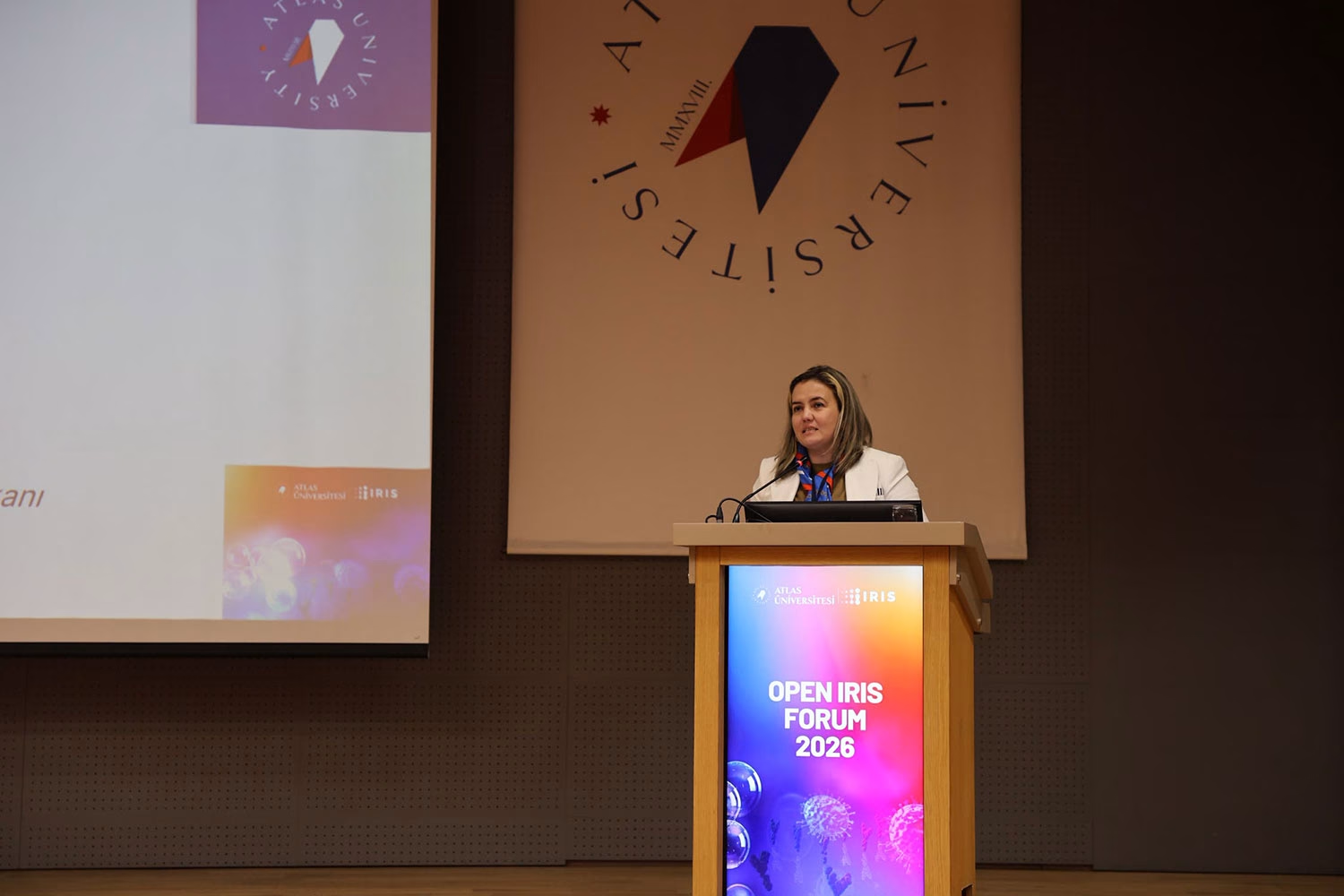
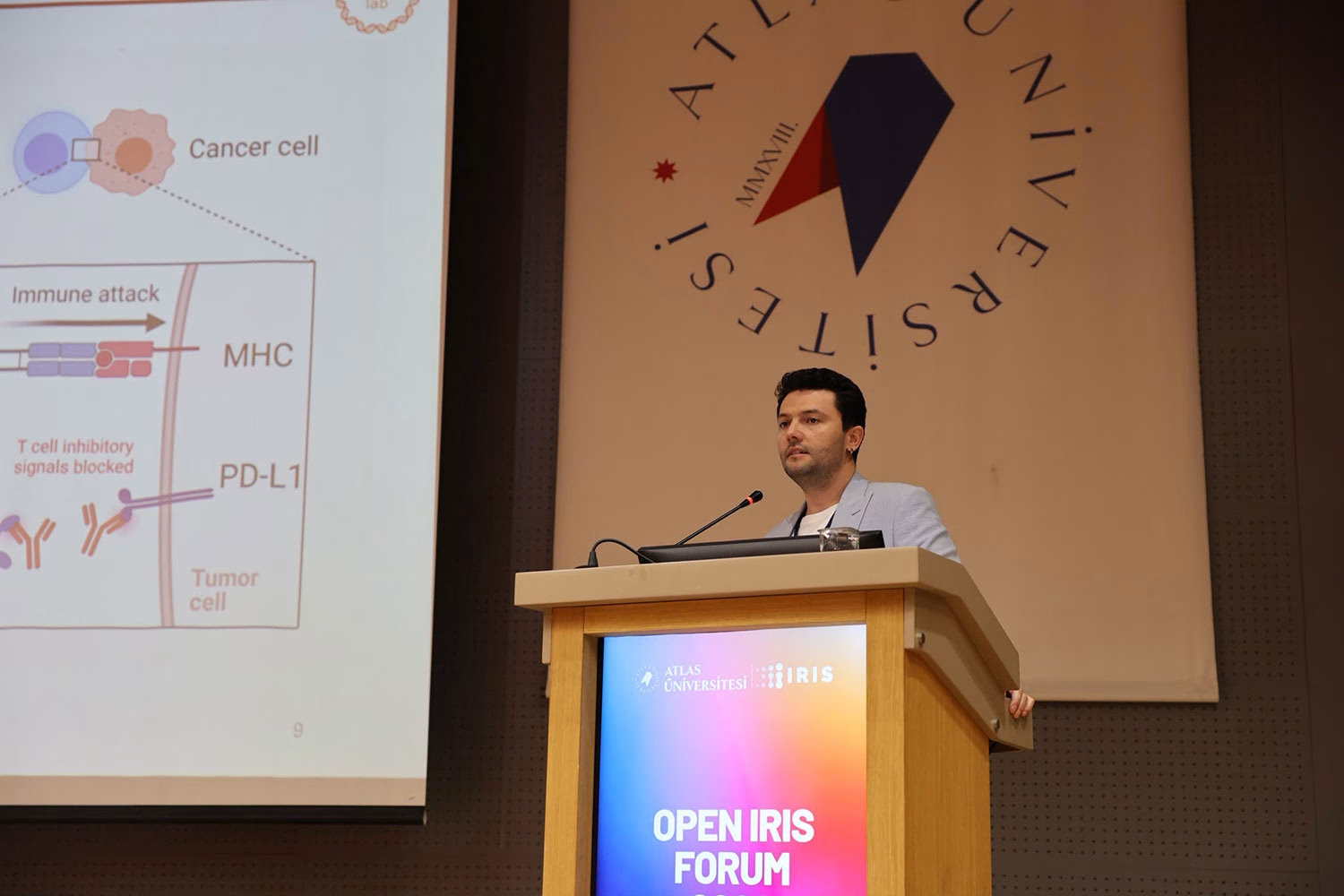
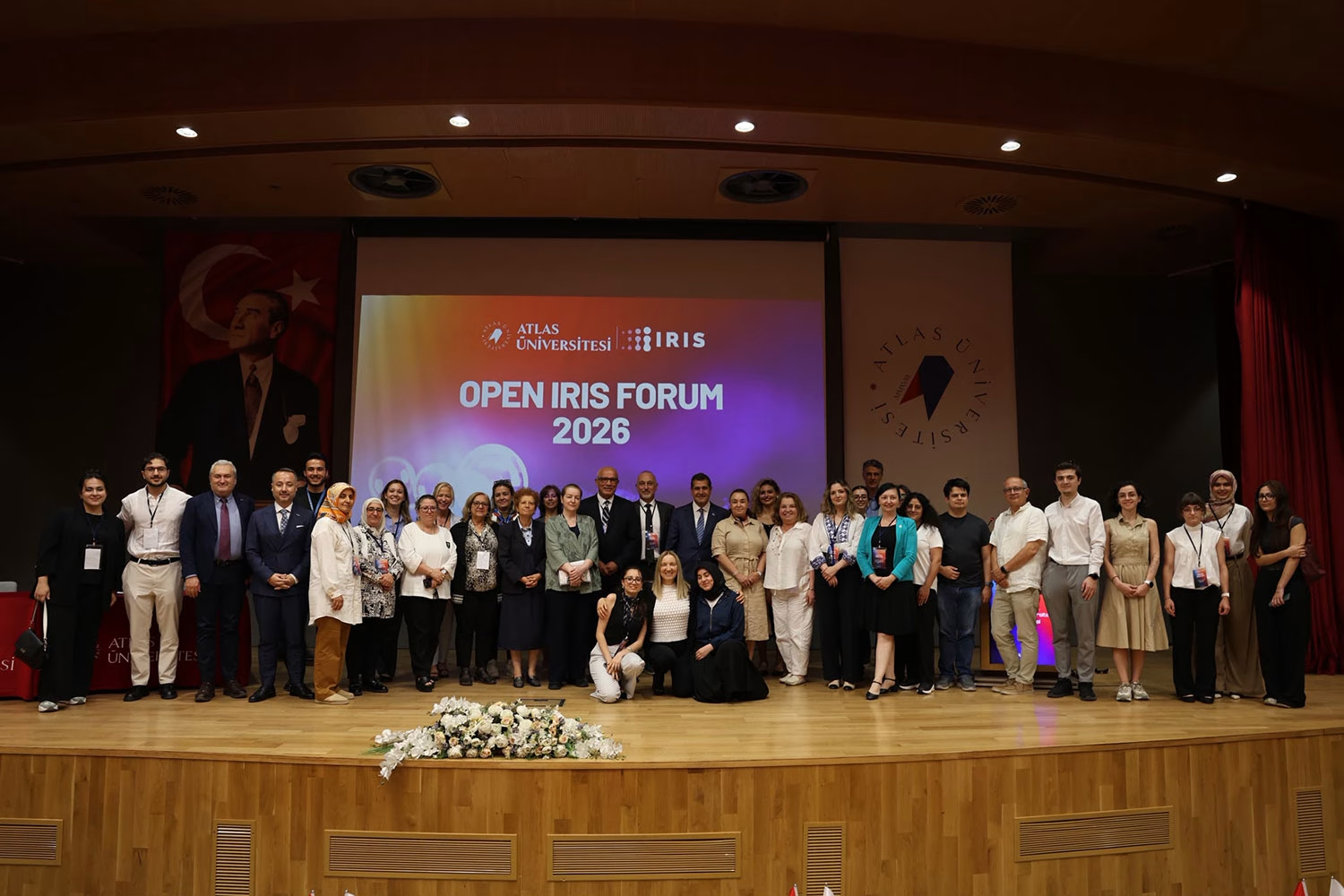
In line with its research-oriented internationalization vision, Atlas University hosted another significant scientific event. Held on July 10, 2026, in the Dr. Ralph A. DeFronzo Auditorium at the Atlas Valley Campus, the OPEN IRIS Forum 2026 addressed topics shaping the future of science, such as health technologies, artificial intelligence, biotechnology, translational research, research funding, and global academic collaborations, through an interdisciplinary approach.
Bringing together academics, researchers, and young scientists from prestigious universities in Türkiye and around the world, the forum created an important platform for the production and sharing of scientific knowledge, its transformation into joint projects, and the strengthening of international research networks.
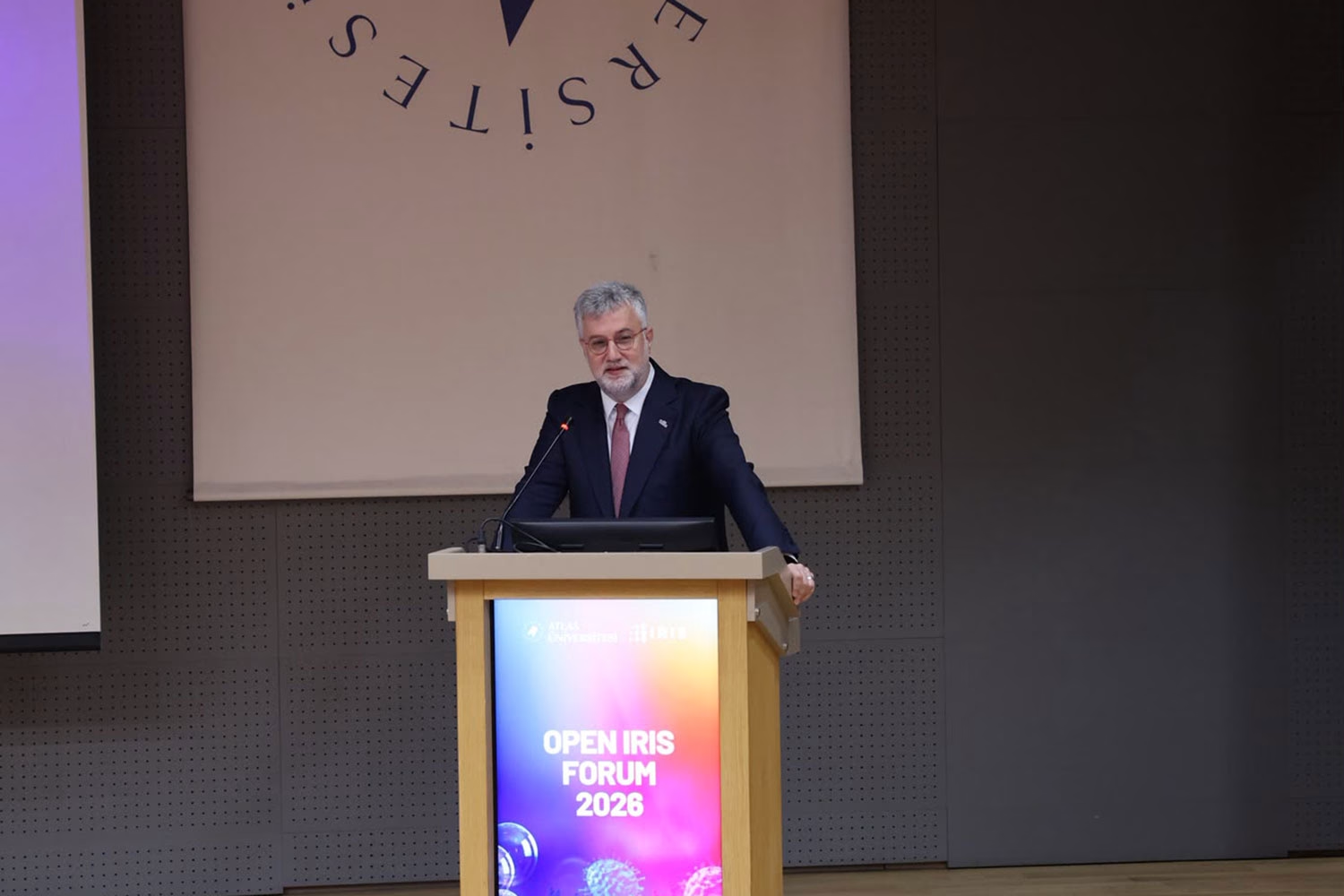
Prof. Dr. Ersoy Kocabıçak: “The Future of Science is Shaped by International Collaborations”
Delivering the opening speech of the forum, Atlas University Rector Prof. Dr. Ersoy Kocabıçak emphasized that today's universities should be more than just institutions that produce knowledge; they should be active participants in global research networks.
Noting that the future of science is shaped by international collaborations and an interdisciplinary work culture, Prof. Dr. Ersoy Kocabıçak stated, “Science is now developing beyond borders, with the collective intelligence of different disciplines and different countries. As universities, our main goal is to strengthen our research capacity through international collaborations, prepare young researchers for the global scientific ecosystem, and transform the knowledge produced into social benefit.”
Professor Dr. Ersoy Kocabıçak, noting that the global problems facing humanity today cannot be solved by a single person or a single discipline, emphasized the importance of sustainability in science. Stating that collaboration and a culture of joint production are fundamental to sustainable scientific success, Professor Dr. Kocabıçak said that Atlas University is resolutely pursuing its vision of creating a research ecosystem that supports sharing, collective intelligence, and scientific production, and that the OPEN IRIS Forum is a strong reflection of this vision.
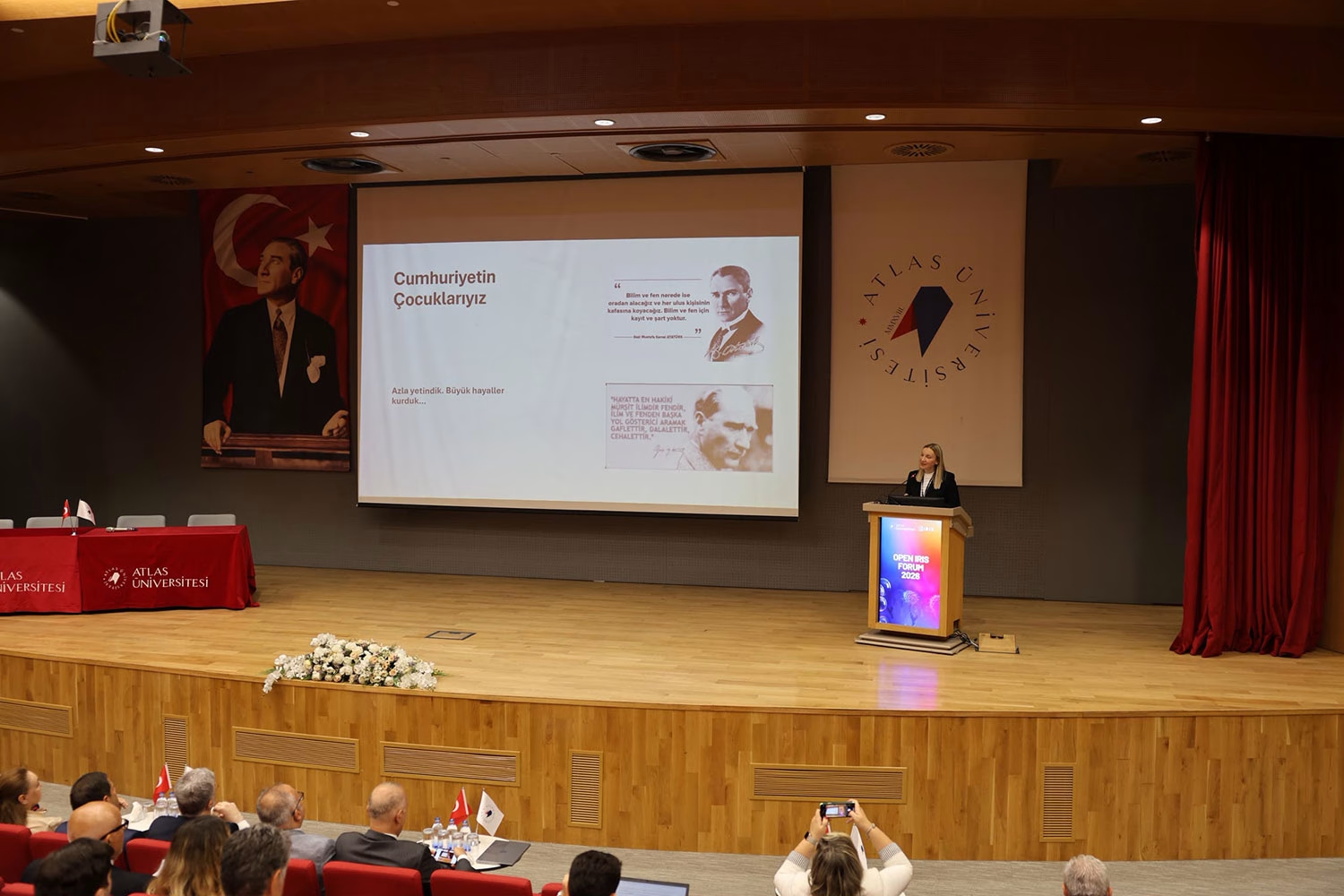
Prof. Dr. Neşe Lortlar Ünlü: “We aim to make Türkiye one of the strong actors in the global research ecosystem.”
Forum Chair and Atlas University Global Education & Innovation Leader Prof. Dr. Neşe Lortlar Ünlü, in her speech titled “Loyalty to Science: Establishing a Global Research Ecosystem for Turkey,” emphasized that scientific success is built upon strong international collaborations, trust, mentorship, and a sustainable research culture.
Prof. Dr. Neşe Lortlar Ünlü stated, “Research ecosystems are nourished not only by laboratories but also by trust-based collaborations, interdisciplinary thinking, and a culture of shared production. With the OPEN IRIS Forum, we aim to increase Türkiye's effectiveness in international scientific networks by bringing together researchers from different countries around the same vision and to create sustainable collaborations that will guide future research.”
Professor Dr. Neşe Lortlar Ünlü stated that Turkish scientists working in different countries around the world have formed a significant network of knowledge and experience, and that the diaspora should be considered as Türkiye's "brain power" rather than "brain drain." She added that with the right approaches and lasting collaborations, this potential could make significant contributions to Türkiye's scientific development.
Noting that research today progresses not through individual efforts but through the collaborative work of interdisciplinary and international teams, Prof. Dr. Neşe Lortlar Ünlü stated that the strongest universities of the future will be those with the strongest research collaborations, not those with the largest infrastructure.
Prof. Dr. Neşe Lortlar Ünlü stated that the main goal of the OPEN IRIS Forum is to create a trust-based, year-round, and continuously evolving research community by bringing together researchers from different parts of the world around a shared vision, and added that the forum will lay the groundwork for sustainable partnerships that will increase Türkiye's effectiveness in international scientific networks.
Concluding her speech by emphasizing that the most valuable legacy of science is the people it trains, the environment of trust it creates, and the research culture it passes on to future generations, Prof. Dr. Neşe Lortlar Ünlü expressed her hope that OPEN IRIS Forum 2026 would be a lasting beginning that transforms science into impact and inspires new collaborations.
IRIS Lab Founder Prof. Dr. Selim Ünlü shared his experiences.
Atlas University Board of Trustees Member, Prof. Dr. Selim Ünlü, who conducts academic and scientific studies at Boston University in the USA, shared his academic journey, his work at Boston University, and his experiences regarding the establishment process of Atlas University's IRIS Laboratory in his opening speech titled "An Engineer's Journey to Contributing to Health Technologies".
A broad scientific agenda ranging from artificial intelligence to translational research.
During the forum, scientific presentations were given in sessions titled "The Future of Science Ecosystems" and "Translational Science and Clinical Perspectives," covering many current topics such as the role of artificial intelligence in health research, big data analytics, the intersection of molecular biology and artificial intelligence, sustainable research ecosystems, biotechnology, cancer research, infectious diseases, and university-industry collaborations.
Atlas University Faculty of Medicine Dean Prof. Dr. Merih Çetinkaya, Graduate Education Institute Director Prof. Dr. Hafize Uzun, Prof. Dr. Serap Kuruca from the Faculty of Medicine, and Prof. Dr. Yılmaz Kılıçaslan from the Faculty of Engineering and Natural Sciences also participated in the sessions.
"National Vision Speech" by Prof. Dr. Hasan Mandal.
Speaking at the forum, Istanbul Technical University Rector Prof. Dr. Hasan Mandal, in his presentation titled "Science, Innovation and National Competitiveness in the Second Century of the Republic," made assessments regarding Türkiye's future in the fields of science, technology, and innovation. In his speech, he drew attention to the role that universities will play in strengthening research infrastructures, the contribution of translational research to healthcare services, and increasing national competitiveness.
Prof. Dr. Hasan Mandal emphasized that in the second century of the Republic, the determining factor in competitiveness in science, technology, and innovation will not only be the technologies developed, but also the understanding and methods used to develop these technologies.
Professor Dr. Hasan Mandal stated that multifaceted global problems such as climate change, energy security, artificial intelligence, pandemics, and geopolitical transformations cannot be solved by a single discipline, institution, or perspective. He emphasized that universities should go beyond being merely knowledge-producing institutions and transform into structures that generate knowledge, develop technology, and mobilize collective intelligence in collaboration with the public, industry, and society.
In his speech, Prof. Dr. Hasan Mandal emphasized that the approach needed today is a co-creation culture that goes beyond the classical understanding of collaboration. He stated that lasting impact and sustainable competitive advantage are possible in ecosystems where different disciplines, institutions, and competencies come together towards common goals and create value together.
A Joint Research Agenda Was Established at the Strategy Workshops.
In the strategy workshops held in the second part of the forum, participants exchanged views on topics such as artificial intelligence and digital health, translational research in cancer and infectious diseases, biotechnology and diagnostic technologies, university-industry collaborations, research funding, and international partnerships. The recommendations that emerged from the workshops were transformed into a shared research vision in the OPEN IRIS Declaration, which was announced at the end of the forum.
Atlas IRIS Laboratory Introduced
Atlas IRIS Laboratory, which will make a significant contribution to Atlas University's research infrastructure, was introduced comprehensively for the first time.
In her presentation titled "Atlas IRIS Laboratory: Current Infrastructure, Research Opportunities and Future Perspectives," Prof. Dr. Zeynep Özünal, Head of the IRIS Laboratory and Faculty Member of the Medical Faculty, provided comprehensive information about the research infrastructure, international research opportunities, and projects planned for the future.
Medical Faculty Member Prof. Dr. Ayhan Bilir also gave a presentation titled "The Journey of a Vision: The Founding Story of Atlas IRIS Laboratory," in which he described the process of establishing the laboratory.
OPEN IRIS Forum 2026, whose international dimension was further strengthened by video messages from Prof. Dr. Mete Atatüre from Cambridge University and Assoc. Prof. Dr. İlyas Şahin from Harvard Medical School, concluded as an important scientific platform supporting Atlas University's goal of increasing its effectiveness within global research networks.
OPEN IRIS Forum 2026, with its approach centered on scientific excellence, international research collaborations, and interdisciplinary production, once again demonstrated Atlas University's vision of becoming a research university, while bringing together future scientists around a culture of collaborative production.