


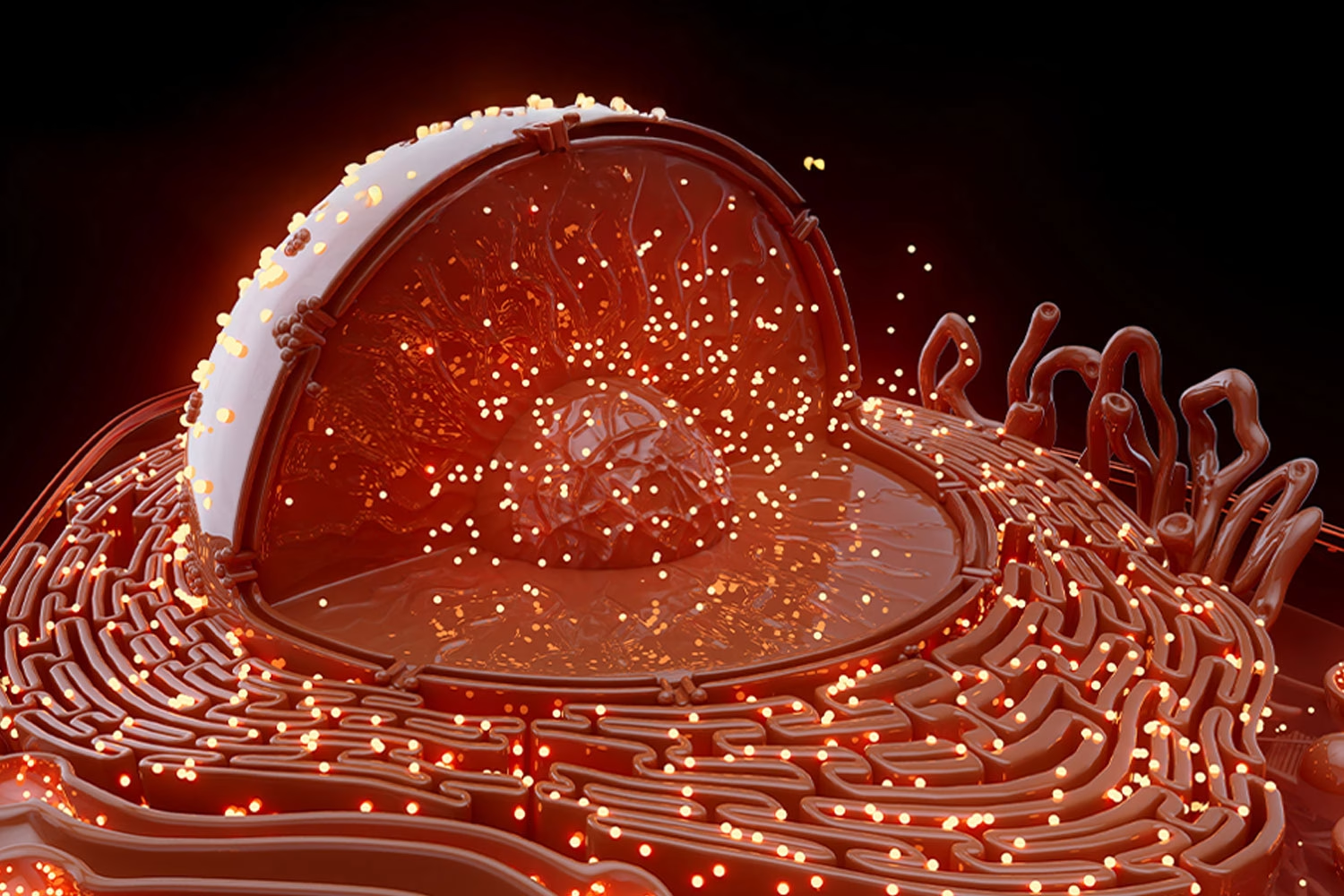
Living cells encode complex networks of interconnected biomolecular components for information processing and decision-making. The systems dynamics of such networks is inherently stochastic and nonlinear, with many biomolecular components (genes, RNAs and proteins, etc.) often occurring at low molecular counts within cells. We will discuss state-of-the-art computational methods for modeling biomolecular networks and combine them with experiments to study the diverse cellular processes, ranging from the non-genetic origins of drug-tolerant bacterial/cancer cells to the infection dynamics of viruses in single cells.
About the speaker,
Prof. Abhyudai Singh earned his bachelor’s degree in mechanical engineering from the Indian Institute of Technology in Kanpur, India. He received master’s degrees in both mechanical and electrical & computer engineering from Michigan State University and a master’s degree in ecology, evolution, and marine biology from the University of California, Santa Barbara (UCSB). After earning his doctoral degree in electrical & computer engineering in 2008, also from UCSB, he completed postdoctoral work in UC San Diego’s Department of Chemistry and Biochemistry. From 2011 to 2017, he was an Assistant Professor in the Departments of Electrical & Computer Engineering, Biomedical Engineering, and Mathematical Sciences at the University of Delaware, and was promoted to Full Professor in 2021. His research interests are in modeling and inference of biomedical systems with applications to systems biology, virology, medicine, and neuroscience.